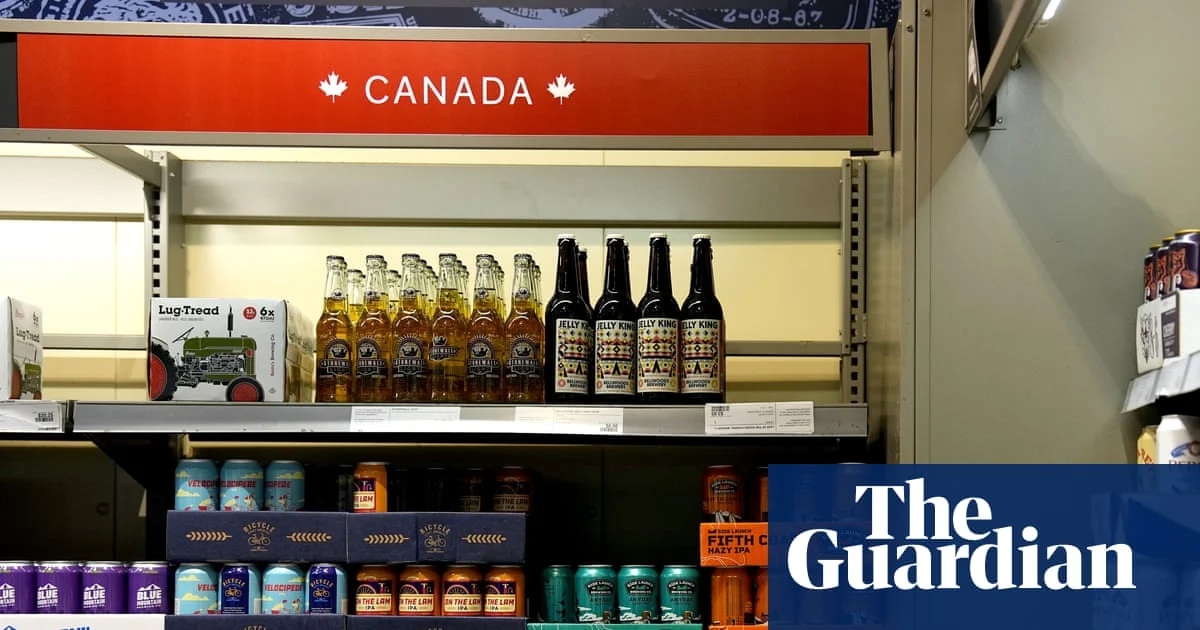
The Guardian is seeking input from Canadians who are boycotting US products after trade talks failed and the US imposed new tariffs on Canadian goods. The shift reflects a broader change in Canadian consumer habits amid ongoing trade tensions between the two nations.
Canadian Prime Minister Mark Carney has pledged to retaliate “dollar for dollar” after the US introduced 50% tariffs on some Canadian goods. As part of negotiations, Carney had urged provinces to lift existing boycotts against US alcohol, which were enacted following earlier tariff disputes. However, public sentiment appears to be moving in the opposite direction. A recent Angus Reid survey found that 40% of Canadian grocery shoppers actively check product origins, with most preferring non-US alternatives when possible.
KEY FACTS
- The US imposed 50% tariffs on Canadian goods after trade talks collapsed.
- Canadian Prime Minister Mark Carney vowed to respond “dollar for dollar.”
- 40% of Canadian grocery shoppers now check product origins, with many avoiding US goods.
- Provincial boycotts of US alcohol were introduced earlier in response to tariffs.
Why Are Canadians Boycotting US Products?
The trade dispute between Canada and the US has escalated after negotiations failed to reach an agreement. In retaliation for 50% tariffs imposed by the US, Canadians appear to be voting with their wallets. An Angus Reid survey last month revealed that a significant portion of Canadian consumers are deliberately avoiding American-made products when possible, particularly in grocery stores. This shift suggests that federal and provincial trade policies may be influencing everyday shopping habits.
What Happens Next?
Prime Minister Mark Carney has promised a “dollar for dollar” response to the US tariffs, though specifics remain unclear. Meanwhile, the boycott movement appears to be growing organically, with nearly half of grocery shoppers now paying attention to product origins. The Guardian is seeking firsthand accounts from Canadians participating in the boycott to gauge its scale and motivations further.
WHAT WE KNOW — AND WHAT WE DON’T
Verified by the source:
- US tariffs of 50% on some Canadian goods are now in effect.
- Canadian provinces previously boycotted US alcohol in response to tariffs.
- 40% of Canadian grocery shoppers check product origins.
Still unconfirmed:
- The exact products affected by the new US tariffs.
- Whether the Canadian government will impose specific counter-tariffs.
- The economic impact of the consumer boycott on US exports.
WHY IT MATTERS
The tariffs and subsequent consumer backlash illustrate growing economic tensions between Canada and the US, two historically close trading partners. If sustained, the boycott trend could influence broader trade policies and consumer markets in North America.
WHAT TO WATCH
Further developments in Canada-US trade relations and whether Canadian officials formalize retaliatory measures. The Guardian plans to report back on responses from Canadians participating in the boycott.