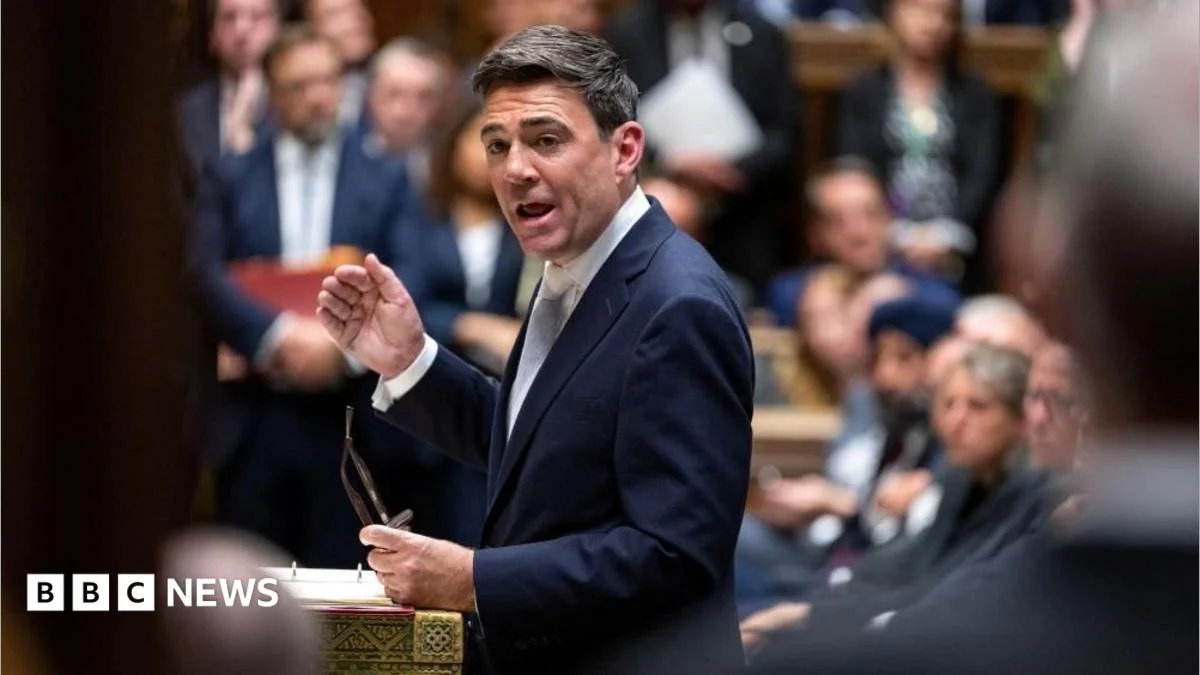
Prime Minister Burnham addressed economic concerns at his initial appearance at Prime Minister’s Questions (PMQs), stating his government would prioritize “fiscal responsibility.” This exchange occurred amidst a period where borrowing costs are surging.
During the session, Burnham was pressed on the economy by Kemi Badenoch. The discussion highlighted the government’s approach to financial management as the nation grapples with increasing borrowing costs.
Key Facts
- Burnham was pressed on the economy.
- This occurred at his first PMQs.
- Borrowing costs are surging.
- The PM stated his government would be “grounded in fiscal responsibility.”
- He faced Kemi Badenoch at Prime Minister’s Questions.
Prime Minister’s Stance on Fiscal Responsibility
Prime Minister Burnham, in his first appearance at Prime Minister’s Questions, outlined his government’s foundational principle regarding economic management. He explicitly stated that his administration would be “grounded in fiscal responsibility.” This declaration came as the economic landscape was marked by surging borrowing costs, a factor that often prompts scrutiny of government spending and financial policies. The Prime Minister’s commitment to this principle suggests an intent to manage public finances carefully, particularly in an environment where the cost of government borrowing is increasing.
What Do Surging Borrowing Costs Mean?
Surging borrowing costs typically indicate that it is becoming more expensive for governments and other entities to borrow money. This can have several implications for the broader economy and the public. For governments, higher borrowing costs mean a larger portion of the national budget must be allocated to debt interest payments, potentially reducing funds available for public services, infrastructure, or other investments. For individuals and businesses, rising borrowing costs can translate to higher interest rates on loans, mortgages, and other forms of credit, impacting spending and investment decisions. The increase in these costs underscores the economic pressures that Prime Minister Burnham’s government is facing.
The First PMQs Challenge
Prime Minister’s Questions represents a significant weekly event in the parliamentary calendar, providing an opportunity for opposition parties to scrutinize the government’s policies and performance. For Prime Minister Burnham, his first PMQs was a key moment to articulate his vision and respond to immediate challenges. Facing Kemi Badenoch, the focus quickly turned to the economy, reflecting widespread concerns about the financial environment, particularly the surge in borrowing costs. This initial exchange set the tone for how the new government intends to address economic pressures and highlighted the immediate issues at the forefront of the political agenda. You can find more about political discussions on economic policy in our politics section.
What We Know — and What We Don’t
Verified by the source:
- Prime Minister Burnham was questioned on the economy at his first PMQs.
- Borrowing costs are currently surging.
- The Prime Minister stated his government would be “grounded in fiscal responsibility.”
- Kemi Badenoch was the individual who faced the Prime Minister at this PMQs.
Still unconfirmed:
- The specific details or context of the questions asked by Kemi Badenoch.
- The precise reasons or extent of the surge in borrowing costs.
- Any specific policies or measures the government intends to implement to address the surging borrowing costs or to demonstrate fiscal responsibility.
- The full content of Prime Minister Burnham’s responses beyond the quoted statement.
Why It Matters
The Prime Minister’s focus on fiscal responsibility amid surging borrowing costs is significant because it indicates the economic priorities of the new administration. Rising borrowing costs can impact national finances and the everyday cost of living, making the government’s approach to the economy a critical area for public and market confidence. This initial statement sets expectations for future economic policy decisions, which could influence everything from public spending to interest rates.
What To Watch
Future statements and policies from the government regarding economic management will be key, particularly any measures aimed at addressing the current surge in borrowing costs or elaborating on the commitment to fiscal responsibility. For more on economic trends, visit our economy and markets category.