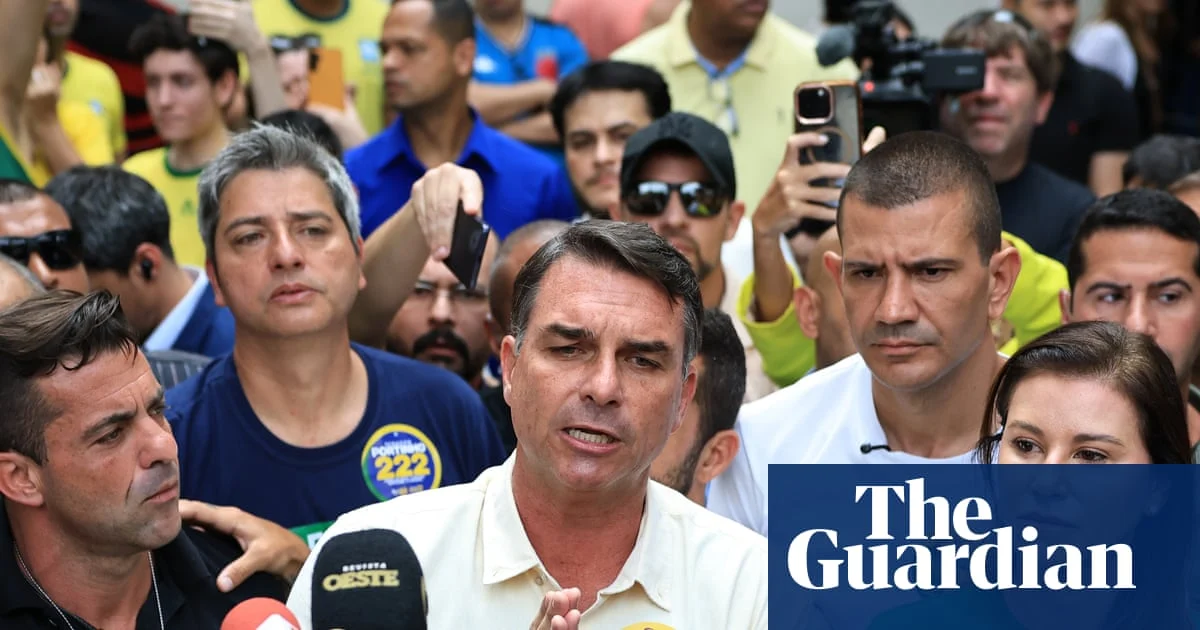
Brazil’s presidential race will proceed to a second-round runoff after far-right candidate Flávio Bolsonaro finished ahead of incumbent leftwing President Luiz Inácio Lula da Silva but fell short of the outright majority needed to avoid a runoff. The result defied expectations, with Lula describing the outcome as unexpected.
With 99.9% of votes counted, Bolsonaro secured 47% of the vote compared to Lula’s 45.1%. Bolsonaro received 56.1 million votes to Lula’s 53.8 million, setting up a 25 October showdown between the two rivals.
Key Facts
- Brazil presidential runoff confirmed after first-round vote fails to produce a majority winner.
- Flávio Bolsonaro led with 47% of the vote, ahead of incumbent Luiz Inácio Lula da Silva at 45.1%.
- 56.1 million votes went to Bolsonaro; 53.8 million went to Lula, per The Guardian.
- Race moves to a second round on 25 October, as no candidate cleared 50%.
- Lula called the result unexpected, according to The Guardian.
What happens next?
The Brazilian electorate now faces a second-round runoff on 25 October between Flávio Bolsonaro and Luiz Inácio Lula da Silva. Runoff elections in Brazil pit the top two candidates against each other when no contender wins an absolute majority in the first round, a system designed to ensure broader consensus for the presidency.
Bolsonaro’s performance exceeded pre-election polling expectations, suggesting strong support among Brazil’s right-wing base following the legacy of his father, former President Jair Bolsonaro, who was impeached and removed from office in disgrace. Lula, an 80-year-old veteran politician returning to the race after previous terms in office, trails narrowly but retains significant backing across parts of the country.
The runoff will determine who governs Latin America’s largest democracy for the next term, with both candidates representing sharply different visions for the nation’s economic and social policies.
Who is affected?
All Brazilian voters are affected by the runoff outcome, but the contest draws particular attention from supporters of both candidates and international observers monitoring the health of Brazil’s democratic institutions. The stakes are high given the polarized nature of the race and the contrasting policy platforms of the two finalists.
Bolsonaro, the son of former President Jair Bolsonaro, represents the far-right continuation of his father’s agenda, which included controversial positions on environmental policy, social issues, and economic reform. His stronger-than-expected showing signals enduring influence from the previous administration despite its turbulent ending.
Lula, a longtime figure in Brazilian politics and former president, brings a leftwing platform focused on poverty reduction, labor rights, and social spending. His campaign has emphasized stability and institutional continuity, appealing to voters concerned about democratic norms and governance.
How did we get here?
Brazilian presidential elections use a two-round system when no candidate wins a majority of votes in the first round. This mechanism has been part of Brazil’s democratic framework since the 1988 constitution, intended to ensure that winners command broad support rather than a mere plurality.
Flávio Bolsonaro’s entry into national politics gained momentum alongside the broader rise of right-wing populism in Brazil, culminating in his father Jair Bolsonaro’s presidency from 2019 until his removal following impeachment proceedings. The elder Bolsonaro’s tenure was marked by polarizing rhetoric, clashes with Congress, and criticism over handling of the Amazon rainforest and public health responses.
Lula’s return to electoral politics reflects the enduring appeal of the left in Brazil, particularly among working-class voters and those disillusioned by inequality and economic instability. His path back to the presidency required overcoming legal and political obstacles, including imprisonment on corruption charges later annulled by Brazil’s Supreme Court.
What We Know — and What We Don’t
Verified by the source:
- A second-round runoff is scheduled for 25 October between Flávio Bolsonaro and Luiz Inácio Lula da Silva.
- Bolsonaro received 47% of the vote with 56.1 million votes cast in his favor.
- Lula received 45.1% of the vote with 53.8 million votes cast in his favor.
- Vote count stood at 99.9% when results were reported.
- Lula described the first-round result as unexpected.
Still unconfirmed:
- No independent verification of the vote totals from other sources.
- Exact voter turnout percentage is not provided.
- Regional breakdowns of voting patterns remain unavailable.
Why it matters
The Brazil presidential runoff carries global significance as Latin America’s largest democracy prepares to choose between two starkly different political directions. International investors, regional allies, and environmental advocates closely watch Brazil’s elections due to the country’s major role in global agriculture, climate policy, and emerging markets. Related coverage in politics and economy-markets provides further context.
What to watch
The final vote count completion and any statements from election officials regarding irregularities or disputes. Campaign developments leading up to the 25 October runoff will shape voter sentiment and clarify policy contrasts. Per The Guardian, runoff day is set for 25 October.