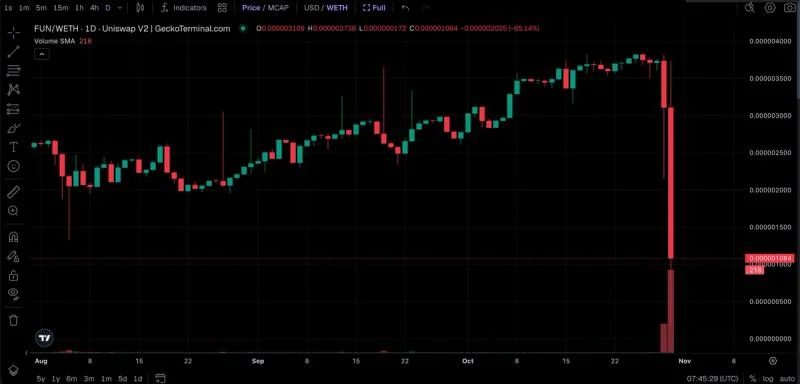
A hacker who infiltrated Binance dumped a little-known 2017 token, causing its price to crash by roughly 90%. The token, FUN, was moved alongside other smaller assets into markets too thin to handle large sell orders, accelerating the collapse. The incident highlights how vulnerable low-liquidity tokens can be when exposed to sudden, massive dumping.
The event underscores the fragility of older or lesser-known cryptocurrencies when faced with concentrated sell pressure. Markets with shallow order books cannot easily absorb large trades without significant price slippage, which the hacker exploited to move assets quickly. The crash wiped out most of the token’s value within a short window.
Key Facts
A hacker exploited Binance to dump the 2017 token FUNThe token crashed roughly 90% after the dumpSmaller markets could not absorb the large sell volumeThe hacker also moved FUN and other small tokens into thin markets
How Did We Get Here? The hacker accessed Binance and executed a series of trades that dumped large quantities of FUN and other minor tokens. These tokens had low trading volumes and sparse liquidity, meaning even modest sell orders can drive prices down sharply. When a single actor introduces a large supply all at once, automated market makers and small exchanges react with steep slippage rather than steady pricing. The result was a 90% collapse in value for FUN, with other small tokens experiencing similar fates as the hacker exited positions across multiple platforms. This kind of event is rare but devastating for holders of illiquid assets.
Who Is Affected? Investors holding FUN and other small tokens suffered immediate losses. The crash erased most of the market value of these assets for anyone holding them at the time. Traders and retail investors who bought into these tokens based on the promise of early adoption were hit hardest. Broader market participants who track such tokens for speculative trades also faced volatility that rippled into adjacent listings. While major cryptocurrencies like Bitcoin and Ethereum were largely unaffected, the incident serves as a reminder that smaller tokens remain highly susceptible to manipulation and abrupt price swings.
What We Know — and What We Don’t
Verified by the source:
- A hacker stole funds from Binance and dumped the 2017 token FUN
- The dump caused the token’s price to crash approximately 90%
- Smaller markets failed to absorb the large sell volume
- Other minor tokens also fell as part of the same move
Still unconfirmed:
- The exact date or time of the hack
- The total value of funds stolen or lost
- Whether Binance has responded or identified the attacker
- The specific exchanges or platforms used for the dumps
- Whether other tokens were permanently delisted or recovered
Why It Matters The incident illustrates how security breaches at major exchanges can have outsized effects on the wider ecosystem, especially for lesser-known tokens. Small-cap cryptocurrencies often lack the liquidity buffers that protect larger assets during sudden shocks. When a malicious actor gains access to user funds and rapidly liquidates obscure tokens, the market reaction can be catastrophic. For everyday investors, this reinforces the risk of holding tokens that trade infrequently or lack deep order books. It also raises ongoing questions about exchange security and how quickly platforms can respond to large unauthorized withdrawals.
What To Watch Market observers are watching whether similar small tokens show signs of distress in the following days. The broader crypto market will likely keep an eye on any official statements from Binance regarding the breach and potential recovery efforts. Continued monitoring of thinly traded assets may help reveal whether this event was isolated or part of a recurring pattern.