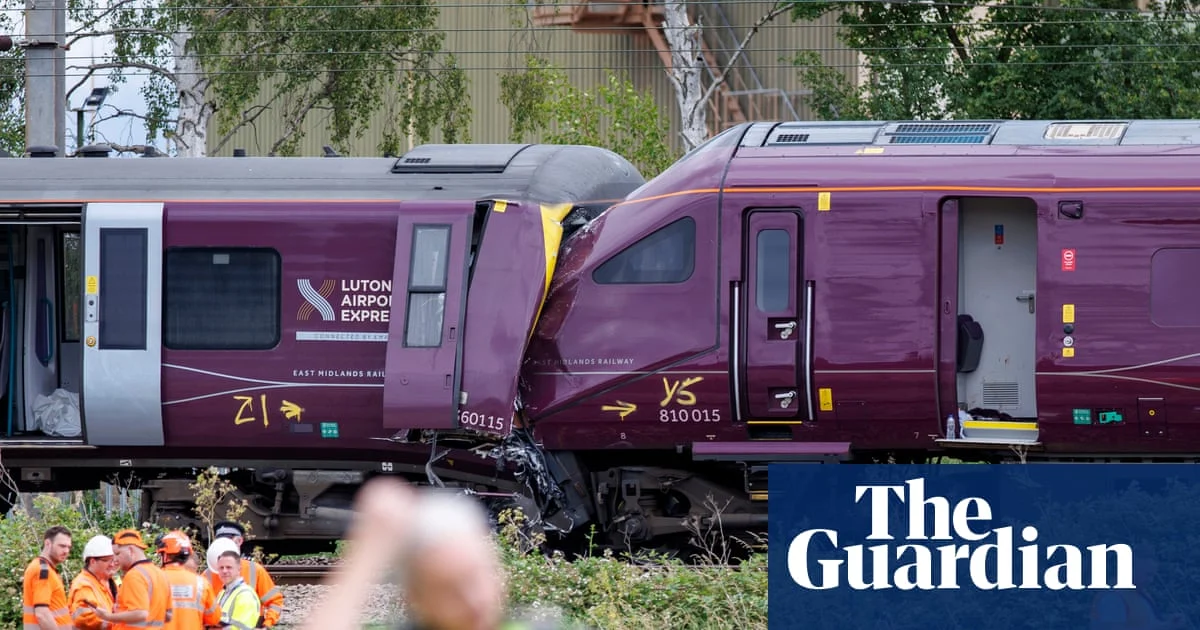
Bedford rail crash: train sped up after red light warning, say investigators
Rail investigators reported that the train involved in the Bedford rail crash earlier this year accelerated after the driver received an automatic warning indicating the train had passed a red light.
The investigation into the June collision, which resulted in the death of the East Midlands train driver, found that the warning was acknowledged but no corrective action followed, and the train continued to gain speed afterward.
Key Facts
- Train sped up after receiving a red light warning, investigators said.
- The driver of an East Midlands train died in the June crash.
- The driver acknowledged the automatic warning but did not appear to act.
- A signal thought to be rarely red was involved at the time of the incident.
- One train ran into the back of another in the Bedford rail crash.
What happened after the red light warning?
According to investigators, the East Midlands train continued to accelerate even after the driver received the automatic warning confirming the train had passed a red light. The signal in question was described as one that was rarely ever red, raising questions about how that approach was interpreted by the operator.
The train then collided with the rear of another train in the Bedford rail crash. Rail authorities have not released additional operational details, but confirmed the sequence of events aligns with the warning being acknowledged yet unaddressed.
The red light warning system is designed to alert drivers immediately when a signal has been passed at danger. Investigators are assessing whether the acknowledgment of the warning without corrective braking contributed to the severity of the collision.
Who is affected by the findings?
The collision in the Bedford rail crash claimed the life of the East Midlands train driver. Investigators noted that the train accelerated after the driver received the red light warning, though no further details about injuries or broader impact have been published.
Rail operators and safety regulators will likely review similar approaches involving rarely-red signals following the release of the preliminary investigation. The report also highlights how automatic warnings, while helpful, depend entirely on driver response to prevent incidents.
Passengers on both trains, families of those involved, and rail commuters may see changes to safety protocols as a direct result. The findings add scrutiny to how signals and automatic warning systems are applied along high-traffic corridors.
What We Know — and What We Don’t
Verified by the source:
- A red light warning was issued and acknowledged by the driver.
- The train accelerated after passing the red light.
- The driver died in the June crash.
- One train struck the back of another.
- The signal involved was rarely ever red.
Still unconfirmed:
- The exact time or location of the red light approach.
- The train operator’s full response procedures that day.
- The number of passengers or injuries involved.
- The official cause or final determination of the investigation.
This follows ongoing coverage of transport and infrastructure issues across economy and markets, including rail safety developments.
Why it matters
Rail safety incidents like the Bedford crash and the subsequent red light warning findings matter because they affect daily commuters, freight schedules, and long-term investment in rail infrastructure — all of which are part of the broader economy and markets discussion.
What to watch
Transport authorities have not commented publicly on next steps, but safety regulators are expected to assess whether changes to the red light warning response protocols will be implemented based on the investigation.