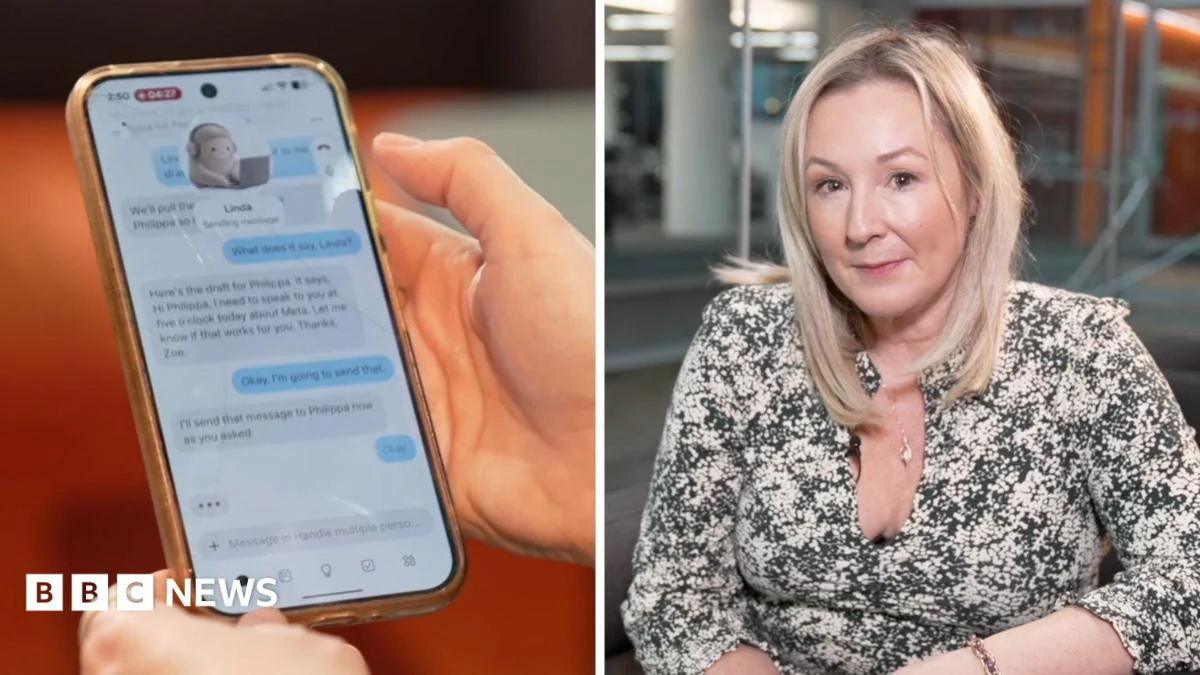
BBC technology and AI editor Zoe Kleinman spent a week living with Meta’s AI agent Muse to discover whether the system can genuinely handle daily tasks. The experiment, documented in a new BBC News video, puts the company’s latest artificial intelligence assistant through practical, real-world use rather than controlled demonstrations.
The test arrives as major technology companies race to move AI agents from chat interfaces into active digital assistants that can book appointments, manage communications, and navigate software on a user’s behalf. Kleinman’s week-long trial offers a rare independent look at how Meta’s entry performs outside the lab.
Key Facts
- BBC technology and AI editor Zoe Kleinman conducted the test
- She spent one week with Meta’s new AI agent
- The agent is named Muse
- The evaluation focuses on practical usefulness in daily life
- The report is published as a BBC News video
How the Test Worked
Kleinman integrated Meta’s AI agent into her routine for seven consecutive days. The approach mirrors how a typical user might adopt such a tool — relying on it for scheduling, information retrieval, message drafting, and other recurring digital chores. Unlike brief demos staged by developers, an extended trial reveals friction points: misunderstood commands, privacy prompts, integration gaps with third-party services, and the cognitive load of supervising an autonomous system.
AI agents differ from standard chatbots by taking action across applications rather than merely generating text. Meta’s Muse aims to operate across the company’s ecosystem and potentially beyond, coordinating calendars, summarizing threads, and executing multi-step workflows. The week-long format lets the editor judge whether the agent reduces effort or simply shifts it from doing tasks to managing the assistant.
What Happens Next for AI Agents?
The industry is moving from conversational AI to agentic AI — systems that pursue goals with limited human oversight. Meta joins Google, Microsoft, OpenAI, and Anthropic in this push. Each company’s strategy reflects its platform strengths: Google leans on Search and Workspace, Microsoft on Office and Azure, Meta on its social graph and messaging scale. Kleinman’s test provides early signal on whether Meta’s social-data advantage translates into a more context-aware assistant.
Regulatory scrutiny is also rising. The EU’s AI Act and emerging U.S. state laws impose transparency and accountability requirements on autonomous systems, especially those processing personal data. Any agent that reads email, accesses calendars, or messages contacts on a user’s behalf triggers compliance obligations that could shape product rollout timelines and feature sets.
What We Know — and What We Don’t
Verified by the source:
- BBC technology and AI editor Zoe Kleinman conducted a week-long test of Meta’s AI agent Muse
- The evaluation was published as a BBC News video
- The central question was the agent’s practical usefulness
Still unconfirmed:
- Specific tasks Muse completed or failed during the week
- Whether the test used a public beta, internal build, or demo environment
- Kleinman’s final verdict on usability, reliability, or privacy
- How Muse compares to rival agents from Google, Microsoft, or OpenAI
- Meta’s planned release timeline or supported platforms
Why It Matters
If Meta’s AI agent works as advertised, millions of users could offload routine digital labor to an automated system that understands their social and professional context. That shift would change how people allocate attention, reshape software design, and raise new questions about data governance. Independent, extended tests like Kleinman’s are essential benchmarks before such systems reach broad deployment.
What to Watch
Meta has not announced a public release date for Muse. Future coverage will clarify whether the week-long test reflects a near-production version or an early research prototype, and how the company addresses the privacy and reliability gaps that typically emerge in real-world agent deployments.