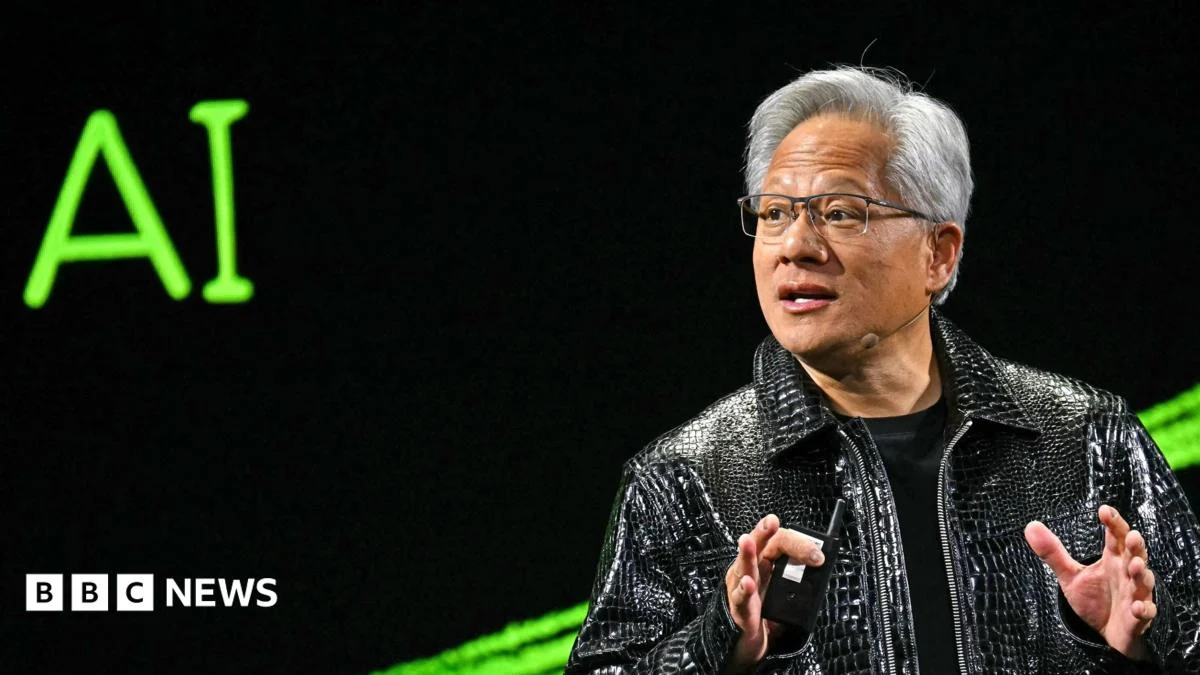
Fears surrounding the AI boom have not dissipated following the brief departure and return of Huang at Nvidia, according to analysis by BBC economics editor Faisal Islam. The concerns predate the leadership disruption and are structural in nature, meaning a change at the top of the chipmaker does not address the underlying issues.
The AI boom has driven extraordinary market valuations and investment flows, but questions about sustainability, profitability, and regulatory exposure have lingered for months. Islam’s assessment suggests the leadership episode at Nvidia — however dramatic — is a symptom rather than a cause of the deeper uncertainty.
Key Facts
- Faisal Islam reports AI boom fears remain unresolved
- Legitimate concerns existed before Huang’s abrupt Nvidia exit
- Huang has since returned to lead Nvidia
- His return will not fix the underlying fears, per the analysis
How Did We Get Here?
The AI boom accelerated rapidly after the public release of large language models in late 2022. Nvidia, as the dominant supplier of graphics processing units (GPUs) essential for training and running AI models, became the primary hardware beneficiary. Its market capitalization surged past $3 trillion at points in 2024, making it one of the world’s most valuable companies.
This concentration of value in a single company — and a single supply chain — created systemic vulnerability. Investors, regulators, and industry observers have questioned whether the pace of AI infrastructure spending is justified by near-term revenue, whether competitive alternatives will erode Nvidia’s moat, and whether geopolitical tensions over chip exports could disrupt the trajectory.
Against this backdrop, any leadership instability at Nvidia attracts outsized attention. The abrupt exit of Huang, even if brief, signaled potential governance or strategic fractures at the epicenter of the AI boom. His return stabilized the immediate narrative but did not alter the fundamental questions.
What Happens Next?
Market participants are now watching several indicators. First, whether major cloud providers and AI labs — Microsoft, Google, Amazon, Meta — maintain or accelerate their capital expenditure guidance for GPU procurement. Second, whether emerging competitors such as AMD, Intel, or custom silicon efforts from the hyperscalers themselves gain meaningful market share. Third, whether regulatory scrutiny on AI model training, copyright, and export controls intensifies in ways that dampen investment appetite.
Nvidia’s next earnings reports and forward guidance will be parsed closely for signs of demand normalization or acceleration. The company’s product roadmap, including the Blackwell architecture rollout, also carries disproportionate weight for the entire AI boom ecosystem. Any execution stumble could reignite the fears Islam highlights.
What We Know — and What We Don’t
Verified by the source:
- Faisal Islam, BBC economics editor, authored analysis on persistent AI boom fears
- Concerns existed prior to Huang’s departure from Nvidia
- Huang has returned to his position at Nvidia
- Islam assesses the return will not resolve the underlying fears
Still unconfirmed:
- The specific nature or duration of Huang’s abrupt exit
- Which specific fears Islam considers “legitimate” versus speculative
- Whether Nvidia’s board or shareholders issued any statement on the episode
- How Nvidia’s major customers reacted to the leadership disruption
- Whether the fears cited are shared by other major financial institutions or regulators
Why It Matters
The AI boom represents the largest technology investment cycle in decades, with implications for equity markets, national competitiveness, labor markets, and energy infrastructure. If the fears Islam describes are warranted, a repricing of AI-related assets could have broad spillover effects. Conversely, if the concerns prove overblown, the episode may be remembered as a momentary wobble in a durable secular trend. Either way, the concentration of so much value and strategic importance in one company makes Nvidia’s stability a matter of systemic interest.
What To Watch
Upcoming earnings from Nvidia and its major customers, along with any regulatory developments on AI governance or chip export controls, will test whether the AI boom fears subside or deepen.