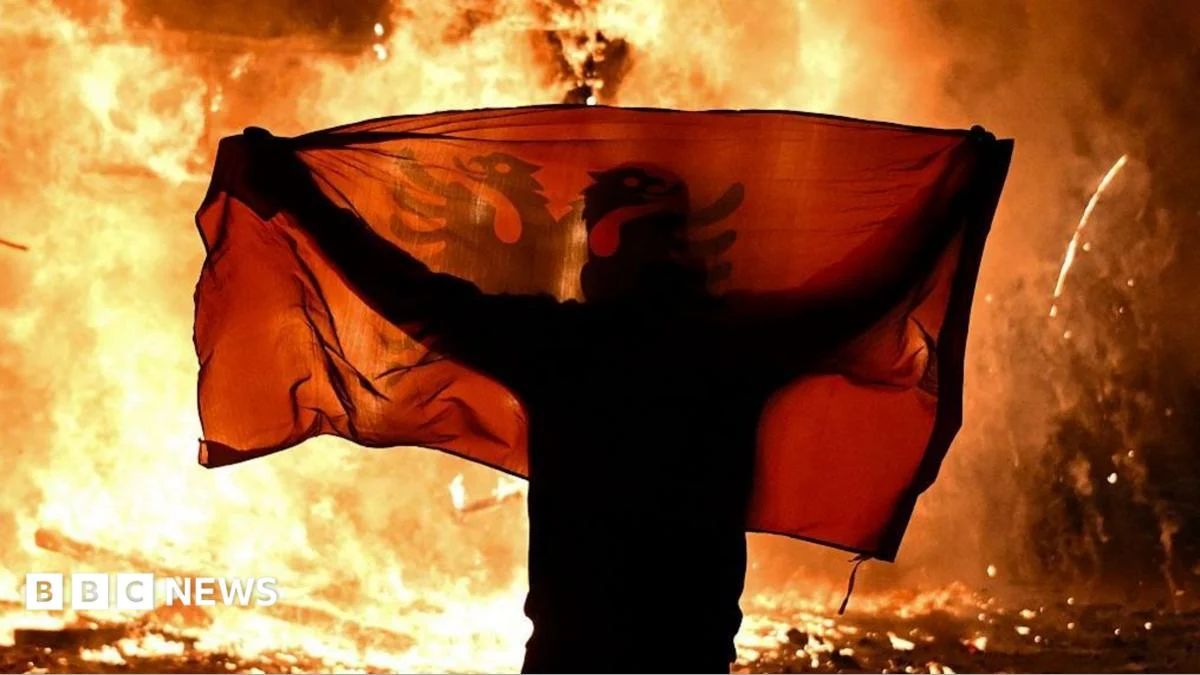
Albanian protests in the capital city of Tirana have turned violent, representing a significant escalation in a movement that had been peaceful until this week. The demonstrations are being led by an anti-government group known as the Flamingo movement, which has organized months of protests prior to the recent outbreak of violence.
While earlier demonstrations remained largely non-violent, the situation changed dramatically this week when clashes erupted between protesters and authorities. The exact triggers and scale of the violence remain unclear, but the shift signals a new and concerning phase in Albania’s ongoing political tensions. Such unrest can have broader implications for governance, public order, and regional stability in the Balkans.
Key Facts
- Albanian protests have turned violent in the capital, Tirana.
- The protests are part of an ongoing anti-government movement called the Flamingo movement.
- The violence marks a new level of confrontation compared to previous demonstrations.
- The protests have been taking place for several months.
- The recent wave of protests began on Tuesday of this week.
The Story
What happens next?
The trajectory of the Albanian protests remains uncertain following the recent escalation in violence. As tensions between demonstrators and law enforcement continue, the potential for further unrest or a de-escalation depends heavily on how both sides respond in the coming days. Government officials have not yet issued detailed statements regarding the causes of the violence or measures being taken to restore order. The international community is likely watching closely, given Albania’s role as a candidate country for European Union membership and its strategic position in the Balkans. Any prolonged instability could complicate diplomatic relations and EU accession talks, adding pressure on domestic leadership to manage the crisis effectively.
Historical precedents in the region suggest that sustained civil unrest often leads to either negotiated political settlements or increased polarization. The Albanian government now faces a delicate balancing act between maintaining public order and addressing the underlying grievances that have fueled months of protest activity. Observers note that the emergence of violence may reshape public perception of the Flamingo movement and influence future participation in demonstrations. Whether this represents a temporary flare-up or the beginning of a more protracted confrontation will largely depend on whether dialogue is initiated between protesters and state institutions.
The role of media coverage and social platforms in shaping narrative framing should not be underestimated. As Albanian protests gain more attention, misinformation or heightened rhetoric could exacerbate divisions within society. International observers and human rights organizations may also step in to monitor developments, especially if reports of injuries or arrests emerge. For now, the immediate priority appears to be preventing further violence while preserving space for legitimate dissent—a challenge that will test Albania’s democratic institutions and rule of law framework.
How did we get here?
The roots of the Albanian protests can be traced back several months, during which the Flamingo movement has organized repeated demonstrations against what it describes as government corruption and mismanagement. These early-stage protests were characterized by mass gatherings and symbolic actions, including the use of flares and banners, without major incidents of violence. However, Tuesday marked a turning point when tensions abruptly spilled into physical confrontations. The sudden shift raises questions about evolving protest strategies, internal dynamics within the movement, and the level of coordination with opposition parties or civic groups. It also underscores how long-running grievances, when left unaddressed through formal channels, can erupt into more disruptive forms of expression.
BBC News, citing local sources, reported that the violence occurred amid heightened emotions among crowds gathered in central Tirana. While specific details such as casualty figures or official responses remain unconfirmed, the incident reflects broader patterns seen in other post-communist European states where economic hardship and weak institutional trust have sparked civic outrage. Analysts suggest that generational divides, youth unemployment, and concerns over judicial independence may be contributing factors behind the sustained wave of discontent fueling Albanian protests. The government’s handling of public service reforms and infrastructure projects has previously drawn criticism from civil society groups, adding momentum to calls for accountability. As the situation develops, all eyes will be on whether authorities opt for punitive measures or pursue inclusive dialogue to defuse mounting societal fractures.
International stakeholders including the European Union and NATO allies have expressed concern over deteriorating conditions in Albania. Their responses could range from quiet diplomacy to formal statements urging restraint from all parties involved. Given that Albania continues pursuing its EU candidacy path, maintaining domestic stability remains crucial both politically and economically. Any prolonged disruption risks deterring foreign investment and delaying necessary reforms aimed at aligning national legislation with European standards. Meanwhile, continued exposure through global news outlets ensures that Albanian protests remain under international scrutiny, potentially influencing future policy decisions made by Tirana regarding transparency and civic engagement mechanisms going forward into next year’s electoral cycle.
What We Know — and What We Don’t
Verified by the source:
- Violence broke out during Albanian protests in Tirana this week.
- The protests are led by an anti-government group referred to as the Flamingo movement.
- These demonstrations have been ongoing for several months.
- The escalation began on Tuesday of this week.
Still unconfirmed:
- The exact number of injuries or arrests resulting from the recent clashes.
- The specific triggers that led to the outbreak of violence.
- Official government statements or responses to the incidents.
- The total number of participants involved in Tuesday’s demonstration.
- Whether the violence was isolated or part of a coordinated effort by protesters.
Why It Matters
Albanian protests turning violent highlight growing domestic frustrations that, if unresolved, could undermine governance and delay critical reforms needed for EU membership. Continued instability threatens not only internal cohesion but also regional security in a strategically important part of Southeast Europe.
What To Watch
Further developments will depend on whether authorities engage in dialogue with the Flamingo movement or resort to stricter enforcement measures.