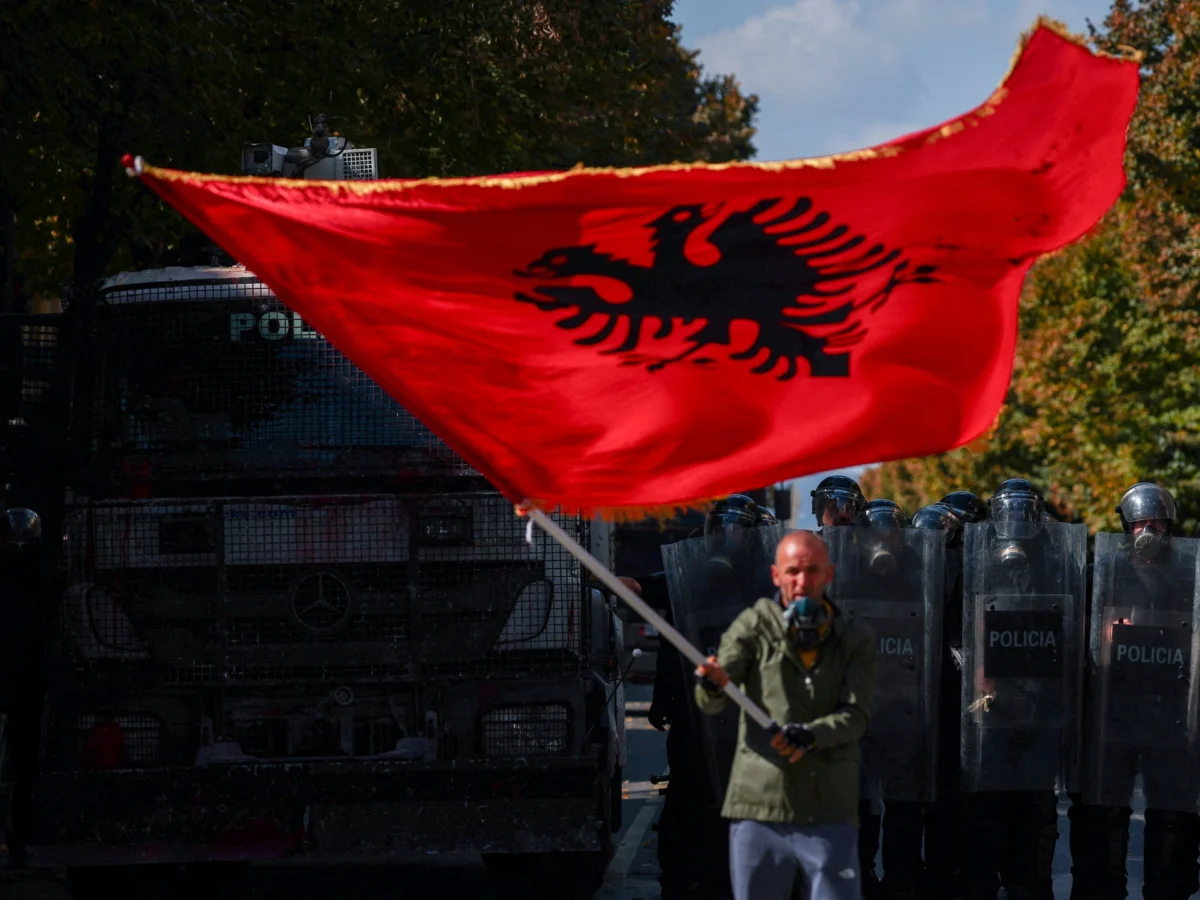
Student-led anti-government protests entered their sixth consecutive day in Albania’s capital, where demonstrators clashed with police in the streets. The protests, which demand the resignation of the prime minister, have intensified in recent days as crowds gather in central areas of the city.
Police responded to the demonstrations—now in their sixth day—with a crackdown, according to reports. The confrontations escalated into physical clashes between officers and protesters, who are pressing for Prime Minister Rama to step down.
Key Facts
- Protesters clashed with police in Albania’s capital during the sixth day of demonstrations.
- The protests are student-led and call for Prime Minister Rama to resign.
- Police cracked down on demonstrators, according to the source.
Protesters Clash With Police
The latest confrontation marks the continuation of a sustained wave of student-led protests that began earlier this month. Demonstrators have gathered in central areas of the capital, chanting slogans and demanding political change. According to the source, police moved to disperse the crowds, leading to direct clashes between officers and protesters. The situation escalated into physical confrontations, with both sides exchanging projectiles and tear gas reportedly deployed by law enforcement.
While the source did not provide specific numbers or exact locations within the capital, it confirmed that the unrest continued into the sixth day, indicating growing momentum behind the demonstrations. The students and their supporters have maintained pressure on the government, viewing the protests as a response to broader grievances about governance and policy direction.
What Drives the Movement
The protests are part of a wider pattern of civil unrest in Albania, where public frustration has mounted over issues including corruption, rule of law concerns, and delays in EU accession talks. Students have been among the most visible voices in recent months, organizing marches and sit-ins that have drawn thousands onto the streets. The demand for Prime Minister Rama’s resignation reflects a deepening crisis of public confidence in the current administration.
Regional observers note that such prolonged demonstrations pose challenges for stability and democratic dialogue. The government has previously labeled some protests as disruptive, while opposition leaders have expressed varying degrees of support for the demonstrators. As the situation develops, attention is focused on whether authorities will pursue further negotiations or escalate enforcement measures.
How Did We Get Here?
The wave of protests follows a broader tradition of civic engagement in Albania, where public demonstrations have historically served as a barometer of political discontent. In the past decade, the country has seen recurring cycles of unrest tied to allegations of corruption and electoral disputes. Student groups have increasingly taken leadership roles in organizing dissent, particularly since 2023.
This latest phase of demonstrations emerged after a wave of campus-related grievances that resonated with wider public concerns. The decision to call for the prime minister’s resignation represents a sharp escalation from earlier reform-focused demands. As both sides brace for continued confrontation, the path forward remains uncertain.
What We Know — and What We Don’t
Verified by the source:
- Anti-government protests entered their sixth day in Albania’s capital.
- Demonstrators are calling for Prime Minister Rama to resign.
- Police used force to crack down on protesters.
- Clashes occurred between police and demonstrators.
Still unconfirmed:
- Total number of participants or arrests made during the clashes.
- Exact locations of the confrontations within the capital.
- Injuries sustained by protesters or law enforcement officers.
- Whether any formal complaints or investigations have been launched.
Why It Matters
Prolonged civil unrest can strain democratic institutions and affect public trust in governance. In Albania, these protests reflect deep-seated concerns about accountability and transparency, issues that resonate across many post-communist societies grappling with EU integration. The outcome may influence future reform efforts and electoral dynamics.
What To Watch
All eyes are on whether the government will engage in dialogue with protest leaders or escalate security measures. The next few days could determine whether the demonstrations continue or begin to lose momentum.
Meta description: Student-led anti-government protests entered their sixth day in Albania’s capital, where demonstrators clashed with police over demands for Prime Minister Rama to resign.