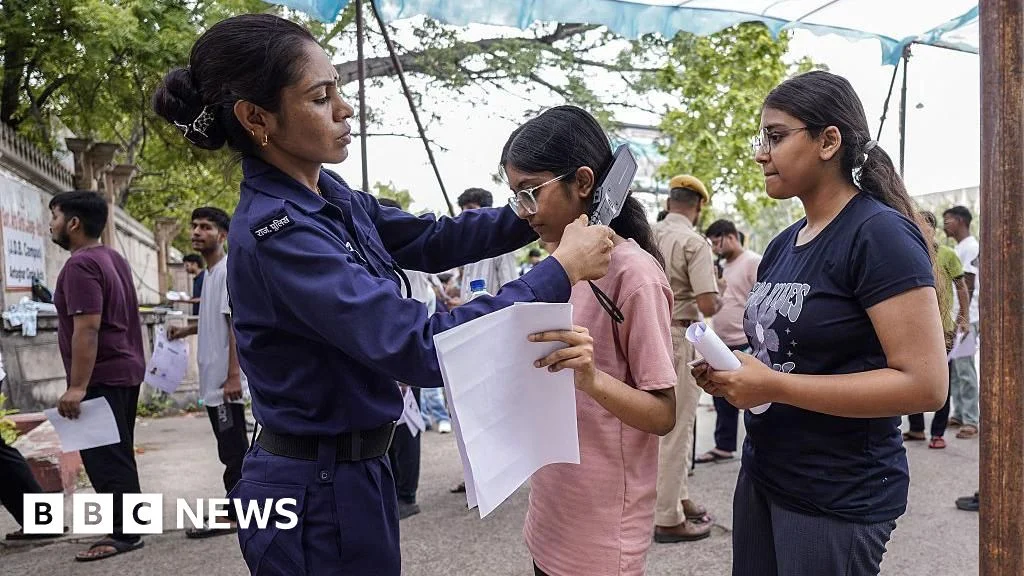
At 7:15 a.m. in Delhi’s sprawling All India Institute of Medical Sciences, a line of terrified students stretched past the gate, each clutching a plastic card that read “biometric verification required”. The air smelled of antiseptic and diesel as a squadron of Indian Air Force personnel in camouflage‑green uniforms fanned out, rifles slung, to guard the doors.
This is the scene for the first “resit” of the National Eligibility cum Entrance Test (NEET) after a suspected paper leak forced the Union Ministry of Health to scrap the original March exam for over 1.2 million candidates.
What triggered the massive security sweep?
On March 2, the Ministry announced that a duplicate set of answer keys had surfaced online, prompting an emergency review. The leak, which officials say may have involved a rogue employee at a testing centre, led to a court‑ordered postponement and a complete overhaul of the exam process.
To restore confidence, the government deployed the Indian Air Force, ordered fingerprint and iris scans for every candidate, and instructed security teams to frisk anyone entering the halls.
Why does this matter?
NEET decides who can study medicine in India, a country that produces roughly 60,000 doctors a year for a population of 1.4 billion. A compromised test could skew the profession’s future, affect rural health staffing and fuel public distrust in a system already strained by pandemic‑era shortages.
For families, the stakes are personal: a single NEET score can determine whether a child from a modest town can afford private coaching, travel to a tier‑1 city, or even pursue a medical career at all.
Numbers, procedures and the human cost
More than 1.2 million aspirants are sitting the resit on April 15 across 200 centres. Each candidate undergoes a three‑step biometric check: thumbprint, facial scan, and a quick retinal scan. Security staff report an average of 30 minutes per student, extending the usual waiting time from two to four hours.
Air Force officials, speaking on condition of anonymity, said the deployment involved 1,500 personnel and 12 transport helicopters to move equipment between remote centres.
Students like 19‑year‑old Priyanka Sharma from Uttar Pradesh described the process as “more stressful than the exam itself”. She added that the extra checks made her feel “seen” but also “exhausted” after a 12‑hour wait.
Critics on social media complained that the heavy‑handed security could trigger panic or discrimination, especially for candidates with medical conditions that make long standing uncomfortable.
What happens next?
The results are slated for release on May 2. The Ministry says it will audit all answer sheets with AI‑driven plagiarism detection to ensure no further tampering.
If the resit proceeds without incident, officials hope to set a precedent for tighter cybersecurity in India’s massive testing ecosystem, which also includes civil services and engineering exams.
For now, the sight of soldiers at a medical entrance exam underscores how a single leak can ripple into a national security‑style response, blurring the line between education and defence.
war and geopolitics intersect with health and science in ways rarely imagined.