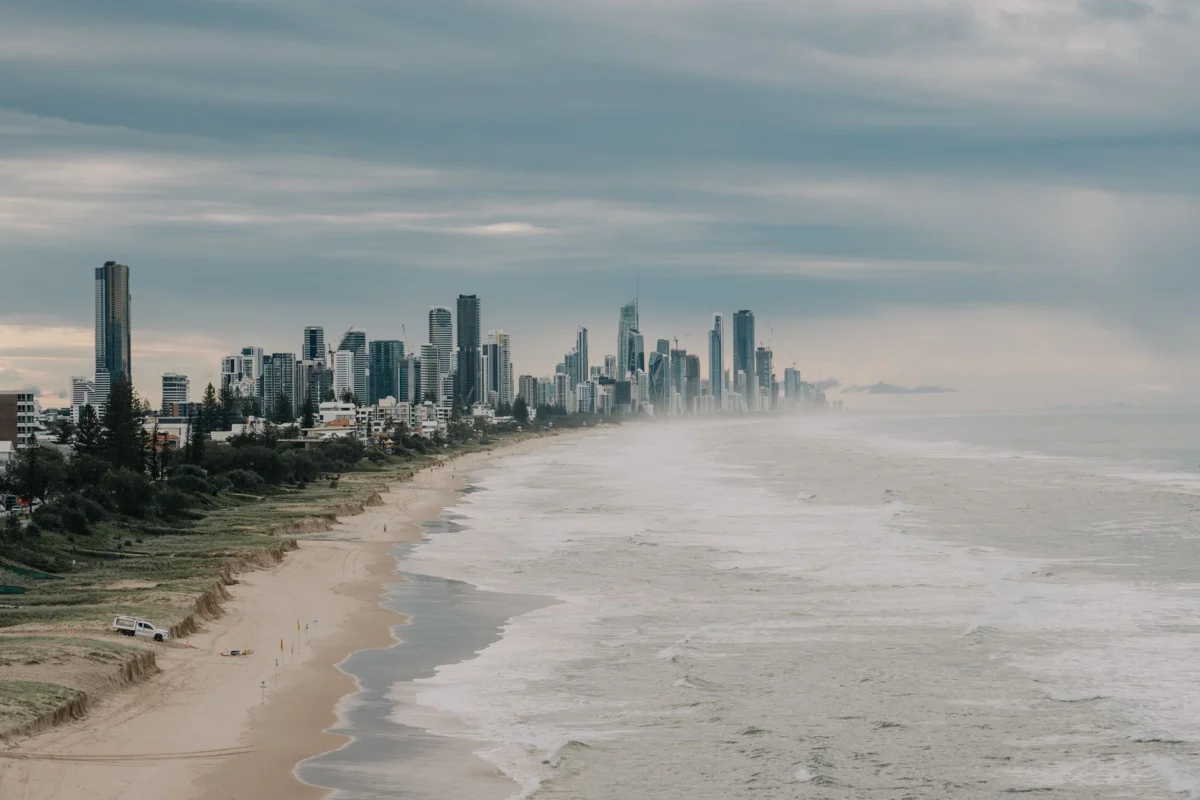
Rising seas are eroding coastlines worldwide, and an experiment rooted at MIT suggests artificial intelligence could help reverse that loss. Researchers combined satellite imagery with AI modeling to regrow a beach in the Maldives, marking one of the first real-world tests of machine learning for beach restoration. More pilot projects are now planned for Boston and Miami.
Coastal communities face accelerating shoreline retreat as sea levels rise and storms intensify. Traditional beach restoration methods—often involving sand pumping and seawall construction—are costly, labor-intensive, and sometimes ecologically disruptive. The new AI-driven approach aims to predict sediment movement and identify optimal conditions for natural accretion, potentially making restoration faster and less intrusive. The Maldives trial offered a first look at whether those predictions translate into measurable results on the ground.
Key Facts
- An experiment at MIT used AI and satellite images to grow a coastline in the Maldives.
- More beach restoration projects are planned for Boston and Miami.
- The research focuses on combating rising seas that threaten global coastlines.
How Did We Get Here?
Scientists have long studied ways to counteract coastal erosion, but conventional techniques often fail to keep pace with accelerating climate impacts. The integration of artificial intelligence into beach restoration represents a shift toward data-driven solutions. By analyzing decades of oceanographic and topographic data, AI models can simulate how waves, currents, and sediment interact over time.
The Maldives, an island nation highly vulnerable to sea-level rise, provided a fitting test site. The archipelago’s low elevation and extensive shoreline make it both a symbol of vulnerability and a laboratory for innovation. Early results suggest the AI-guided method may enhance natural processes rather than relying solely on mechanical intervention.
What Happens Next?
Boston and Miami will host upcoming pilots, offering opportunities to test the technique under different marine and urban conditions. Researchers caution that results from one location cannot be universally applied. Each site presents unique challenges, from tidal patterns to local construction policies.
The success of future installations will likely determine whether AI becomes a standard tool in the beach restoration toolkit. Scientists emphasize the need for long-term monitoring and adaptive strategies, especially as global sea levels continue to climb.
What We Know — and What We Don’t
Verified by the source:
- An MIT-rooted experiment used AI and satellite imagery to regrow a Maldivian coastline.
- Additional projects are slated for Boston and Miami.
- The initiative responds to worldwide beach loss caused by rising seas.
- The exact scale, cost, or timeline of the upcoming Boston and Miami projects.
- Quantitative data on how much coastline was regenerated in the Maldives.
- Whether the AI model has been validated across other geographic or climatic settings.
Still unconfirmed:
Why It Matters
Over 600 million people live within meters of the high-tide line, and many small island and coastal nations face existential threats from sea-level rise. If AI-assisted beach restoration proves scalable and sustainable, it could become a vital adaptation strategy for vulnerable populations and infrastructure worldwide.
What To Watch
The outcomes of the Boston and Miami pilots will indicate whether the AI-driven approach can deliver consistent, replicable results across diverse coastal environments.