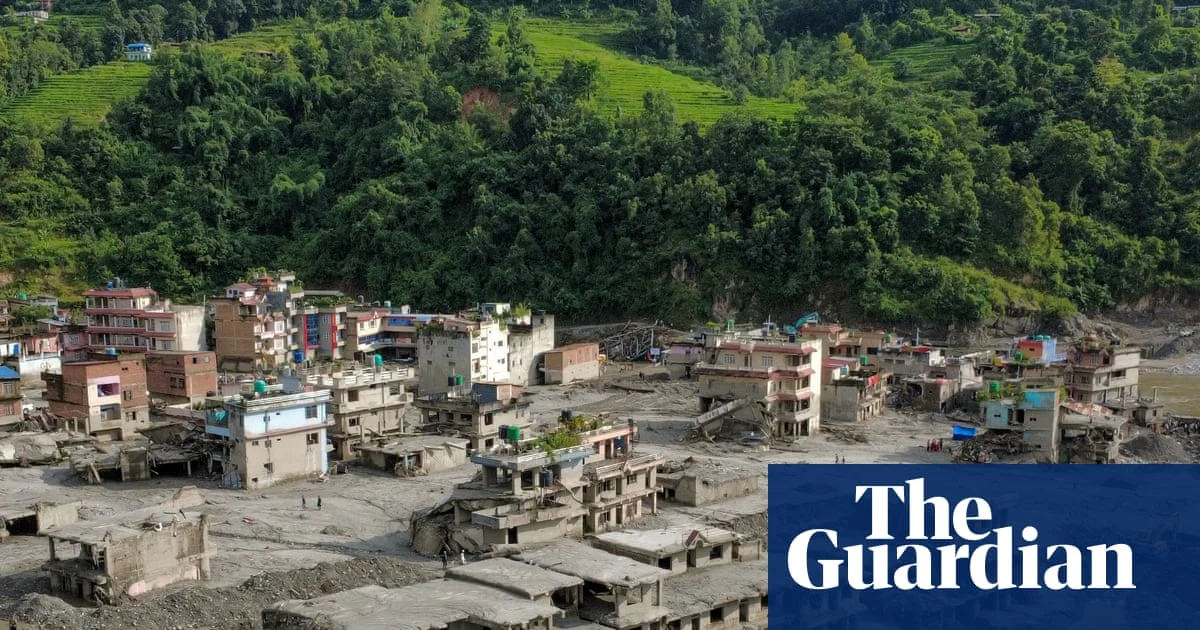
A study by researchers has found that global heating was a likely contributing factor in the catastrophic floods that struck Nepal and Tibet in August, leading to the deaths of more than 1,300 people. The disaster began when a portion of a glacier collapsed, sending a massive amount of snow and ice—estimated at 110 million cubic meters—into the valley below. The resulting flash floods caught local communities off guard, causing widespread destruction and loss of life.
The study highlights unusually warm conditions in the region prior to the glacier’s collapse, suggesting that rising global temperatures destabilized the natural barrier that had long held back the glacial mass. This finding aligns with growing concerns that climate-related events are becoming more frequent and severe, particularly in Himalayan regions where glaciers serve as both water sources and potential hazards for millions of people downstream.
Key Facts
- A study identified global heating as a likely factor in the Nepal-Tibet floods.
- The floods were triggered by the collapse of a glacier covering roughly 200,000 square meters.
- More than 1,300 people lost their lives in the aftermath.
- Researchers noted unusually warm conditions before the glacier’s collapse.
- An estimated 110 million cubic meters of snow and ice were released during the avalanche.
Who Is Affected?
The impact of the Nepal-Tibet floods extended far beyond the immediate moment of the glacier’s collapse. Communities located downstream bore the brunt of the sudden surge of water and debris, with homes, infrastructure, and livelihoods swept away in minutes. These regions are often densely populated, especially in mountainous areas where flat land suitable for settlement is limited. The lack of early warning systems capable of predicting such rapid-onset disasters left residents with little opportunity to evacuate or protect property.
Local governments and aid organizations faced enormous logistical challenges in reaching affected populations. Roads were destroyed, communication networks disrupted, and many villages remained isolated for days after the event. The scale of displacement has raised questions about long-term resettlement plans and the capacity of regional authorities to manage future climate-induced emergencies.
How Did We Get Here?
This is not the first time that glacial lake outburst floods—or similar hydrological disasters—have claimed lives in the Himalayas, but the scale and speed of this particular incident have drawn fresh attention from scientists worldwide. Decades of greenhouse gas emissions have steadily increased average global temperatures, accelerating the melting rate of glaciers across high-altitude regions. While some glaciers retreat gradually, others become unstable under stress, increasing the risk of sudden collapse—an outcome that may grow more common as warming continues.
The researchers behind the latest study emphasized that attributing any single weather or climate-related event directly to global heating requires careful statistical analysis. However, their results contribute to an emerging body of evidence linking rising temperatures to extreme natural disasters in vulnerable parts of South Asia. Their findings underscore the urgency of adapting to current climate impacts while simultaneously reducing emissions at a global level.
What We Know — and What We Don’t
Verified by the source:
- The floods killed more than 1,300 people.
- Global heating was identified as a destabilizing factor in the glacier’s collapse.
- Unusually warm conditions occurred before the glacier collapsed.
- The avalanche released approximately 110 million cubic meters of material.
Still unconfirmed:
- The exact identity of the glacier involved.
- The precise date of the collapse beyond August.
- Detailed estimates of economic damage.
- Whether early warnings were issued or ignored.
- Names or titles of officials involved in response efforts.
Why It Matters
These Nepal-Tibet floods represent a broader trend: climate change is intensifying hazards in areas already prone to geographic instability. For billions living near melting glaciers, understanding how warming affects natural barriers isn’t academic—it’s existential. As international donors and policymakers meet to discuss climate resilience funding, incidents like these highlight the need for urgent adaptation measures alongside emission cuts. Preparing communities for flash floods, improving forecasting tools, and investing in sustainable infrastructure will determine whether future tragedies unfold without warning.
What To Watch
Further assessments of the disaster zone and additional peer-reviewed studies analyzing the role of climate variability are expected in coming months. Officials have not yet commented publicly on proposed preventive strategies, and it remains unclear if new early alert systems will be deployed ahead of next monsoon season. Meanwhile, global climate negotiations continue, though concrete policy changes addressing glacial risks have yet to materialize.