Lede
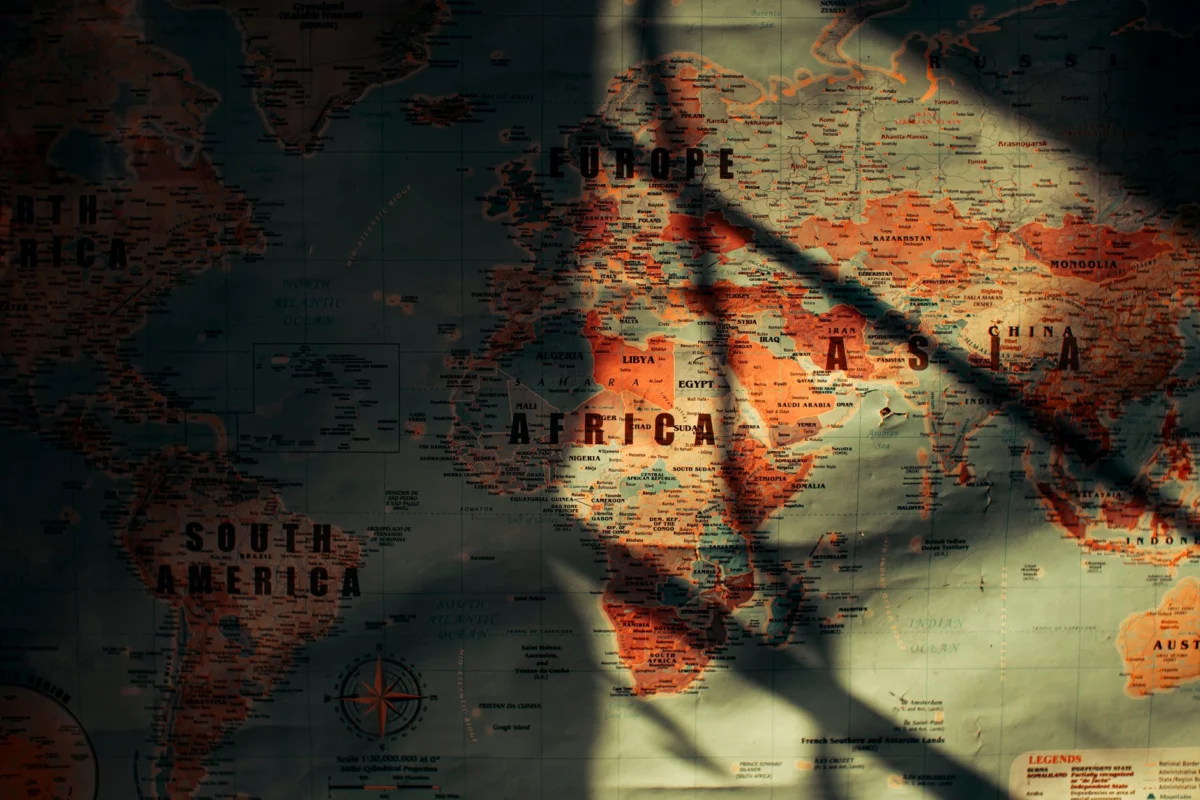
The Africa map redrawn signals deepening instability, as the continent appears more spectral and its people increasingly vulnerable than in prior years.
Recent discussions suggest renewed interest in reshaping national boundaries, though concrete details remain limited. Analysts describe the current moment as unusually fragile for a region long navigating post-colonial identity and external influence.
Key Facts
- The Africa map redrawn has sparked renewed debate.
- The continent is described as appearing more spectral than in recent memory.
- African populations are portrayed as more vulnerable than they have been in years.
Why Now?
Shifts in global power dynamics, resource competition, and internal governance challenges have contributed to the perception that the Africa map redrawn may reflect more than cartographic adjustment. Political scientists note that border reconfiguration discussions often coincide with periods of weakened state authority or external intervention.
Observers caution that redrawing the Africa map redrawn without broad consensus risks destabilizing regions already facing economic and security pressures. Historical precedents show that arbitrary boundary changes can exacerbate ethnic tensions or territorial disputes.
Who Is Affected?
Communities across the continent are described as more vulnerable, suggesting that any changes tied to the Africa map redrawn could disproportionately impact populations lacking strong institutional protections. Marginalized groups may face heightened uncertainty if borders shift without inclusive dialogue.
Economists warn that altered boundaries could disrupt trade networks and cross-border kinship ties that many Africans rely on daily. The vulnerability highlighted in reports aligns with existing concerns over climate stress, migration, and uneven development.
What We Know — and What We Don’t
Verified by the source:
- The Africa map redrawn is currently a topic of discussion.
- The continent is characterized as more spectral than before.
- People in Africa are described as more vulnerable than in previous years.
Still unconfirmed:
- No specific actors or organizations driving the redrawing effort are named.
- No timeline or formal proposals for border changes are provided.
- No verification from independent sources or official records is included.
Why It Matters
Perceptions of instability and vulnerability shape international investment, diplomatic engagement, and humanitarian response. When the Africa map redrawn becomes a serious policy consideration, global stakeholders must weigh historical context against present-day risks to ensure any changes promote, rather than undermine, regional stability.
What To Watch
Stakeholders should monitor whether formal proposals emerge from multilateral bodies or individual nations. Further reporting or official statements would help clarify whether the Africa map redrawn remains rhetorical or signals concrete policy moves.