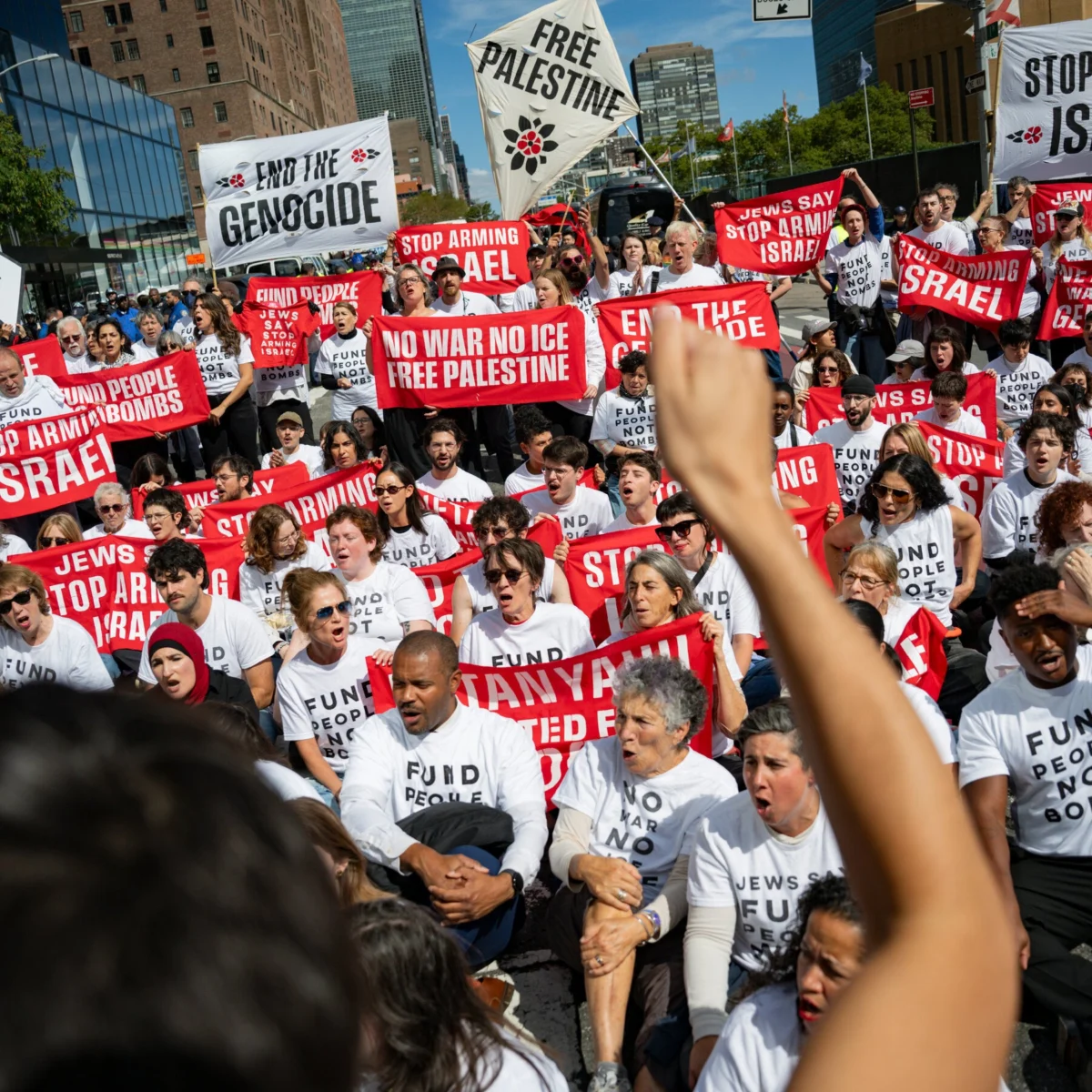
Nearly 100 people were arrested during protests in Midtown Manhattan as Israeli Prime Minister Benjamin Netanyahu addressed the United Nations General Assembly. Demonstrators gathered in large numbers to voice opposition to the prime minister’s policies amid ongoing international tensions over Gaza.
The arrests occurred near the UN headquarters, where security measures were heightened for the high-profile diplomatic event. Protesters carried signs and chanted slogans criticizing Israel’s military actions and calling for a ceasefire. Police moved in to disperse the crowd, leading to multiple detentments as tensions escalated between demonstrators and law enforcement.
KEY FACTS
- Approximately 100 people were arrested during the demonstration.
- Large groups gathered in Midtown Manhattan to protest.
- The protests took place while Israeli Prime Minister Netanyahu spoke at the UN General Assembly.
- Demonstrators voiced opposition to the prime minister’s policies, particularly regarding Gaza.
- Arrests followed police intervention to manage the crowd near UN headquarters.
The Story
What triggered the disruption?
The protest erupted as part of a wave of demonstrations targeting world leaders attending the annual UN General Assembly meetings. Activists and civic groups have increasingly used these gatherings to spotlight global conflicts, especially those involving Middle Eastern politics. This particular show of dissent coincided with Netanyahu’s scheduled address to the assembly, drawing both local and international attention.
Midtown Manhattan was temporarily disrupted as thousands of protesters filled the streets around the UN complex. Emergency personnel and NYPD officers were deployed to maintain order and ensure the safety of delegates and pedestrians. Video clips circulated online showing confrontations between riot police and masked activists, though no official injuries were confirmed at this time.
The arrested individuals included a mix of students, human rights advocates, and members of grassroots organizations. Charges ranged from disorderly conduct to unlawful assembly, according to initial reports. Authorities said the detainments were necessary due to escalating chaos along 42nd Street and Second Avenue.
Who is affected?
The incident impacted ordinary commuters, tourists, and security personnel stationed in the vicinity. Several subway lines were briefly suspended, and nearby businesses reported temporary closures. For many observers, the protest underscored the volatile intersection of diplomacy and civil resistance on the global stage.
Supporters of the demonstrators argue that peaceful assembly remains essential for democratic discourse. Critics, however, warn that disruptive tactics may overshadow legitimate grievances. Meanwhile, diplomatic observers question whether such public outbursts influence policy decisions behind closed doors.
The broader community continues debating how societies should balance freedom of expression with public safety. As more details emerge, experts suggest that future summits could see stricter protocols governing large-scale demonstrations outside official venues.
What We Know — and What We Don’t
Verified by the source:
- Approximately 100 arrests were made during the Netanyahu protest.
- Protests occurred in Midtown Manhattan during Netanyahu’s UN speech.
- Demonstrators opposed policies linked to Gaza.
- Police intervened to manage the crowd near UN headquarters.
Still unconfirmed:
- Specific reasons given for each individual arrest.
- Exact number of injuries, if any, among protesters or police.
- Identity or affiliation of those leading the demonstration.
- Precise timeline of events leading up to the arrests.
- Whether formal charges will be filed against all detainees.
Meta description: Around 100 people were arrested during protests in Midtown Manhattan while Israeli PM Netanyahu addressed the UN General Assembly.
Why It Matters
The clash reflects growing domestic and international unease surrounding foreign policy decisions tied to armed conflict zones like Gaza. Public dissent plays a vital role in holding governments accountable, yet navigating security concerns can strain civic freedoms. These tensions often mirror wider debates within democracies about how best to respond to war and humanitarian crises abroad.
What To Watch
Legal proceedings involving those arrested may unfold over the coming weeks, potentially shedding light on judicial responses to politically charged protests. Additional demonstrations are anticipated as other world leaders prepare to speak at the General Assembly session.