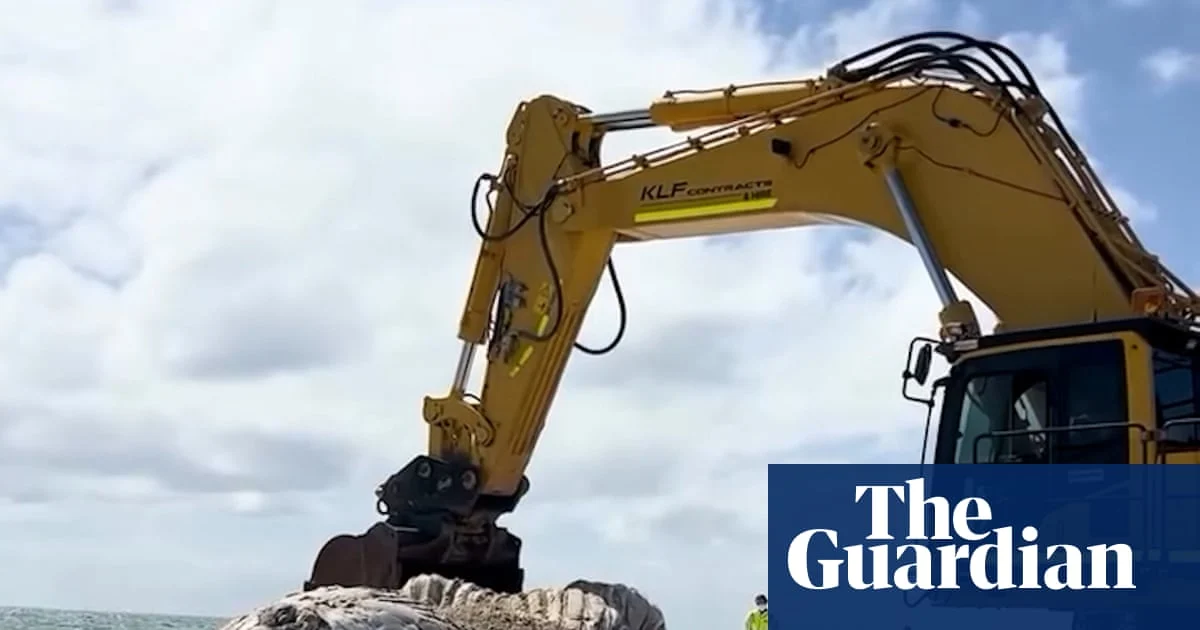
A 31-tonne whale carcass is being removed from Perth’s City Beach after washing up early Monday, drawing large great white sharks to the area. Contractors worked Wednesday to prepare the carcass for transport using earthmovers, tarpaulins and ropes, with plans to move it to a landfill site for burial.
The public has been asked to stay clear of the beach during the delicate removal operation. Authorities confirmed that some of the great white sharks drawn to the carcass measured up to six metres in length, prompting safety warnings along the shoreline. The whale, measuring approximately 13 metres, attracted significant public attention, with some visitors taking photos and others expressing concern over the strong odour emitted by the decaying animal.
KEY FACTS
- A 13-metre whale carcass washed up at Perth’s City Beach early Monday.
- The whale weighed an estimated 31 tonnes.
- Huge great white sharks, some up to six metres, approached the shoreline.
- Contractors used earthmovers, tarpaulins and ropes to prepare removal.
- The carcass is scheduled for transport to a landfill site for burial.
What happens next?
Following preparation by contractors, the whale carcass will be transported to a landfill site for burial. Earthmovers, tarpaulins and ropes were used to stabilise and cover the massive 31-tonne carcass ahead of its removal. Authorities have warned the public to avoid the beach during the operation.
How did we get here?
Early Monday, a 13-metre whale washed ashore at Perth’s City Beach, quickly becoming a focal point for both wildlife and public curiosity. The decaying carcass attracted several large great white sharks, some reaching lengths of up to six metres, prompting safety concerns for swimmers and surfers nearby. As news spread, crowds gathered to view the scene and some even took selfies, while others were deterred by the strong stench emanating from the animal.
In response, contractors began a large-scale operation to remove the whale. Using heavy machinery including earthmovers, along with tarpaulins and ropes, crews worked to secure the carcass ahead of its transport. Local authorities urged residents to steer clear of the beach during the removal process, emphasising the risks posed by the presence of the sharks.
Who is affected?
The presence of the whale carcass and visiting great white sharks has disrupted normal activities at City Beach, a popular recreational area for residents and tourists alike. Officials have advised against entering the water, impacting surfers, swimmers and beachgoers during the removal period.
Psychological and sensory discomfort has also been reported, with many visitors describing an overwhelming stench from the decomposing animal. While some members of the public sought to document the event through photos and videos, others chose to avoid the area entirely due to health and safety concerns.
What We Know — and What We Don’t
Verified by the source:
- The whale washed up at Perth’s City Beach early Monday.
- The whale measured 13 metres and weighed approximately 31 tonnes.
- Sharks, including great whites up to six metres, were sighted near the shoreline.
- Contractors used earthmovers, tarpaulins and ropes to prepare the carcass.
- The public was advised to stay away from the beach during removal.
Still unconfirmed:
- The exact species of the whale.
- The cause of the whale’s death.
- The specific landfill site where the carcass will be buried.
- Whether the sharks posed any threat to swimmers.
- The total duration of the removal operation.
Why it matters
This incident underscores the complex relationship between marine wildlife and urban coastlines. Events such as this can attract predators like great white sharks close to shore, highlighting the need for coordinated responses when large marine animals wash ashore. It also serves as a reminder of nature’s unpredictable presence in everyday environments.
What to watch
Authorities have yet to announce the final timeline for the carcass removal, though contractors indicated the landfill transport could occur soon. Updates will depend on weather conditions, shark activity and logistical readiness.
For the latest developments, readers can follow coverage in the climate-environment section.