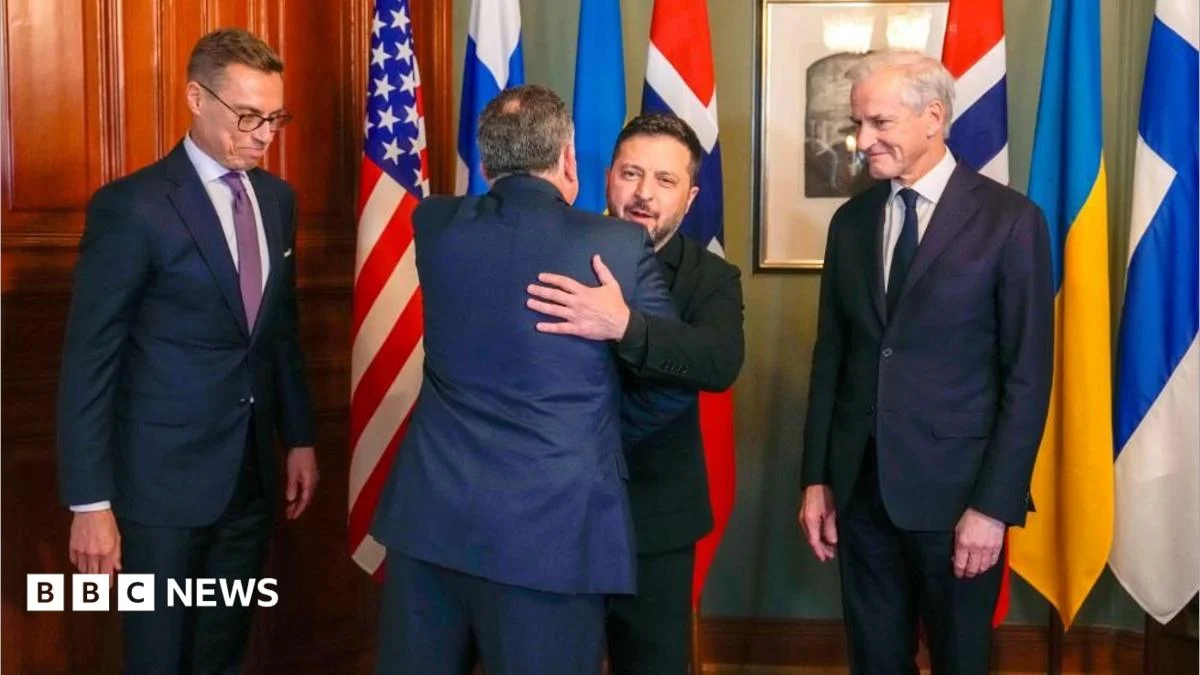
Oslo talks between Ukrainian President Volodymyr Zelensky and senior US envoys resumed as US Secretary of State Marco Rubio pushed back on accusations that Washington was withholding intelligence essential to Ukraine’s defense efforts.
The discussions, held in Norway’s capital, focused on ongoing coordination over military and intelligence support. Rubio’s denial came amid mounting questions about the flow of sensitive information between the United States and Ukraine, a key partner in the ongoing war-geopolitics landscape. Both sides emphasized the importance of continued collaboration, though concerns over transparency and timely intelligence sharing continue to simmer.
Key Facts
- Oslo talks are underway between Zelensky and US envoys.
- Secretary of State Rubio denied that the US is withholding intelligence from Ukraine.
- The accusations centered on potential delays in critical intelligence sharing.
- The meeting took place in Oslo, Norway.
The Story
What happens next?
The Oslo talks represent a pivotal moment in US-Ukraine coordination, particularly as calls grow louder for greater clarity on intelligence sharing protocols. These discussions come at a sensitive time, with frontline operations heavily reliant on real-time data and strategic assessments provided by international allies.
Rubio’s rejection of the withholding accusations suggests a deliberate effort to maintain trust and operational continuity. However, the lack of specific details in public statements leaves room for interpretation. For now, both parties are signaling commitment to joint objectives, even as underlying tensions persist around accountability and communication channels.
Who is affected? The outcome of these Oslo talks carries weight beyond diplomatic circles. Ukrainian forces depend on consistent intelligence flows for tactical planning, while domestic audiences in both nations watch closely for signs of strain or solidarity. Delays or breakdowns in coordination could embolden adversaries and complicate broader regional stability efforts.
Background and context Historically, intelligence cooperation between the US and Ukraine has evolved significantly since 2022. Past disclosures have outlined structured frameworks for transferring actionable insights, often through secure liaison mechanisms. While recent claims suggest friction, no official documentation confirms systematic delays—highlighting the importance of distinguishing between allegation and verified fact.
What We Know — and What We Don’t
Verified by the source:
- US and Ukrainian officials met in Oslo.
- Marco Rubio serves as the current US Secretary of State.
- He publicly denied withholding intelligence from Ukraine.
Still unconfirmed:
- No specific evidence detailing scope or duration of alleged intelligence gaps.
- No named individuals or departments cited in connection with accusations.
- Exact topics or outcomes of the Oslo talks remain unspecified.
Why It Matters The ongoing Oslo talks underscore the delicate balance between alliance loyalty and logistical realism. As warfare increasingly relies on speed and precision, any gap—or perception of one—in intelligence sharing can reshape battlefield dynamics and morale on both sides.
What To Watch Future developments may include formal statements from either government or independent audits addressing the allegations. Updates from the war-geopolitics sphere will likely follow closely, especially if new claims emerge or diplomatic breakthroughs are announced. For continuous coverage, readers can refer to our war-geopolitics archive or economy-markets section for related economic impacts.