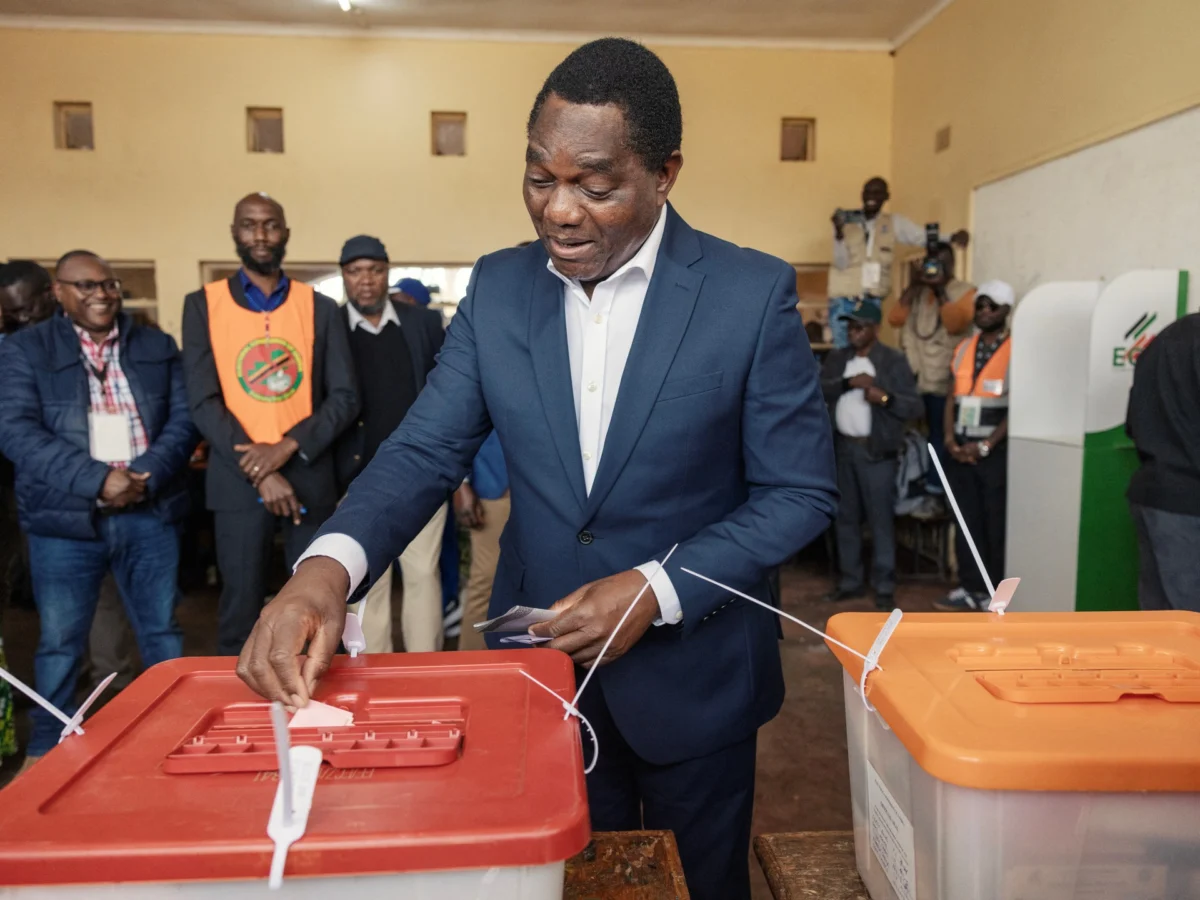
Zambian President Hakainde Hichilema has won a second term in office, according to official results. The incumbent secured approximately 60% of the vote, while his main challenger received 38%.
The victory solidifies Hichilema’s position as Zambia’s leader following his first term, which began in 2021. The election outcome reflects continued support for his administration’s policies among Zambian voters.
KEY FACTS
- Official results show President Hichilema received about 60% of votes
- His main challenger secured approximately 38% of votes
- This marks Hichilema’s second presidential term
What does this mean for Zambia?
The decisive victory suggests stability in Zambia’s political landscape following the election. Hichilema’s United Party for National Development (UPND) now has a renewed mandate to implement its agenda.
Zambia, Africa’s second-largest copper producer, faces economic challenges including debt restructuring negotiations. The election result may provide continuity in these critical discussions with international creditors.
How did we get here?
Hichilema first came to power in 2021 after defeating then-president Edgar Lungu. His initial election marked Zambia’s third peaceful transfer of power since 1991.
The recent election follows Zambia’s constitutional term limits, which allow presidents to serve a maximum of two five-year terms. The process appears to have maintained the country’s record of democratic transitions.
WHAT WE KNOW — AND WHAT WE DON’T
Verified by the source:
- Hichilema has won a second term as Zambia’s president
- The official vote count shows approximately 60% for Hichilema versus 38% for his main opponent
Still unconfirmed:
- The exact voter turnout percentage
- Specific policy priorities for Hichilema’s second term
- Reactions from opposition parties
WHY IT MATTERS
Zambia’s election outcome has implications for regional stability in southern Africa and the country’s ongoing economic recovery efforts. As a significant copper producer, Zambia’s political continuity affects global commodity markets and international investment flows.
WHAT TO WATCH
Attention now turns to Hichilema’s second-term cabinet appointments and policy direction. The administration will need to address Zambia’s economic challenges while maintaining political stability.