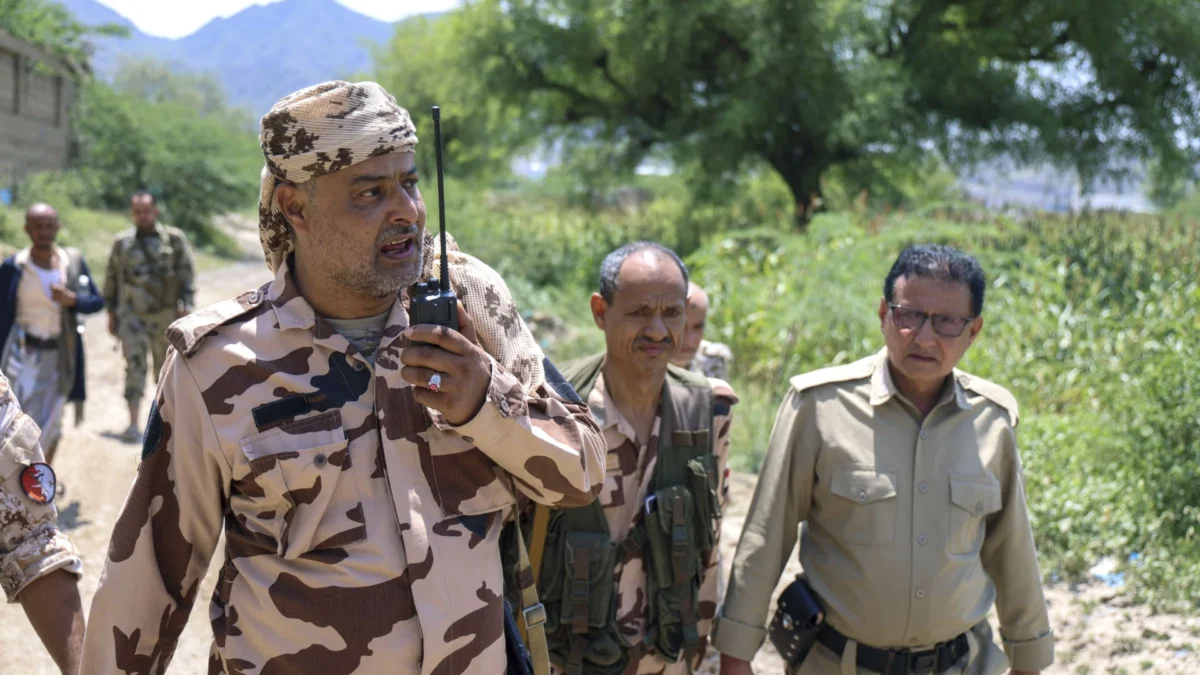
Yemen’s government announced the launch of a major military offensive aimed at recapturing all territory currently held by Iran-backed Houthi forces.
The campaign represents the government’s most ambitious attempt to regain control of areas dominated by the Houthis, who have held significant portions of the country including the capital Sanaa for years. According to reporting from US Top News and Analysis, the offensive was formally declared by Yemeni government officials as part of a broader strategy to retake the country.
Key Facts
- Yemen’s government launched a major military campaign against Iran-backed Houthis.
- The offensive targets all areas currently controlled by the Houthi movement.
- No specific timeline or battle locations were disclosed in official statements.
- The campaign marks a notable escalation in the protracted Yemen conflict.
The Story
What happens next?
The Yemen offensive signals renewed attempts by the internationally recognized government to regain territorial control. However, without detailed operational plans or troop movements disclosed, the actual scope and feasibility of retaking all Houthi-held areas remain unclear.
Military analysts note that previous offensives have struggled due to logistical challenges, factional infighting, and limited international support. The lack of specific timing or locations in this announcement suggests either early planning stages or deliberate ambiguity to avoid alerting enemy positions.
This development comes amid broader regional tensions involving Iran and its allies, whose support for the Houthis has drawn condemnation from several Western nations. The conflict has already resulted in one of the world’s worst humanitarian crises, with millions displaced and facing severe food insecurity.
Who is affected?
Civilians living in Houthi-controlled zones face heightened risk during renewed combat operations. Displaced populations may experience further instability as fighting resumes across previously contested regions.
Economically, increased violence threatens critical infrastructure such as ports and roads used for aid delivery. This could worsen shortages of essential supplies including fuel, medicine, and clean water in an area where over two-thirds of the population requires humanitarian assistance.
Internationally, regional powers including Saudi Arabia and the United Arab Emirates may adjust their involvement depending on how much ground the Yemen offensive manages to reclaim. Their responses will likely shape both short-term battlefield dynamics and long-term diplomatic negotiations aimed at ending the war.
What We Know — and What We Don’t
Verified by the source:
- A major military campaign was launched by Yemen’s government.
- Targets include all areas controlled by Iran-backed Houthis.
- Motivation includes reclaiming national territory from insurgents.
Still unconfirmed:
- Exact start date and operational boundaries of the offensive.
- Current strength or deployment levels of participating forces.
- Extent of foreign military backing or logistical coordination involved.
Why It Matters
The renewed Yemen offensive underscores the persistence of instability in a region vital to global energy markets and security. Any shift toward full government control would reshape power balances but might also prolong suffering unless accompanied by credible peace efforts. For now, civilians bear the brunt of repeated cycles of warfare despite scarce resources available for reconstruction or relief.
What To Watch
Observers should monitor whether the offensive gains traction on the ground, particularly around key urban centers. Statements from international actors like the United Nations or regional governments may signal shifts in diplomatic engagement tied to this escalation.