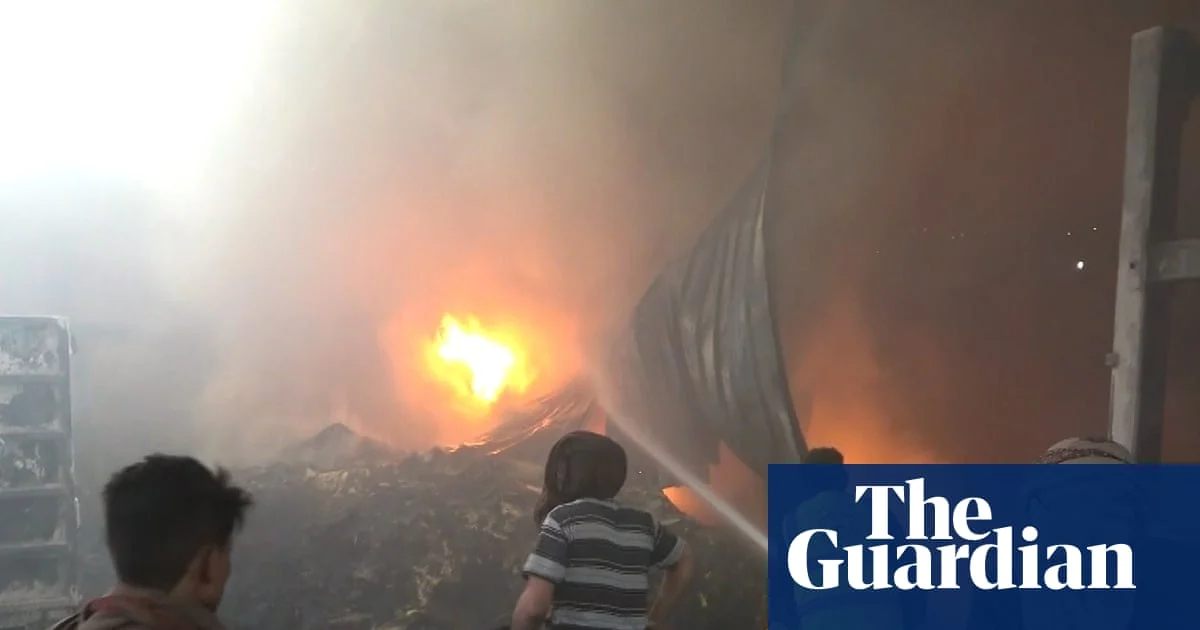
Yemen’s Saudi-backed government announced Sunday the start of a military operation to recapture all Houthi-held territory, escalating hostilities in a conflict already devastating the country.
The declaration by Rashad al-Alimi, head of Yemen’s presidential council, came as the Houthis reportedly made fresh gains, including cutting a vital supply route to the besieged city of Taiz and surrounding a government-held city.
KEY FACTS
- Saudi-backed government launched military operations to retake Houthi-held territory.
- Announcement made by Rashad al-Alimi, head of Yemen’s presidential council.
- Houthis reportedly cut a vital supply route to Taiz.
- Houthis reportedly encircled a government-held city.
- Operation aims to extend state authority across entire national territory.
The Announcement
The government’s offensive marks a significant escalation in Yemen’s ongoing civil war, which has drawn in regional powers and left millions in need of humanitarian aid. Al-Alimi stated that the goal is not only to retake territory but also to restore state institutions across all areas currently controlled by the Houthis.
By framing the operation as a national effort to reassert state authority, the government is signaling intent beyond battlefield gains. This aligns with longstanding international calls for a unified Yemeni state under an inclusive government, though previous attempts have failed to produce lasting stability.
What Happens Next?
Military developments on the ground remain fluid. The Houthis’ reported advances near Taiz suggest they are not yielding strategic initiative, despite being the targets of a new government push. Taiz, one of Yemen’s largest cities, has been under partial siege for years, and any further deterioration in access to supplies could worsen humanitarian conditions.
Historically, offensives announced by Yemen’s government have struggled due to limited troop capabilities and reliance on coalition air support. Whether this campaign will differ depends on logistics, coordination with Saudi-led coalition forces, and the Houthis’ ability to hold or retake positions.
How Did We Get Here?
Yemen has been locked in civil war since late 2014, when Houthi forces advanced on the capital, Sanaa, and pushed the internationally recognized government into exile.
Over time, the conflict has drawn in a Saudi-led military coalition supporting the government, while the Houthis receive backing from Iran. Multiple ceasefires and peace deals have failed to hold. The current escalation follows a pattern of renewed violence coinciding with stalled negotiations and shifting alliances both within Yemen and among foreign supporters.
WHAT WE KNOW — AND WHAT WE DON’T
Verified by the source:
- The Saudi-backed government announced military operations to retake all Houthi-held territory.
- Rashad al-Alimi, head of the presidential council, made the announcement.
- Houthis reportedly cut a supply route to Taiz.
- Houthis reportedly encircled a government-held city.
Still unconfirmed:
- Exact timing and scope of ongoing military engagements.
- Identity and casualty levels in affected areas.
- Details of international or coalition involvement in the new offensive.
- Specific strategic objectives beyond general recapture of territory.
WHY IT MATTERS
The renewed offensive underscores the fragility of peace efforts in Yemen, where years of conflict have produced one of the world’s worst humanitarian crises and ongoing instability across the region.
WHAT TO WATCH
Future developments in Taiz and surrounding areas could indicate whether the government’s new push gains traction or mirrors past failed campaigns. Observers will also be watching for responses from regional backers and international mediators.