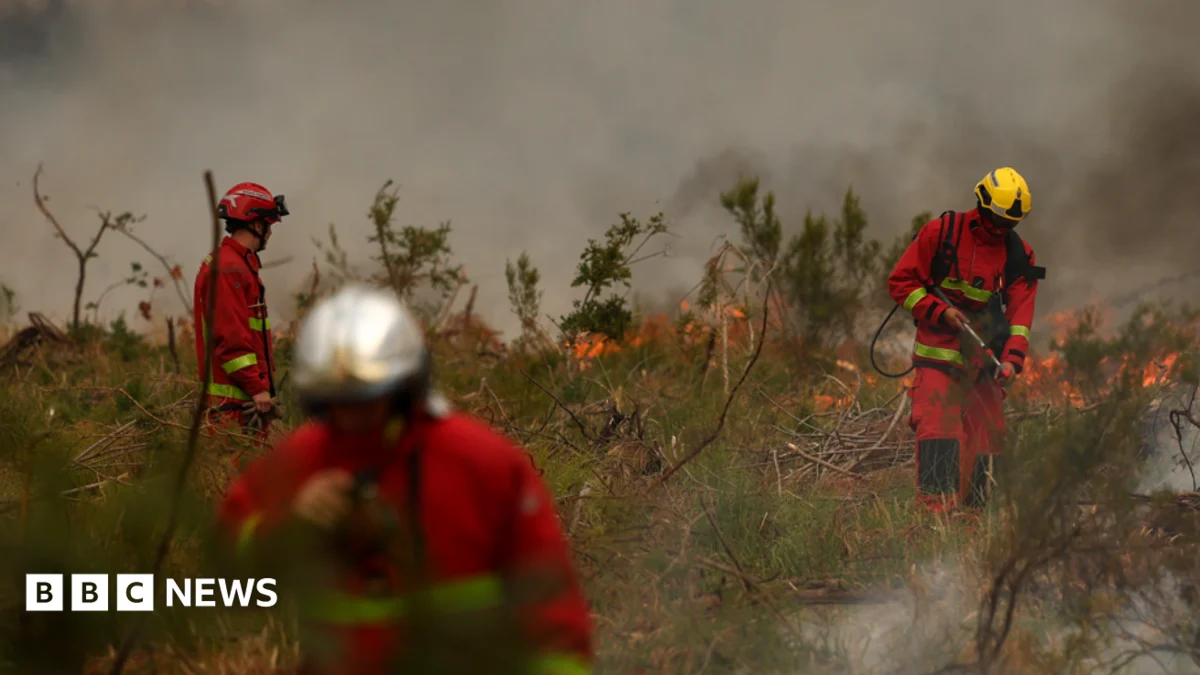
Firefighters are battling a wildfire near Bordeaux as part of ongoing wildfire evacuation efforts that have seen more than 330,000 people evacuated across France and Spain. Tens of thousands of residents have been ordered to leave their homes in the Gironde region amid spreading flames.
Wildfires have become a recurring challenge in southwestern Europe, especially during hot, dry summer months. Authorities deploy ground crews, aerial support, and equipment to contain the blaze while evacuation orders aim to protect lives. The situation near Bordeaux reflects a broader pattern affecting both France and Spain, where thousands have fled similar fires in recent weeks.
Evacuation centers have been set up to shelter displaced individuals, providing basic necessities such as food, water, and medical assistance. Local officials coordinate with emergency services to monitor fire movement and adjust safety zones as needed. The scale of the response highlights the strain on regional resources when large‑scale fires erupt.
Key Facts
- Firefighters battle a wildfire near Bordeaux.
- Tens of thousands of people have been evacuated near Bordeaux.
- More than 330,000 people have been evacuated from wildfires across France and Spain.
Who is affected?
Residents of towns and villages surrounding Bordeaux face immediate displacement as flames approach residential areas. Families with children, elderly individuals, and those with limited mobility often require additional assistance during evacuations. Local businesses, farms, and vineyards may also suffer interruptions to operations and potential property damage.
Tourists visiting the region during the summer season can be caught in evacuation orders, leading to changes in travel plans and temporary shelter needs. Emergency services work to account for all individuals in affected zones, using registration points and communication networks to verify safety.
Agricultural lands and forestry areas in the path of the fire risk loss of crops, livestock, and timber resources. Environmental groups note that smoke and ash can affect air quality over a wider area, prompting health advisories for vulnerable populations.
Understanding the wildfire evacuation process
When authorities issue a wildfire evacuation order, they typically designate specific zones based on fire spread predictions and wind patterns. Residents receive alerts via sirens, mobile alerts, or community announcements and are directed to predetermined assembly points or shelters.
Transportation resources, including buses and coordinated carpooling, help move people away from danger zones. Shelters are often set up in schools, community centers, or sports facilities, where volunteers provide basic supplies and medical staff attend to injuries or stress-related conditions.
Firefighting crews simultaneously work to establish containment lines, using water drops from aircraft and ground teams to create firebreaks. The coordination between evacuation teams and fire suppression units aims to keep escape routes open while reducing the fire’s advance.
What happens next?
Officials will continue to monitor the fire’s perimeter and adjust evacuation boundaries as conditions change. Updates on containment progress and any changes to shelter locations are expected to be released through official channels.
Residents awaiting return to their homes will rely on assessments of safety, including checks for lingering hot spots, structural damage, and restoration of utilities. The timeline for repopulation depends on how quickly the fire is brought under control and hazards are mitigated.
In the longer term, authorities may review evacuation plans, firefighting resource allocation, and land‑management practices to reduce future risk. Community resilience programs and public education campaigns often follow major wildfire incidents.
What We Know — and What We Don’t
Verified by the source:
- Firefighters battle a wildfire near Bordeaux.
- Tens of thousands of people have been evacuated near Bordeaux.
- More than 330,000 people have been evacuated from wildfires across France and Spain.
Still unconfirmed:
- Exact cause of the wildfire
- Number of injuries or fatalities
- Expected duration of the evacuation and firefighting operations
Why It Matters
Large‑scale wildfires underscore growing concerns about climate‑related fire risk in Europe, affecting communities, economies, and ecosystems. Effective evacuation and firefighting responses are essential to protect lives and limit environmental harm, while also highlighting the need for preparedness and adaptive land‑management strategies.
What To Watch
Officials are expected to provide further updates on containment progress and any changes to evacuation orders. Observers will look for announcements regarding the safety of displaced residents and the status of essential services in the affected area.