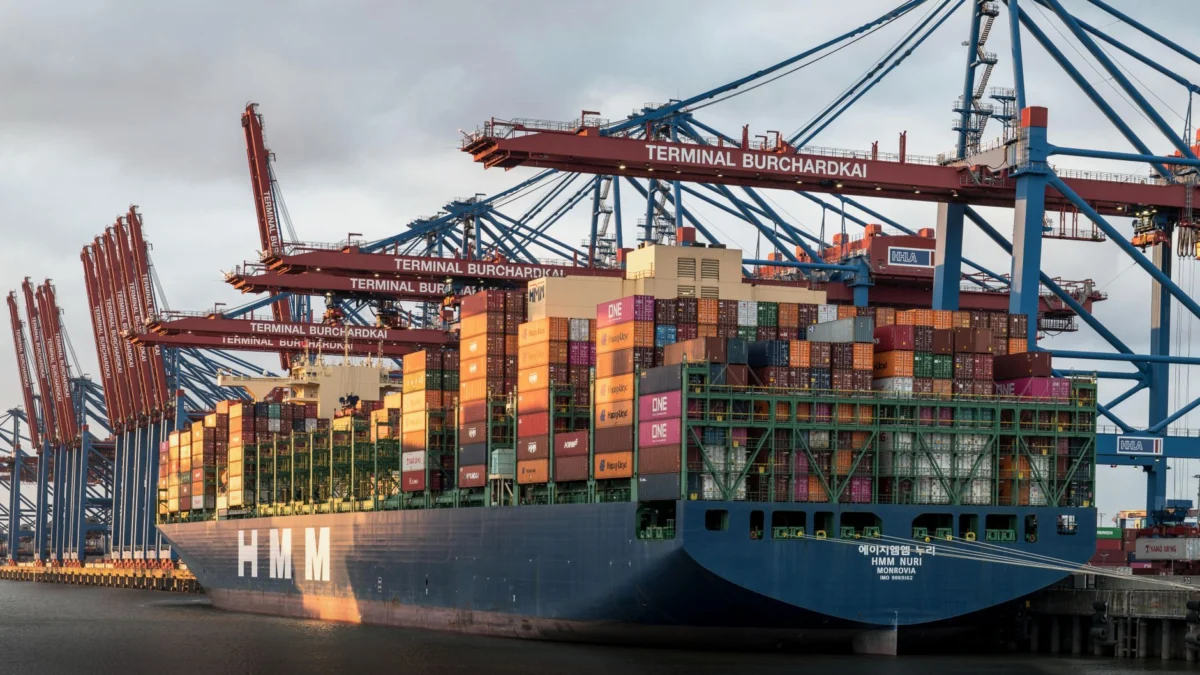
The White House has stated that transshipped goods resulted in $19 billion to $26 billion in lost tariffs, according to a report from Reuters. This significant financial impact highlights concerns over trade practices that circumvent standard tariff procedures.
KEY FACTS
- The White House estimates $19 billion to $26 billion in lost tariffs due to transshipped goods.
- The report was sourced from Reuters, published within the last 12 hours.
- Details on specific goods or countries involved were not disclosed in the source.
THE STORY
What is transshipment?
Transshipment occurs when goods are rerouted through intermediary countries to evade tariffs or trade restrictions. This practice can obscure the true origin of products, allowing them to bypass duties imposed on direct imports from certain nations.
How does this affect the U.S. economy?
Lost tariffs represent significant uncollected revenue that could be used for public services, infrastructure, or debt reduction. The estimated $19 billion to $26 billion shortfall underscores systemic vulnerabilities in trade enforcement.
WHAT WE KNOW — AND WHAT WE DON’T
Verified by the source:
- The White House provided the $19B-$26B estimate for lost tariffs.
- The report originated from Reuters within a 12-hour window.
Still unconfirmed:
- Which specific goods or trade routes are most affected.
- Whether this estimate includes recent years or spans a longer period.
WHY IT MATTERS
Uncollected tariffs strain federal budgets and may disadvantage domestic industries competing with unfairly priced imports. Addressing transshipment loopholes could significantly impact trade policy and enforcement.
WHAT TO WATCH
Potential White House actions to curb transshipment losses, or whether Congress will propose legislative measures to strengthen tariff enforcement. More details may emerge from official statements or follow-up reports.