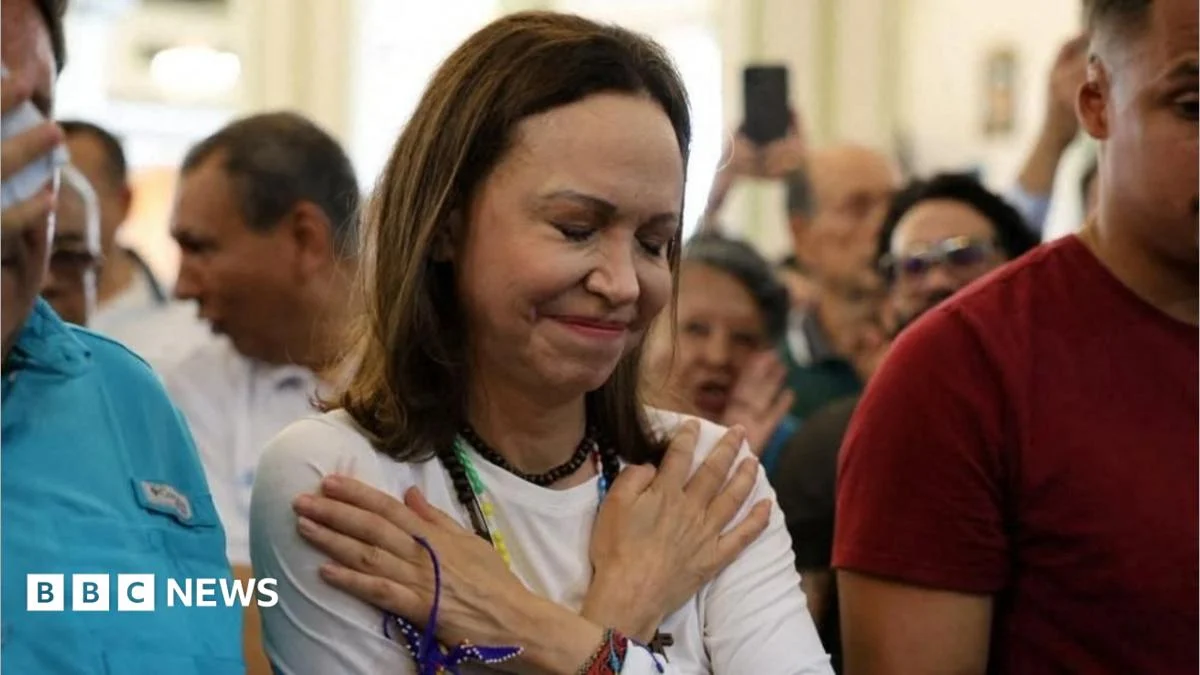
Venezuelan opposition leader María Machado has returned to Venezuela after spending months in exile abroad. Her return marks a notable development for the Venezuelan opposition leader, who had left the country just a month before the US government seized Venezuelan President Nicolás Maduro.
Key Facts
- Venezuelan opposition leader María Machado has returned to Venezuela after months in exile.
- Machado left the country a month before the US government seized Venezuelan President Nicolás Maduro.
- The US government action involved seizing President Nicolás Maduro.
- Machado’s departure and return frame key moments around the US government intervention.
How Did We Get Here?
The timeline shows Machado departing Venezuela just one month before the US government took custody of Venezuelan President Nicolás Maduro. This sequence places her departure amid extraordinary international action against Venezuela’s sitting president. The US government seizure of President Maduro represents an unprecedented escalation in foreign involvement in Venezuela’s ongoing political crisis.
Machado’s exit and subsequent return occur against a backdrop of years-long political instability in Venezuela. The country has faced economic hardship, disputed elections, and competing claims to legitimacy between President Maduro and opposition forces. International actors, including the United States, have historically played significant roles through sanctions, diplomatic recognition decisions, and humanitarian aid efforts.
The timing of Machado’s departure immediately before the US government’s seizure of President Maduro suggests her exile may have been connected to the broader political upheaval surrounding that event.
What Happens Next?
Machado’s return to Venezuela follows a dramatic period in which the US government seized Venezuelan President Nicolás Maduro. This extraordinary international intervention raises immediate questions about Venezuela’s political future, the status of its leadership, and how domestic actors like the opposition will navigate the aftermath.
The situation remains fluid following the US government’s reported seizure of President Maduro, which occurred a month after Machado left Venezuela. Her decision to return signals potential confidence in changing conditions, though the stability of Venezuela’s political landscape remains uncertain. Regional and international responses to these developments are likely to shape subsequent events.
Who Is Affected?
The people of Venezuela face continued uncertainty following the US government seizure of their president and the return of prominent opposition figure María Machado. These developments directly impact Venezuela’s roughly 28 million citizens, who have endured years of economic crisis, hyperinflation, and international sanctions.
Venezuela’s opposition movement sees Machado’s return as potentially significant for organizing efforts, while government supporters may view it differently. The broader Latin American region is also watching closely, as Venezuela’s instability has previously triggered refugee flows of over 7 million people to neighboring countries including Colombia, Peru, and Ecuador.
What We Know — and What We Don’t
Verified by the source:
- María Machado returned to Venezuela after months in exile.
- Machado left the country just a month before the US government seized Venezuelan President Nicolás Maduro.
- The US government seized Venezuelan President Nicolás Maduro.
Still unconfirmed:
- Specific dates of Machado’s departure, return, or the US seizure of Maduro.
- Detailed circumstances or stated motivations for Machado’s exile.
- Legal or diplomatic mechanisms behind the US government’s reported seizure.
- Venezuela’s current government structure or chain of command following Maduro’s reported seizure.
- Reactions from Venezuelan institutions, international bodies, or other governments.
Why It Matters
These developments touch on core issues of sovereignty, democratic governance, and international intervention that resonate far beyond Venezuela’s borders. The reported US government action against Venezuela’s president represents a dramatic escalation in foreign involvement in another nation’s leadership transition, raising profound questions about international norms and the rules governing how countries interact with one another during political crises.
Venezuelan opposition leader María Machado’s return adds another layer of complexity to an already volatile situation. Whether her comeback signals a new phase in Venezuela’s political struggle or merely reflects personal calculation in uncertain times, the world’s attention remains fixed on this South American nation and its increasingly unpredictable trajectory.
What to Watch
Further reporting from credible international sources will be needed to confirm details about the US government seizure of President Maduro and Machado’s homecoming. Official statements from Venezuelan institutions, US authorities, and regional organizations like the UN or OAS would provide additional verification.