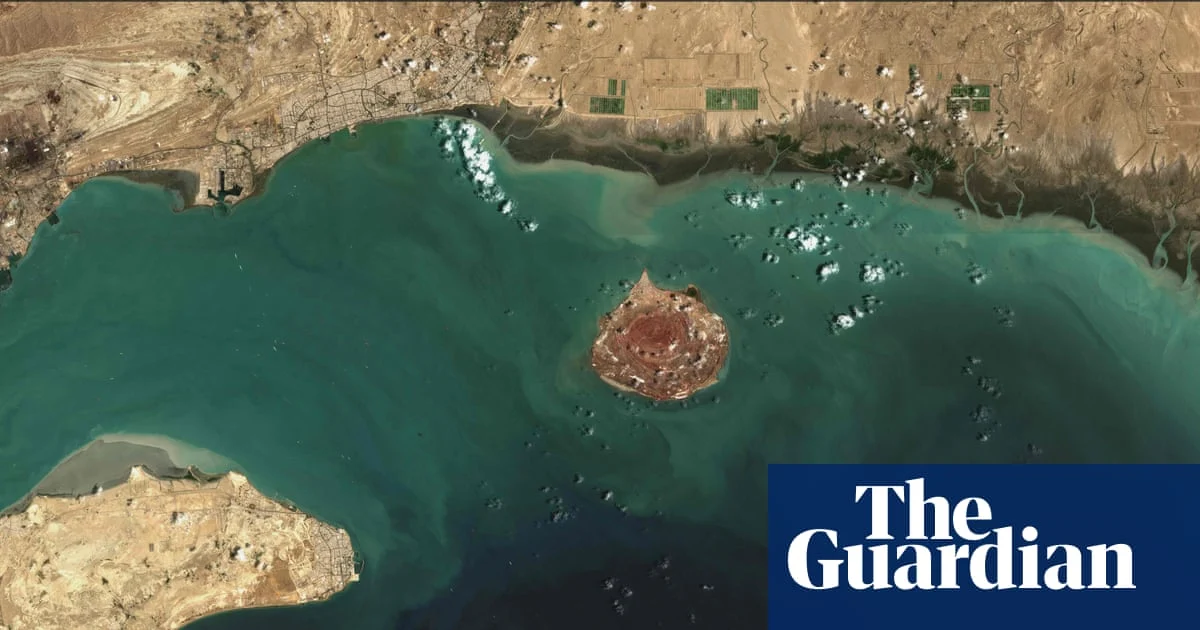
The US military struck Iranian rocket launchers on Larak Island in the Strait of Hormuz, claiming the action was to prevent the launch of sea mines, according to The Guardian. Iran responded with retaliatory strikes on airbases in Jordan and the United Arab Emirates used by US forces, marking the first such hostilities in a month. Hours later, Iranian state TV reported a supertanker caught fire after allegedly hitting two naval mines in the southern part of the strait.
The US said its strike targeted launchers that could threaten shipping lanes in the Strait of Hormuz, a critical global oil transit route. Iran’s retaliatory strikes targeted airbases linked to US military operations in the region, though no casualties or specific damage reports were provided.
KEY FACTS
- The US attacked Iranian rocket launchers on Larak Island in the Strait of Hormuz to prevent sea mine launches.
- Iran retaliated with strikes on US-linked airbases in Jordan and the United Arab Emirates.
- An Iranian supertanker reportedly caught fire after hitting two naval mines in the southern Strait of Hormuz.
- The strikes mark the first major hostilities between the US and Iran in a month.
- No details were provided about casualties, the supertanker’s identity, or its crew.
What triggered the latest escalation?
The immediate trigger was the US strike on Larak Island, which it claimed was a preemptive move against potential sea mine deployments. The Strait of Hormuz has long been a flashpoint, with Iran previously threatening to disrupt shipping in retaliation for US sanctions. The US maintains a military presence in Jordan and the UAE, making those bases logical targets for Iranian reprisals.
What’s the significance of the Strait of Hormuz?
The Strait of Hormuz is one of the world’s most strategically important waterways, with about a fifth of global oil consumption passing through it. Any disruption risks spiking oil prices and escalating regional tensions. Both the US and Iran have previously accused each other of harassing shipping in the area, but direct clashes between their forces remain rare.
WHAT WE KNOW — AND WHAT WE DON’T
Verified by the source:
- The US conducted strikes on Iranian launchers in the Strait of Hormuz.
- Iran retaliated with attacks on US-associated airbases in Jordan and the UAE.
- A supertanker caught fire in the strait, per Iranian state TV.
Still unconfirmed:
- Whether the supertanker incident is connected to the military strikes.
- Casualty figures or damage assessments from the airbase attacks.
- The origin or placement of the naval mines reported near the supertanker.
WHY IT MATTERS
This escalation risks further destabilizing an already tense region and could disrupt global oil supplies. The Strait of Hormuz’s centrality to energy markets means even limited clashes there can have worldwide economic repercussions. The incident also underscores the persistent volatility in US-Iran relations despite periodic lulls in hostilities.
WHAT TO WATCH
Whether either side escalates further with additional strikes, and if the supertanker incident leads to new maritime confrontations. Official damage assessments from the airbase attacks may clarify the scope of Iran’s retaliation.