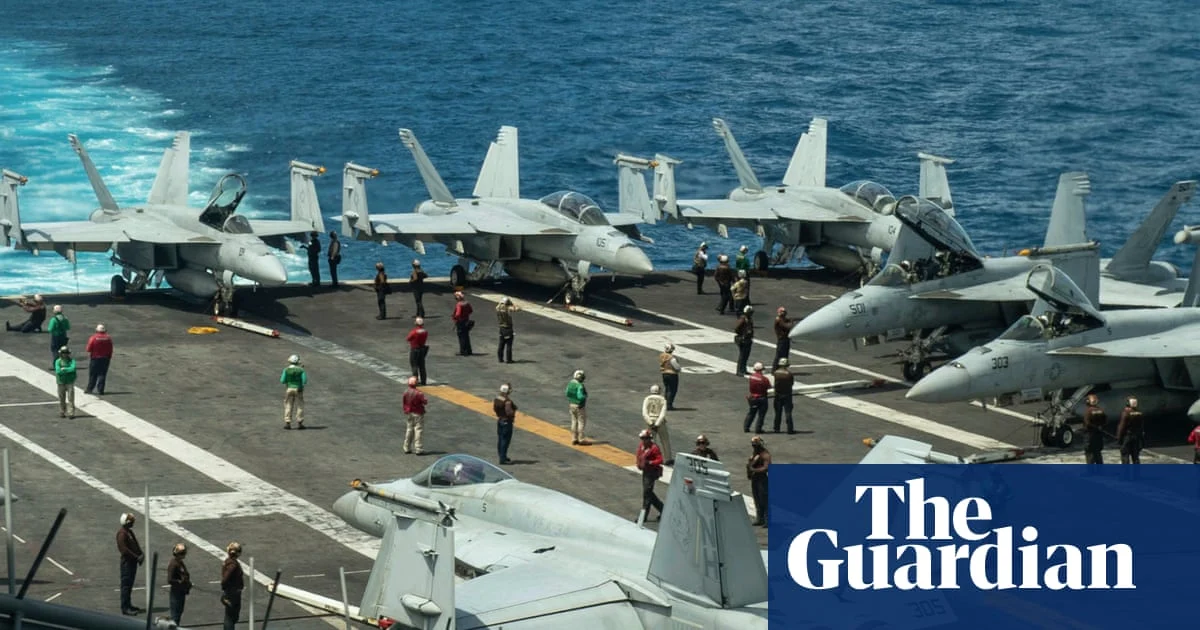
US military deploys third carrier group as conflict with Tehran remains unresolved
The US military is dispatching a third aircraft carrier strike group to the Middle East, underscoring the evolving complexity of ongoing tensions with Iran. President Donald Trump has indicated that additional strikes against Iran may be possible, with the deployment occurring as domestic political pressures mount ahead of midterm elections.
The move reflects a strategic emphasis on projecting power in a region where US-Iran relations remain strained. Analysts note that escalating military presence often correlates with diplomatic uncertainty, particularly when paired with public statements from senior leadership.
Key Facts
- The US is sending a third aircraft carrier strike group to the Middle East.
- Included in the deployment is a specialist amphibious attack group.
- President Trump warned new strikes against Iran could be on the horizon.
- The deployment occurs amid ongoing conflict dynamics between the US and Iran.
- Midterm elections in the US are approaching, adding political context to military decisions.
What happens next?
The arrival of the third carrier group introduces another layer to an already volatile regional posture. While no immediate action has been announced beyond the deployment itself, the presence of multiple carrier groups suggests a readiness to respond swiftly to perceived threats or escalatory moves by Iranian forces. US Central Command has historically used carrier deployments as both deterrent and signal, and this latest move aligns with that tradition.
Military officials have previously stated that such deployments require weeks of coordination, indicating that planning likely began well before public announcement. The inclusion of an amphibious assault group further expands operational flexibility, enabling potential support for land-based operations if required. However, specific mission parameters remain unclear, and no formal timeline for engagement has been disclosed.
Who is affected?
The deployment impacts several stakeholders across the region and beyond. In the Middle East, governments allied with the US — such as Israel and certain Gulf states — may view the increased military footprint as reassuring. Conversely, Iran has repeatedly condemned foreign military presence in the region, and further escalation could strain diplomatic channels.
Domestically, the timing coincides with heightened scrutiny over foreign policy amid election cycles. Voters and legislators alike are weighing national security priorities against fiscal concerns tied to prolonged military involvement. Additionally, service members assigned to the incoming carrier groups face extended rotations, affecting personnel readiness and family planning.
How did we get here?
Tensions between the US and Iran have simmered for years, punctuated by periodic flare-ups involving naval encounters, sanctions, and proxy conflicts across Syria and Yemen. Recent incidents in the Strait of Hormuz have drawn renewed attention to the strategic importance of maintaining open shipping lanes, through which a significant portion of global oil trade passes.
President Trump’s administration has oscillated between conciliatory rhetoric and hardline posturing. Earlier phases of his term saw attempts at diplomatic outreach, including indirect talks facilitated by third-party nations. More recently, however, policy appears to favor containment through force projection, exemplified by repeated carrier deployments and targeted sanctions targeting key sectors of the Iranian economy.
What We Know — and What We Don’t
Verified by the source:
- A third US aircraft carrier strike group has been ordered to deploy to the Middle East.
- The deployment includes a specialist amphibious attack group.
- President Trump hinted at potential new strikes against Iran.
- The decision comes during a period of ongoing conflict-related instability.
- US midterm elections are nearing, influencing political discourse around military policy.
Still unconfirmed:
- The exact departure date and expected arrival time of the carrier group.
- Names of specific ships or units participating in the deployment.
- Whether any direct orders for combat operations have been issued.
- Official reactions from Iranian government officials regarding the deployment.
- Details about the scope of the “specialist amphibious attack group” capabilities.
Why it matters
This deployment highlights how military strategy continues to shape international diplomacy, especially in regions critical to global energy supply chains. With elections looming, public perception of foreign policy becomes increasingly influential in shaping long-term national direction. Readers can follow related developments in our war & geopolitics and politics sections for ongoing coverage.
What to watch
Stakeholders will monitor official communications from US Central Command for further details on operational scope. Meanwhile, Iranian responses — whether diplomatic or otherwise — could determine whether tensions escalate or stabilize in the coming weeks.
The US sends a third aircraft carrier to the Middle East as part of a broader show of force amid unresolved tensions with Iran and looming midterms.