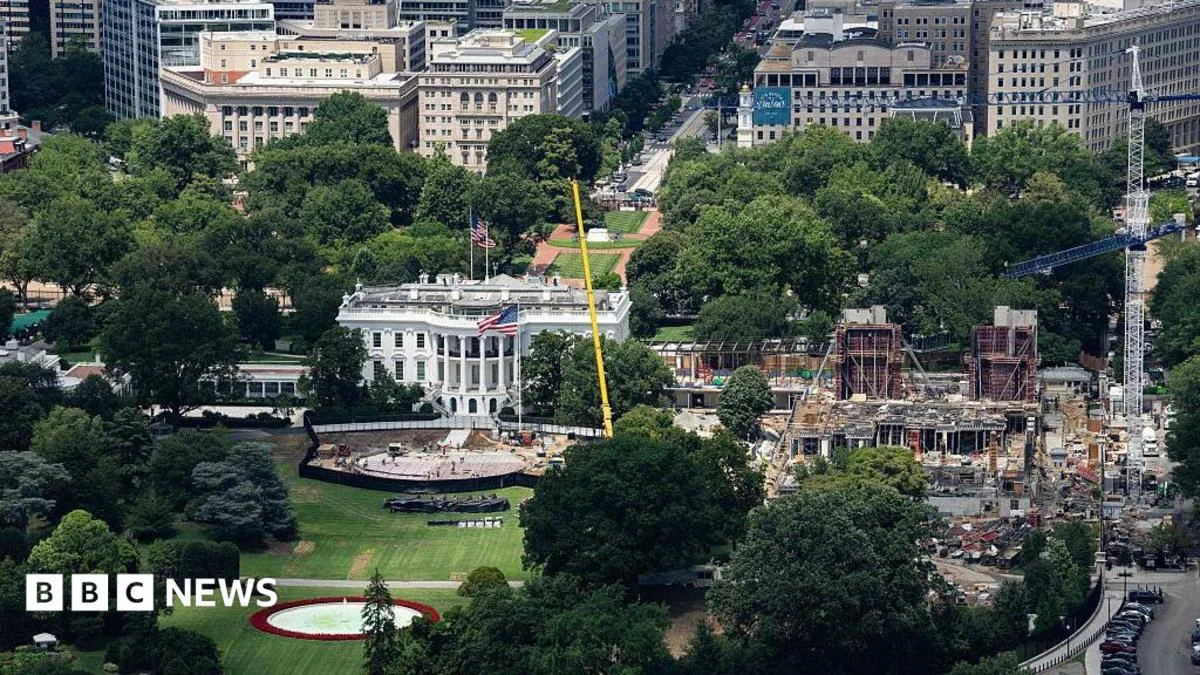
A US appeals court has halted plans for a proposed Trump ballroom project, paving the way for a potential Supreme Court showdown. The court indicated that the decision on whether to proceed with the project should be left to Congress.
The ruling underscores the legal complexities surrounding high-profile developments and highlights the role of federal courts in resolving disputes over large-scale projects. The case could have broader implications for similar developments in the future.
Key Facts
- A US appeals court has halted a proposed Trump ballroom project.
- The court stated Congress should decide on the project’s fate.
What Led to This Decision?
The appeals court’s decision reflects ongoing debates over the legal and regulatory approval processes for major projects. The court’s majority emphasized that such decisions should involve legislative oversight, particularly when they involve significant public or private interests.
What Happens Next?
The case could escalate to the Supreme Court, where the final decision on the project’s fate may be determined. This legal battle highlights the intricate balance between judicial, legislative, and executive powers in the US.
What We Know — and What We Don’t
Verified by the source:
- A US appeals court has paused the Trump ballroom project.
- The court suggested Congress should decide on the project.
Still unconfirmed:
- Whether Congress will take up the issue.
- The timeline for a potential Supreme Court review.
Why It Matters
This case underscores the significant role of federal courts in overseeing controversial development projects. It also raises questions about the division of authority between branches of government in shaping major policy decisions.
What To Watch
Attention now turns to whether Congress will address the issue and if the Supreme Court will ultimately weigh in on the matter.