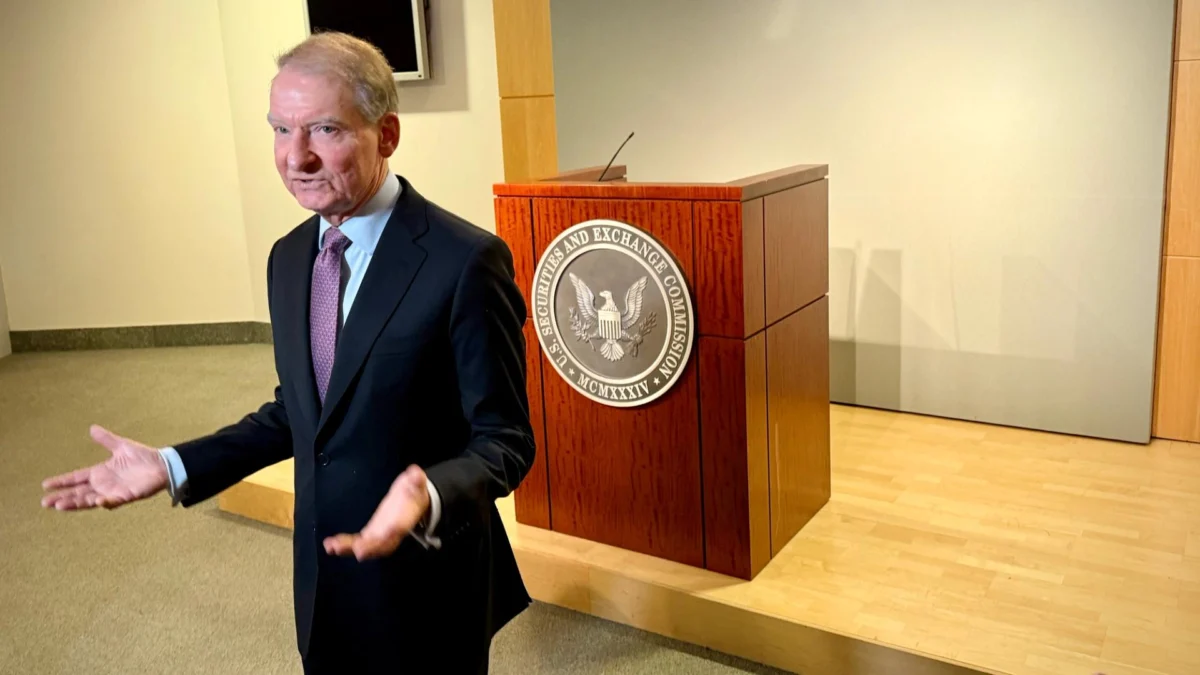
US agencies are racing to substitute their own regulations for the stalled Clarity Act, which was meant to establish clear rules for crypto markets. The question now is whether these stopgap measures will last without a permanent legislative framework.
The Clarity Act had been billed as the cornerstone of a comprehensive approach to overseeing digital assets, but with its collapse, agencies are left patching gaps with existing authority, creating a patchwork of oversight that industry participants say lacks long-term certainty.
Key Facts
- US agencies are replacing rules for the failed Clarity Act.
- Substituted regulations aim to cover crypto markets.
- Original bill intended to set crypto regulation groundwork.
- Survival of the replacement rules remains uncertain.
- Stand-ins are meant to fill the legislative gap.
The Story
Who is affected?
Crypto market participants, trading platforms, and investors are directly affected. These actors had anticipated the Clarity Act would provide consistent guidance across agencies. Instead, they now face an evolving landscape of agency-enforced rules that may shift as new administrations or Congress act.
Agencies are relying on previously ambiguous authorities, such as those of the SEC and CFTC, to assert jurisdiction. This overlap has historically led to conflicting interpretations and enforcement actions against major tokens and platforms. The absence of clear statutory guidance makes these agency rules vulnerable to legal challenge.
How did we get here?
The Clarity Act was introduced as a unified federal framework to govern digital assets, attempting to clarify which agency oversees which token. Without congressional passage, agencies reverted to interpreting outdated laws, such as securities and commodities statutes, for new technologies.
This return to discretionary rulemaking has led to repeated lawsuits from industry, arguing that unclear regulations stifle innovation. Agencies continue issuing guidance and emergency rules, but legal scholars note these may lack the durability of legislation.
The lack of clarity also affects international competitiveness, as other jurisdictions move forward with defined crypto laws. US-based firms may delay expansion or relocate operations overseas to avoid regulatory uncertainty.
What We Know — and What We Don’t
Verified by the source:
- US agencies are substituting regulations for the Clarity Act.
- Replacements aim to govern crypto markets.
- Clarity Act intended to anchor crypto regulation.
- Duration of substitute rules is unknown.
Still unconfirmed:
- Specific agencies leading the substitution.
- Exact form of the substitute regulations.
- Timeline for new legislative effort.
- Whether substitutes will survive court review.
- Industry reaction details.
Why it matters
This regulatory uncertainty affects how businesses, investors, and developers operate in the crypto sector. Clear rules allow planning and investment, while ambiguity can slow innovation and lead to legal battles that reshape markets.
What to watch
Future legislation or court decisions could override or validate the current agency rules.