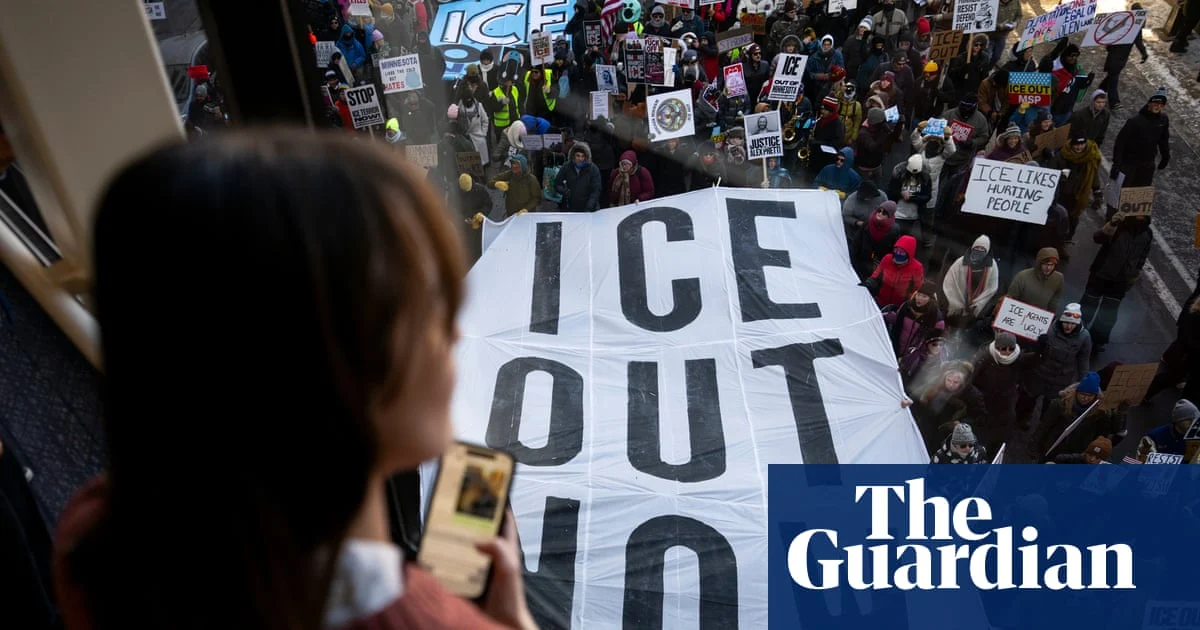
Federal undercover agents posed as community members to surveil activists opposing Immigration and Customs Enforcement (ICE) operations in Minnesota, according to internal Department of Homeland Security (DHS) records. The documents, disclosed in federal court and reviewed by the Guardian, show officers joined encrypted Signal groups, monitored protest plans, and even participated in fundraising efforts while gathering intelligence.
The operation targeted residents and activists critical of ICE enforcement actions in the state. One agent used the alias “peanutbutterjelly” in Signal chats, where they screenshot conversations about demonstrations and offered to assist with organizing logistics.
KEY FACTS
- Undercover DHS officers infiltrated anti-ICE activist groups in Minnesota.
- Agents joined Signal chats and took photos at community meetings while posing as concerned citizens.
- One officer used the username “peanutbutterjelly” in encrypted conversations with activists.
- Documents show agents recorded protest plans and volunteered for fundraising roles.
- The records were disclosed in federal court and obtained by the Guardian.
How did the surveillance operation work?
The undercover agents blended into activist circles by participating in encrypted Signal groups, a platform favored for its privacy features. According to the disclosed documents, officers monitored discussions about protest strategies, took screenshots of chat conversations, and attended in-person gatherings. Their involvement extended to operational support — one agent reportedly offered to help with volunteer recruitment and fundraising efforts while simultaneously documenting activist activities.
What legal questions does this raise?
The revelation of domestic surveillance targeting immigration activists may prompt scrutiny of government monitoring practices. While federal agencies have broad authority to investigate potential threats, the extent to which undercover operations monitor lawful protest activities remains a contested issue. The documents don’t indicate whether the surveillance led to arrests or prosecutions, nor do they specify what intelligence justification existed for the operation.
WHAT WE KNOW — AND WHAT WE DON’T
Verified by the source:
- DHS agents operated undercover in Minnesota anti-ICE activist networks
- Officers joined Signal chats using pseudonyms like “peanutbutterjelly”
- Agents documented protest planning conversations and community meetings
Still unconfirmed:
- Duration and full scope of the surveillance operation
- Whether the monitoring resulted in any enforcement actions
- What specific DHS unit authorized or conducted the operation
WHY IT MATTERS
The disclosure adds to ongoing debates about the boundaries between legitimate law enforcement intelligence gathering and the monitoring of protected First Amendment activities. With immigration enforcement remaining a polarizing issue, the revelation that federal agents surveilled opposition groups could influence public perception of government transparency and civil liberties protections.
WHAT TO WATCH
Legal and congressional responses to the disclosed documents may determine whether additional details about the surveillance program emerge. The court case where these records surfaced could yield further information about the scope and justification for the undercover operation.