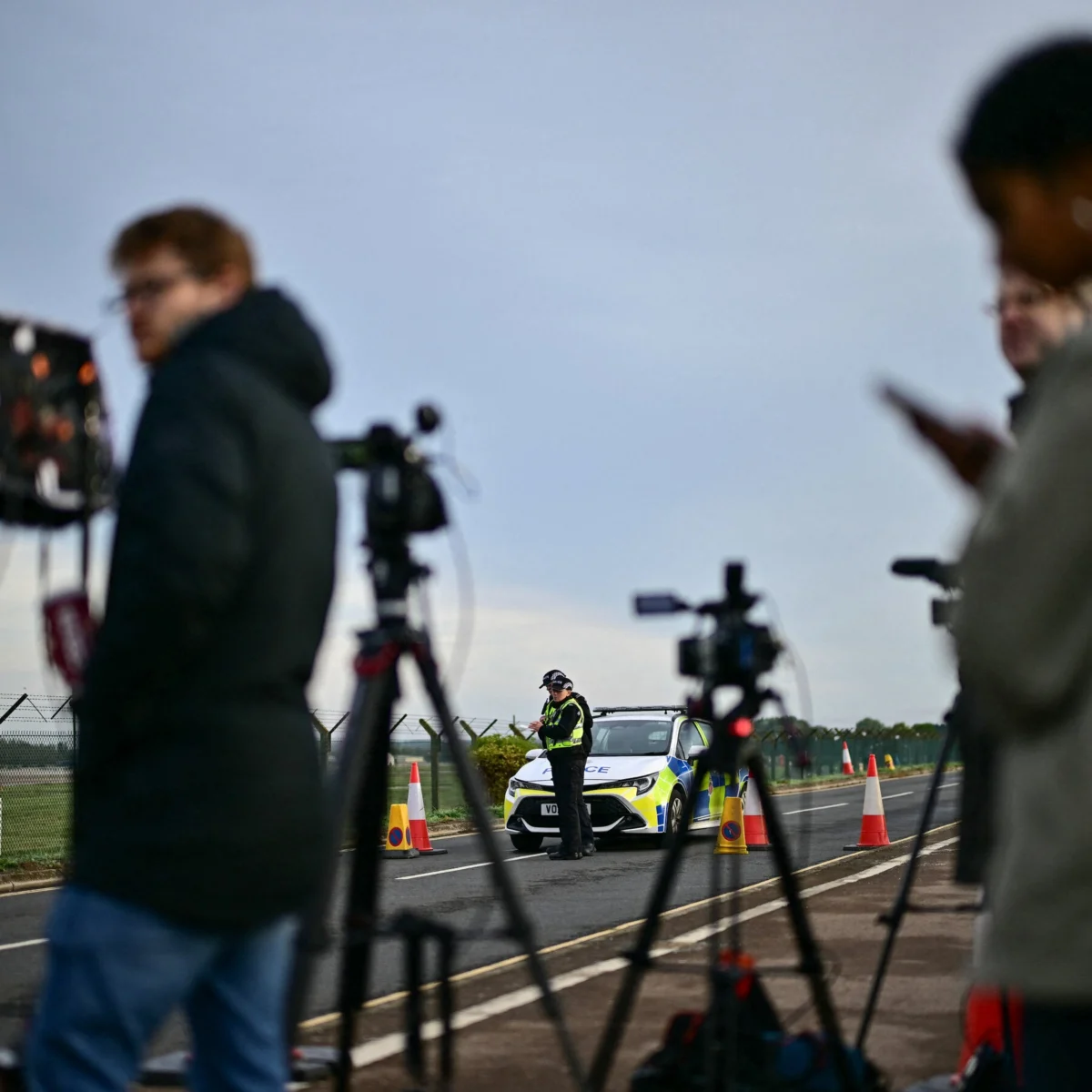
London — British Prime Minister Andy Burnham said there are “strong indications” that Iran played a part in the events at RAF Fairford on Sunday, but did not provide details supporting the assertion. Burnham’s comments are the first public attribution of the incident to Iran by a senior UK official, and they come as tensions between Western governments and Tehran remain elevated over regional activities.
The Prime Minister’s office did not elaborate on what intelligence or evidence underpinned the statement, leaving the scope and origin of the RAF Fairford incident — including whether it involved cyber activity, physical infiltration, or propaganda efforts — unclarified. Downing Street confirmed the remarks were made during a closed briefing and declined to release further specifics, citing national security considerations. The lack of detail in Burnham’s public disclosure reflects the difficulty governments face when attributing foreign interference to state actors without exposing sensitive capabilities or sources.
KEY FACTS
- British Prime Minister Andy Burnham said there are “strong indications” Iran played a part in the RAF Fairford incident.
- Burnham did not provide details explaining why Iran was suspected.
- The incident at RAF Fairford occurred on Sunday.
- The statement marked the first public attribution of the event to Iran by a senior UK official.
- Downing Street declined to release further details, citing national security.
What Happened at RAF Fairford?
The precise nature of the RAF Fairford incident remains unclear. RAF Fairford is a Royal Air Force base in Gloucestershire, England, primarily used for strategic airlift and occasionally by U.S. Air Force bomber operations. Incidents at such installations are typically logged by military authorities, though public disclosures are rare unless they involve security breaches, accidents, or foreign interference.
Burnham’s claim that Iran played a role introduces questions about how that determination was reached. Governments commonly attribute cyber intrusions, surveillance attempts, or physical security breaches to foreign states through a combination of digital forensics, human intelligence, and signals intercepts. However, without specifics, analysts cannot assess whether the attribution rests on intercepted communications, malware traces, or behavioral indicators such as attempted access to restricted systems.
U.S. and European intelligence agencies have previously accused Iran of cyber operations targeting defense infrastructure, though those assessments are usually supported by technical evidence shared with allies. In this case, no such supporting material has been released.
Why Has the UK Named Iran Now?
Naming Iran as a suspected actor, even without public justification, serves several strategic purposes. Public attribution can act as a deterrent, signaling to adversaries that their actions carry reputational and potentially diplomatic costs. It also prepares public and allied audiences for possible retaliatory or protective measures, though no such actions have been announced.
Political leaders often calibrate the timing of sensitive disclosures to align with broader security briefings or diplomatic developments. If Burnham’s statement follows a recent threat assessment update, it may reflect a coordinated effort among intelligence partners to present a united front. Conversely, early or premature attribution risks undermining credibility if subsequent investigations yield different conclusions.
Historical precedent shows that premature public accusations of foreign interference can complicate ongoing investigations and strain diplomatic relations. For instance, previous attributions of cyberattacks to nation-states have sometimes been revised after deeper technical review.
What Happens Next?
Further clarity on the RAF Fairford incident will likely depend on whether Downing Street releases additional briefings or whether U.K. intelligence agencies publish declassified findings. Parliamentary committees may summon intelligence chiefs for questioning on the basis of Burnham’s comments.
Meanwhile, Iran’s foreign ministry has not publicly responded to the accusation. Regional analysts note that escalation cycles involving Tehran tend to intensify when Western officials make public attributions, often prompting tit-for-tat statements or retaliatory cyber activity in other sectors.
The United States has not issued an independent statement confirming or corroborating Burnham’s assertion. Joint operations between UK and US intelligence mean allied confirmation would carry significant weight, but silence from Washington leaves the claim unvalidated internationally.
What We Know — and What We Don’t
Verified by the source:
- The British Prime Minister is Andy Burnham.
- Burnham said there are “strong indications” Iran played a part in events at RAF Fairford.
- Burnham gave no details about what led to the suspicion.
- The incident occurred on Sunday.
- Downing Street declined to release further details, citing national security.
Still unconfirmed:
- The specific nature of the RAF Fairford incident.
- What evidence or intelligence supports the Iran link.
- Whether the U.S. or other allies share the UK’s assessment.
- Any timeline for additional public disclosures.
- Iran’s official response to the accusation.
A single-source rewrite; limited independent verification. The attribution of foreign interference often depends on classified intelligence not accessible to journalists, and public claims without supporting evidence leave room for later revision.
Why It Matters
Public attribution of state-sponsored interference affects diplomatic relations, domestic security policy, and international trust in governmental claims. When leaders name a foreign power without evidence, allies must decide whether to follow suit while the public is left to gauge credibility based on tone rather than substance. Explore more developments in war and geopolitics as this story evolves.
What To Watch
Observers should watch for follow-up briefings from Downing Street, potential parliamentary hearings, and any responses from Iranian officials or U.S. intelligence agencies.