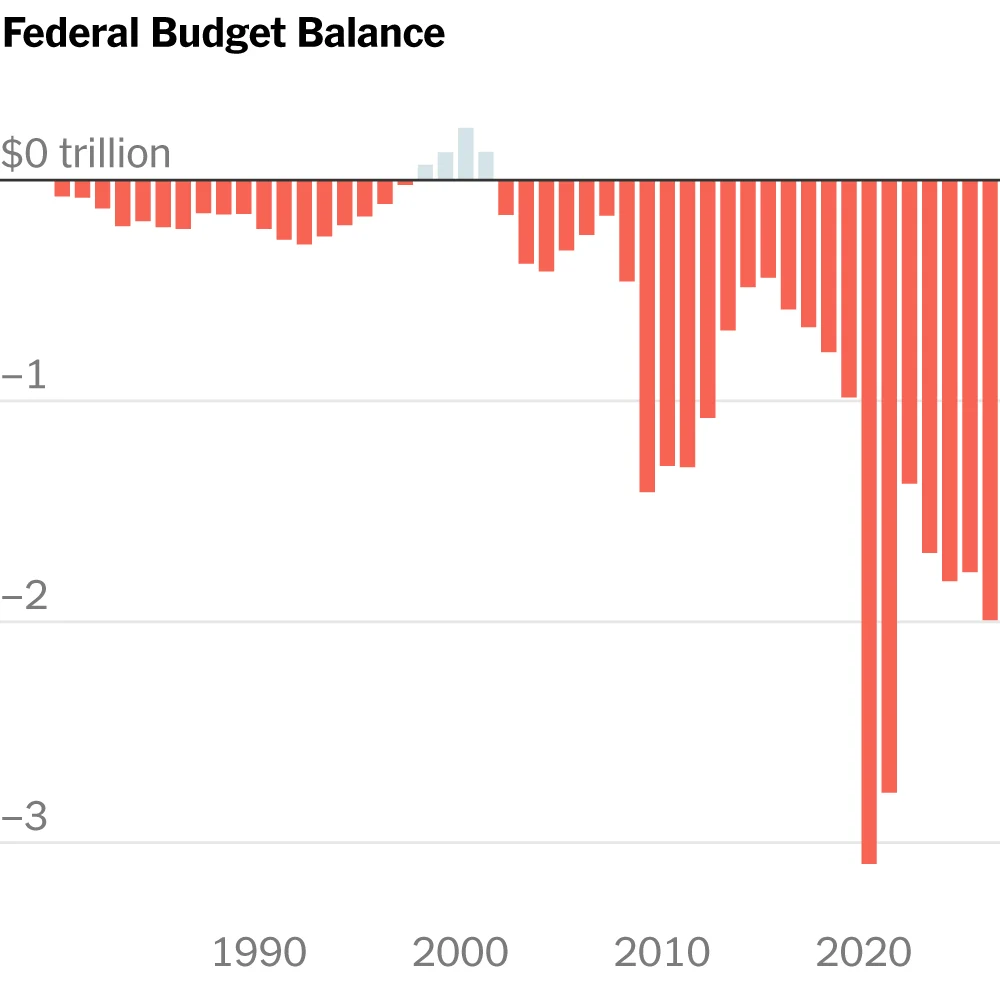
The U.S. budget deficit is approaching $2 trillion, driven by rising borrowing costs linked to higher interest rates and increased government spending, according to reporting from NYT > Business. The Trump administration’s fiscal picture is being tested by dual pressures: elevated interest payments on national debt and fresh expenditures related to military action in Iran and tariff-related refunds. These factors are converging to amplify the gap between federal revenue and outlays, raising questions about long-term fiscal sustainability.
This development marks a significant departure from earlier promises of aggressive cost-cutting under the Trump administration. While the White House had previously emphasized reducing wasteful spending, the realities of global interest rate trends and ongoing geopolitical entanglements are now reshaping the budget outlook. Economists warn that sustained deficits at this scale could weigh on future policy flexibility and contribute to inflationary pressures.
KEY FACTS
- The U.S. budget deficit is nearing $2 trillion, according to NYT > Business.
- Higher interest rates are increasing borrowing costs for the federal government.
- The Trump administration is spending more on the Iran war and tariff refunds.
- Spending increases are fueling the growing deficit.
What Drives the Surge in the U.S. Budget Deficit?
The combination of rising interest rates and new spending commitments is accelerating the growth of the U.S. budget deficit. As the Federal Reserve maintains tighter monetary policy, the cost of servicing the national debt continues to climb. In parallel, military deployments such as those tied to the Iran conflict and domestic economic measures—including tariff refunds—are adding to annual outlays.
For a reader unfamiliar with fiscal terminology, the budget deficit refers to the amount by which government spending exceeds its revenue in a given fiscal year. When repeated annually, it contributes to the total national debt. A deficit nearing $2 trillion underscores the challenge facing policymakers who must balance strategic priorities with fiscal responsibility.
Who Is Affected by the Widening U.S. Budget Deficit?
A growing U.S. budget deficit affects a broad range of stakeholders, including taxpayers, investors, and future generations. Higher borrowing requirements can lead to increased yields on Treasury bonds, influencing mortgage rates, corporate loans, and consumer credit. If unchecked, persistent deficits may constrain Congress’s ability to fund emergencies or invest in infrastructure without raising taxes or cutting programs.
Investors closely monitor deficit levels when assessing the risk profile of U.S. Treasurys, which are typically viewed as safe assets. A ballooning deficit driven by rising interest costs creates a feedback loop—more borrowing increases debt levels, which in turn raises interest obligations unless offset by stronger growth or policy intervention.
What Happens Next for the U.S. Budget Deficit?
Looking ahead, the trajectory of the U.S. budget deficit will depend heavily on macroeconomic conditions and policy decisions. If interest rates remain elevated, borrowing costs will continue to erode budget headroom. Likewise, any escalation in overseas conflicts or expansion of refund programs could deepen the shortfall.
Congressional leaders have signaled potential interest in revisiting discretionary spending caps, though specific actions have not yet been disclosed. Market participants are likely to keep a close eye on upcoming Treasury auctions and federal employment reports as indicators of fiscal strain or relief.
What We Know — and What We Don’t
Verified by the source:
- The U.S. budget deficit is approaching $2 trillion.
- Higher interest rates are increasing borrowing costs.
- The Trump administration allocates funds for the Iran war and tariff refunds.
Still unconfirmed:
- Exact timing or duration of spending initiatives.
- Precise figures beyond the approximate $2 trillion threshold.
- Whether policy adjustments will stem the deficit’s growth.
Why It Matters
A U.S. budget deficit nearing $2 trillion reflects the compounding effects of global rate hikes and active wartime spending. For citizens, this dynamic can translate into slower wage growth, tighter credit markets, and reduced room for public investment in education, healthcare, and infrastructure. Internationally, large deficits may also influence the dollar’s strength and complicate trade negotiations.
What To Watch
Market watchers should monitor upcoming fiscal reports and Treasury issuance schedules for signs of tightening financing conditions. Policy responses—whether through spending restraint or revenue enhancements—could shift the path of the U.S. budget deficit in either direction. Follow our coverage in the economy and markets and war and geopolitics sections for ongoing updates.