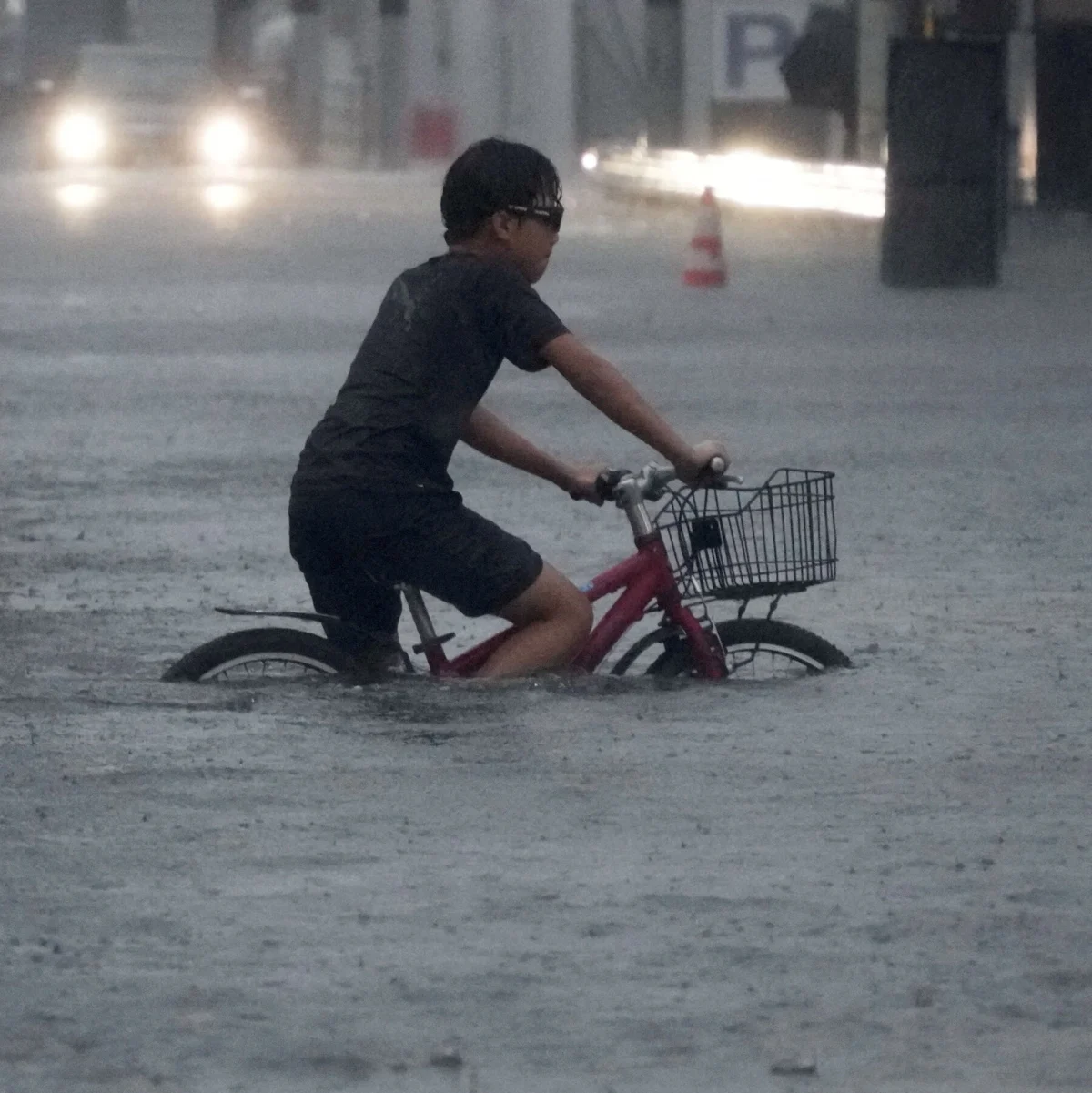
Typhoon Dujuan killed at least five people in Japan after dumping record rainfall that triggered evacuation orders across the Tokyo region. More than 74,000 people remained under evacuation orders as authorities warned of landslides and floods. The storm’s impact was concentrated in areas where heavy rain overwhelmed drainage systems and increased the risk of slope failures.
Japan’s weather and disaster management agencies issued warnings as Typhoon Dujuan moved through the region, prompting large-scale evacuations. Officials described the rainfall totals as record-breaking for the affected areas, though specific measurements were not released in initial public statements. The combination of saturated ground and ongoing precipitation kept conditions dangerous for residents and responders alike.
Key Facts:
- Five people were killed by Typhoon Dujuan in Japan.
- More than 74,000 people remained under evacuation orders in the Tokyo region.
- Authorities warned of landslides and floods following record Typhoon Dujuan rainfall.
What happened during Typhoon Dujuan?
The typhoon brought record rainfall to parts of Japan, according to officials monitoring the storm’s progress. The downpours led to rapid runoff and rising water levels in low-lying and urban areas near Tokyo. As soil became saturated, the risk of landslides increased, especially on hillsides and slopes common in suburban neighborhoods.
Evacuation centers were opened to shelter residents, and transportation services were disrupted as roads and rail lines were affected. The scale of the evacuation reflected the severity of the threat, with authorities prioritizing public safety in flood-prone and landslide-risk zones. Emergency teams coordinated with local governments to monitor conditions and guide displaced residents.
Typhoon Dujuan is classified as a tropical cyclone, which forms over warm ocean waters and brings strong winds and heavy rain. These systems can cause widespread damage when they make landfall, particularly in densely populated regions like the Tokyo metropolitan area. The Japanese government regularly issues evacuation advisories during such events to reduce casualties.
Who is affected by the aftermath?
Residents in the Tokyo region and surrounding prefectures remain the most directly affected group, with hundreds of thousands potentially impacted by evacuation orders and service disruptions. Local governments and emergency services continue coordinating responses, including shelters and utility restoration efforts.
Farmers and rural communities in nearby areas may also face damage from flooding and landslides, though specific agricultural losses were not detailed in early reports. Schools and workplaces in evacuated zones remained closed as officials assessed overnight conditions.
What We Know — and What We Don’t
Verified by the source:
- Typhoon Dujuan killed five people in Japan.
- Over 74,000 people were under evacuation orders in the Tokyo region.
- Record rainfall was reported in areas affected by the typhoon.
- Landslide and flood warnings were issued by authorities.
Still unconfirmed:
- Exact rainfall totals and locations where records were broken.
- Names and backgrounds of the five people who died.
- Full list of affected prefectures beyond Tokyo.
- Estimated number of displaced residents and infrastructure damage.
Why It Matters
Typhoons are seasonal threats in Japan, and accurate reporting helps residents and policymakers prepare for future storms. Understanding the scale and impact of Typhoon Dujuan provides context for disaster planning in one of the world’s most densely populated regions. Continued updates are essential as new information becomes available.
What To Watch
Authorities have yet to release full damage assessments, and further reporting on Typhoon Dujuan Japan impacts is expected as recovery efforts begin. Additional fatalities or injuries may also be confirmed in the coming days as access to affected areas improves.