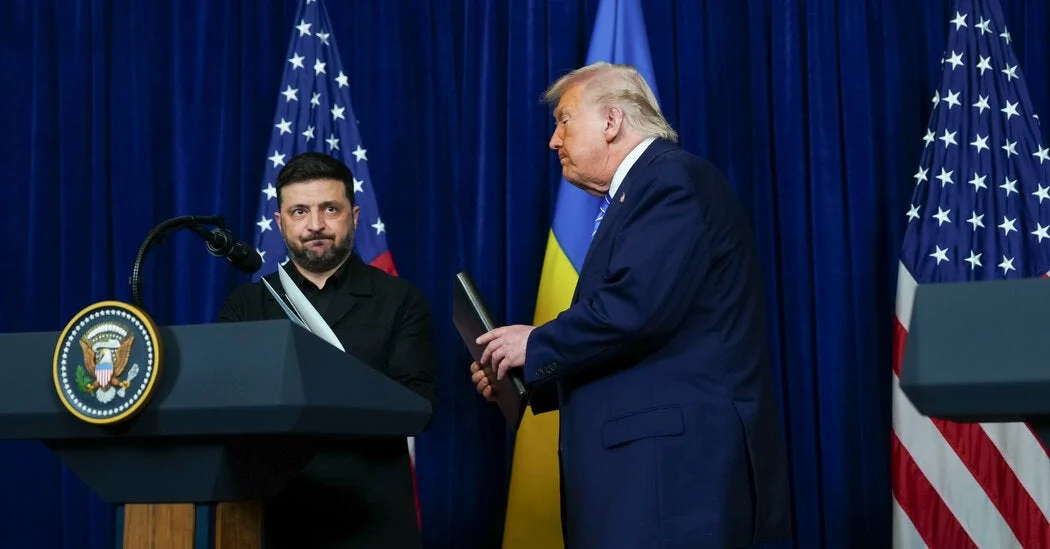
A deepening split between former U.S. President Donald Trump and Ukrainian President Volodymyr Zelensky has emerged, raising concerns that continued tensions could jeopardize vital American assistance to Ukraine. The two leaders have exchanged public criticism in recent weeks, with no clear resolution in sight. If their feud persists, it may strain a partnership that has long underpinned Ukraine’s defense and resilience efforts.
The relationship between Trump and Zelensky has been strained since at least 2019, when Trump’s first impeachment stemmed from a scandal involving a call with Zelensky. Since then, Trump’s unpredictable rhetoric and Zelensky’s appeals for military backing have often clashed. Now, with Trump potentially returning to the political spotlight, the stakes for Ukraine’s access to U.S. funding and hardware appear higher than ever.
KEY FACTS
- Trump-Zelensky relationship is deteriorating rapidly.
- Public war of words threatens U.S. operational aid to Ukraine.
- European allies may lose crucial backing if tensions persist.
- Outcome of feud remains uncertain, per reporting.
The Story
How did we get here?
The current friction builds on years of volatile exchanges between Trump and Zelensky, punctuated by Trump’s 2019 request for investigations into Joe Biden and Hunter Biden during a July phone call. That moment led to Trump’s first impeachment by the House of Representatives. Since then, their interactions have oscillated between transactional praise and sharp rebuke. The renewed tension reflects broader uncertainty over whether Trump, if re-elected, would sustain or reduce U.S. support for Ukraine amid its war with Russia.
Who is affected?
Beyond the two leaders themselves, Ukraine’s national security apparatus relies heavily on American-supplied weaponry, intelligence, and financial aid. European nations also depend on coordinated messaging and joint military strategies tied to U.S. engagement. A breakdown in cooperation risks fragmented Western responses, weakening collective leverage against Russian aggression. For ordinary Ukrainians, any reduction in aid could mean fewer air defenses, slower reconstruction timelines, and heightened vulnerability on the battlefield.
What happens next?
With no immediate diplomatic outreach reported, the path forward hangs on whether either side signals willingness to de-escalate. Analysts note that Trump’s past unpredictability makes forecasting outcomes difficult. Meanwhile, Kyiv continues urging Washington not to waver in its commitment to democratic values and regional stability. Any shift in tone or policy could reshape the trajectory of both the bilateral relationship and the wider conflict.
WHAT WE KNOW — AND WHAT WE DON’T
Verified by the source:
- The Trump-Zelensky relationship is described as rupturing.
- Continued conflict may threaten Ukraine’s receipt of U.S. operational help.
- The article highlights potential harm to Ukraine and European allies.
- The source is The New York Times > World News.
Still unconfirmed:
- Specific recent remarks or timelines from either leader.
- Exact nature of the alleged operational aid at risk.
- Internal deliberations within the White House or EU capitals.
- Official responses from government officials or spokespersons.
Why It Matters
Maintaining strong transatlantic ties remains essential for countering authoritarian influence and upholding democratic solidarity. Should the Trump-Zelensky relationship further unravel, it might reverberate far beyond bilateral diplomacy—impacting global energy markets, refugee policies, and NATO cohesion. Understanding how personal rivalries intersect with foreign policy helps citizens grasp the human cost behind geopolitical decisions.
What To Watch
Observers should monitor upcoming statements from both camps, especially around key anniversaries or summits where Trump-Zelensky dynamics often surface. Shifts in congressional backing for Ukraine aid or changes in NATO posture may also signal evolving alignments. As always, clarity depends on transparent communication—which has yet to materialize.