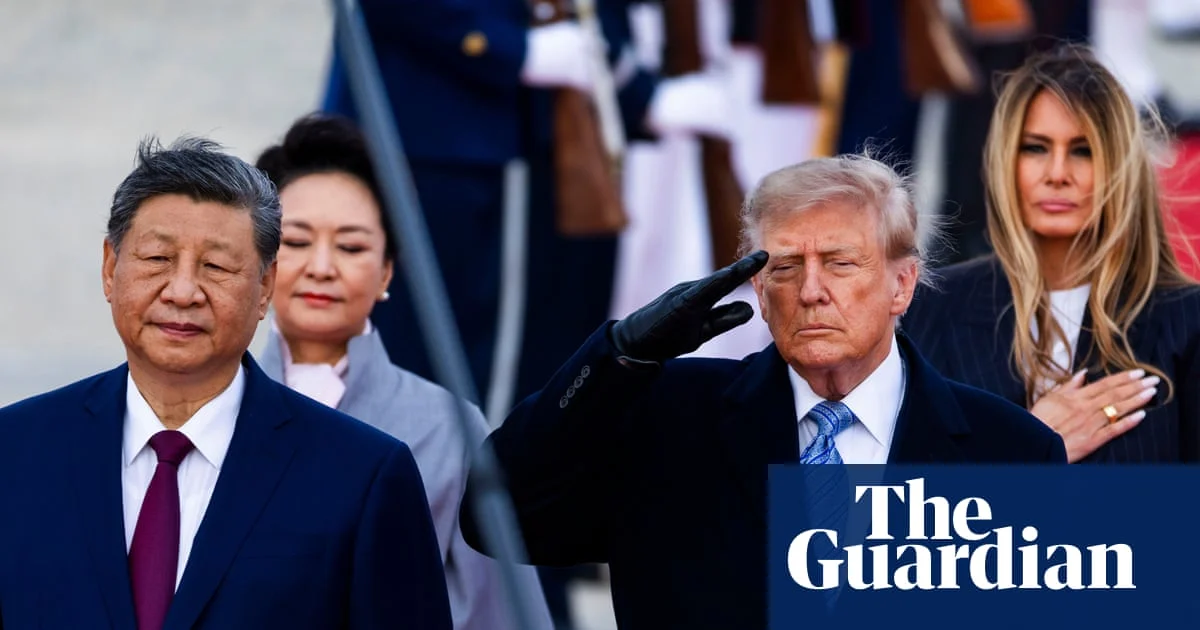
US-China tensions intensified this week as Donald Trump welcomed Chinese leader Xi Jinping to Washington for a state visit, greeting him on the tarmac at Joint Base Andrews before a series of ceremonial events planned at the White House.
The visit comes at a time of deepening friction between the two economic giants, with trade, artificial intelligence development, and cross-strait relations all expected to figure prominently in bilateral discussions.
Key Facts
- Trump welcomed Xi Jinping to the US at Joint Base Andrews.
- Xi is not attending the UN General Assembly in New York.
- Formal events include a White House lawn welcome and a state dinner.
- Tech leaders were invited to the state dinner for Xi.
- Key topics likely include AI, trade, and Taiwan.
The State Visit Unfolds
Upon arrival at Joint Base Andrews, Xi Jinping was greeted directly by President Trump in a move signaling both diplomatic protocol and political symbolism. The state visit continues with a formal welcome ceremony on the South Lawn of the White House, followed by private tea with the U.S. president and first lady, and a tour of the National Archives. These carefully choreographed events underscore the ceremonial importance of the trip, even as underlying policy disagreements simmer between the two nations.
Key Topics on the Bilateral Agenda
At the top of the likely discussion list are three contentious areas: trade relations, the race to develop artificial intelligence technologies, and the status of Taiwan. The U.S. Treasury reported that both sides agreed to extend the Busan trade truce, a temporary measure that has prevented escalation in tariffs and sanctions. Still, friction remains over market access, intellectual property protections, and reciprocal business practices that have defined years of economic sparring between Washington and Beijing.
What Happens Next?
Beyond the immediate state visit, questions remain about whether Xi will attend future international gatherings such as the UN General Assembly or climate forums, and whether progress can be made on AI governance norms, semiconductor export controls, and longstanding disputes over Taiwan’s sovereignty. Regional analysts note that even symbolic encounters like handshakes or brief exchanges carry weight given the scale of interconnected interests across defense, commerce, and technology sectors.
What We Know — and What We Don’t
Verified by the source:
- Trump greeted Xi at Joint Base Andrews at the start of a state visit.
- Xi did not attend the UN General Assembly due to scheduling overlap.
- The White House hosted a formal welcome, private tea, and archival tour.
- The state dinner included invited tech industry leaders.
- U.S. and Chinese officials extended the temporary trade truce known as the Busan agreement.
Still unconfirmed:
- No direct quotes or verbatim statements from either leader were provided.
- Specific timelines or outcomes from closed-door negotiations were not disclosed.
- Exact list of attending tech executives was not named in the source.
Why It Matters
The renewed face-to-face diplomacy reflects the enduring strategic importance of U.S.-China coordination, particularly amid global uncertainty driven by competing visions for technology governance, economic interdependence, and geopolitical influence. For citizens worldwide, shifts in this relationship can ripple through markets, supply chains, and digital innovation policies.
What To Watch
Observers will look for follow-up announcements regarding trade protocols, AI cooperation frameworks, or renewed commitments to multilateral forums. Any formal agreements—or breakdowns—in coming weeks could shape global tech standards and diplomatic alignments moving forward.