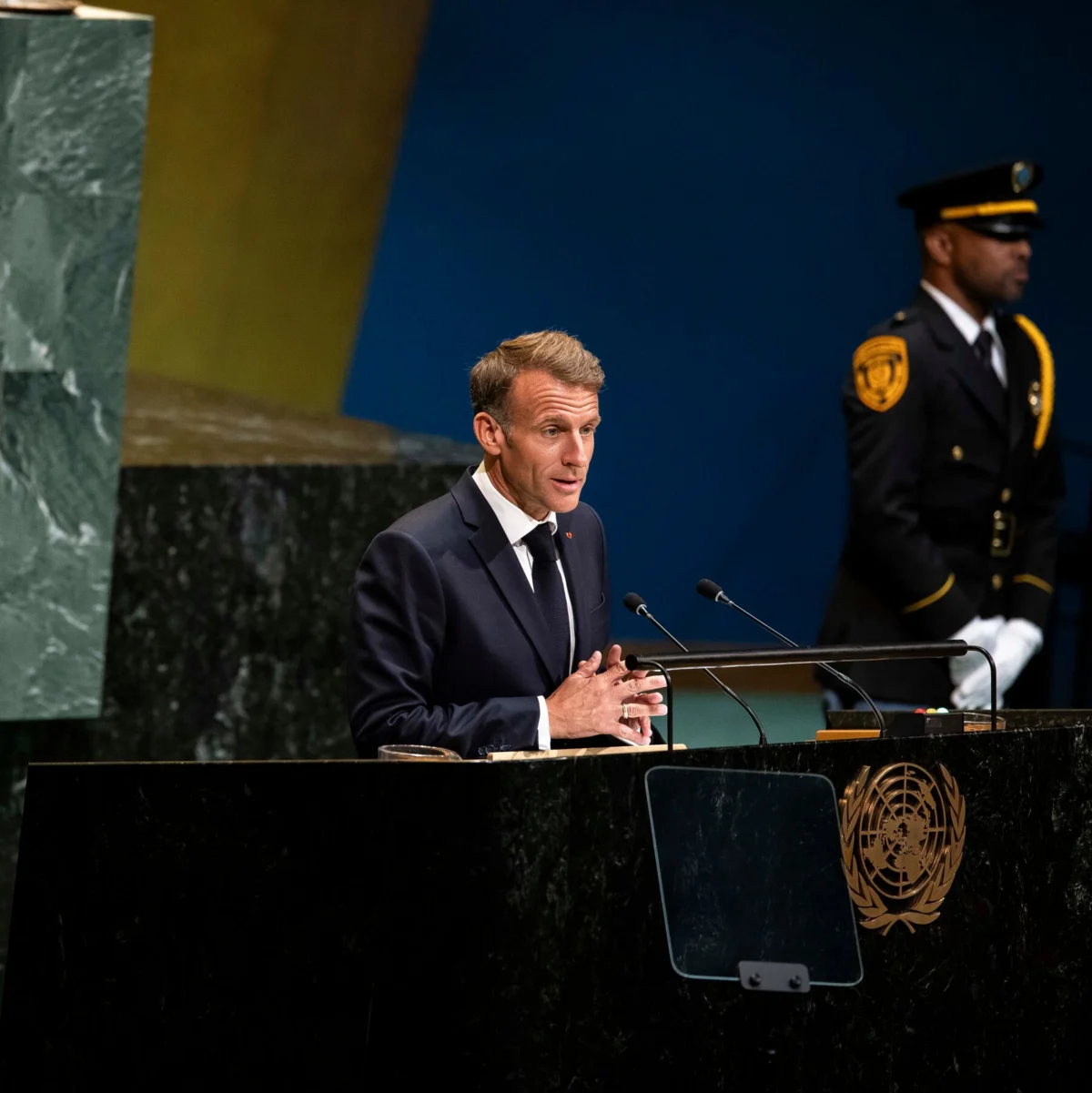
During a rare moment of tension at the United Nations General Assembly, President Trump warned Iran with stark language, suggesting his administration must decide between making a deal or pursuing a path of outright confrontation. In remarks that departed from the usual tone of diplomatic harmony typically seen at the annual gathering, Trump’s comments underscored rising geopolitical friction. His statement — that he would choose between negotiating and ‘annihilating’ Iran — was met with caution from several world leaders, who used the forum to highlight growing divisions across the global stage.
Trump’s speech came during a high-profile session where nations traditionally emphasize unity and shared priorities. Instead, the atmosphere shifted as multiple delegations pointed to increasing polarization on key international issues, reflecting a broader breakdown in multilateral cooperation.
KEY FACTS
- President Trump said he must decide whether to make a deal or “annihilate” Iran.
- The remarks were made at the U.N. General Assembly, where leaders usually promote global harmony.
- Other world leaders warned of deep divisions among nations.
- The event highlighted tensions within the U.N. forum instead of unity.
THE STORY
What happens next?
Following Trump’s remarks, attention has turned to potential responses from both Iran and other participating nations. The U.N. General Assembly serves as a key venue for diplomatic signaling, and statements made here often shape subsequent policy discussions. While Trump did not outline specific actions, his use of forceful language indicates a willingness to escalate rhetoric around Iran. World leaders, meanwhile, appear increasingly wary of unilateral approaches to global conflicts, favoring dialogue despite mounting disagreements.
Several countries have echoed concerns about fragmentation in global governance, suggesting that traditional alliances and diplomatic frameworks may no longer suffice in addressing modern challenges. This sentiment reflects wider unease over how major powers engage with one another on pressing matters such as security, trade, and regional stability.
No formal sanctions or military moves were announced in connection with Trump’s speech, but analysts say the tone sets a new precedent for U.S. engagement at international forums, particularly when addressing adversaries like Iran.
Who is affected?
The implications of Trump’s statement extend beyond immediate U.S.-Iran relations. Allies and partners attending the assembly reportedly expressed discomfort with the heightened rhetoric, fearing it could destabilize ongoing negotiations and regional efforts aimed at preventing conflict. Nations reliant on peaceful resolutions to cross-border disputes also voiced concern over the erosion of diplomatic norms during the gathering.
For Iran, Trump’s comments reaffirm what many inside the country view as continued hostility from Washington, potentially complicating internal political dynamics and external negotiations. Meanwhile, neutral observers and mediators worry that such language undermines confidence in multilateral institutions designed to facilitate de-escalation.
Younger generations of diplomats and civil society members present at side events expressed frustration with old-school tactics, calling instead for renewed emphasis on inclusive dialogue and collective problem-solving.
How did we get here?
Historical tensions between the United States and Iran have simmered beneath the surface of international diplomacy for years. Previous administrations attempted various forms of engagement, ranging from nuclear accords to economic incentives, with mixed results. Under Trump, however, many of those agreements were either dismantled or renegotiated unilaterally, leading to a breakdown in trust and communication channels.
This backdrop helped set the stage for Trump’s latest pronouncement at the U.N. Rather than signaling openness to compromise, his words reinforced a pattern of maximalist posturing that has characterized recent U.S. foreign policy vis-à-vis Tehran. At the same time, global sentiment has grown skeptical of aggressive posturing, pushing more nations toward collaborative strategies even amid shared differences.
The convergence of these factors created an environment ripe for confrontation, yet also one where quiet diplomacy continues to offer hope for measured responses and avoided escalations.
WHAT WE KNOW — AND WHAT WE DON’T
Verified by the source:
- President Trump stated he must decide between making a deal or annihilating Iran.
- His comments occurred during the U.N. General Assembly.
- World leaders used the occasion to warn about deep divisions.
Still unconfirmed:
- No specific timeline or conditions tied to Trump’s decision-making process.
- No official response from Iran or named world leaders was included.
- No details provided regarding audience reactions or follow-up meetings.
- It remains unclear if any formal proposals or countermeasures will emerge.
WHY IT MATTERS
The Trump Iran threat represents a concerning shift in how major powers communicate at global institutions like the U.N. When heads of state resort to ultimatums rather than diplomacy, it weakens the tools available for managing crises peacefully. For everyday citizens, this rhetoric increases the risk of misunderstanding, fear, and instability — especially in regions already strained by conflict or sanctions. It also raises questions about whether multilateral spaces can still serve their intended purpose: fostering cooperation amid disagreement.
Meta Description: At the U.N. General Assembly, President Trump said he must choose between dealing with Iran or annihilating it, prompting warnings from other world leaders about global divisions.
WHAT TO WATCH
Future speeches and bilateral meetings at the U.N. may reveal how seriously other nations take Trump’s stance and whether diplomatic pathways remain viable for resolving tensions with Iran. Updates from the White House or Iranian officials could clarify next steps, though no public timeline has been set.
Also read: Latest in War & Geopolitics | Political Developments