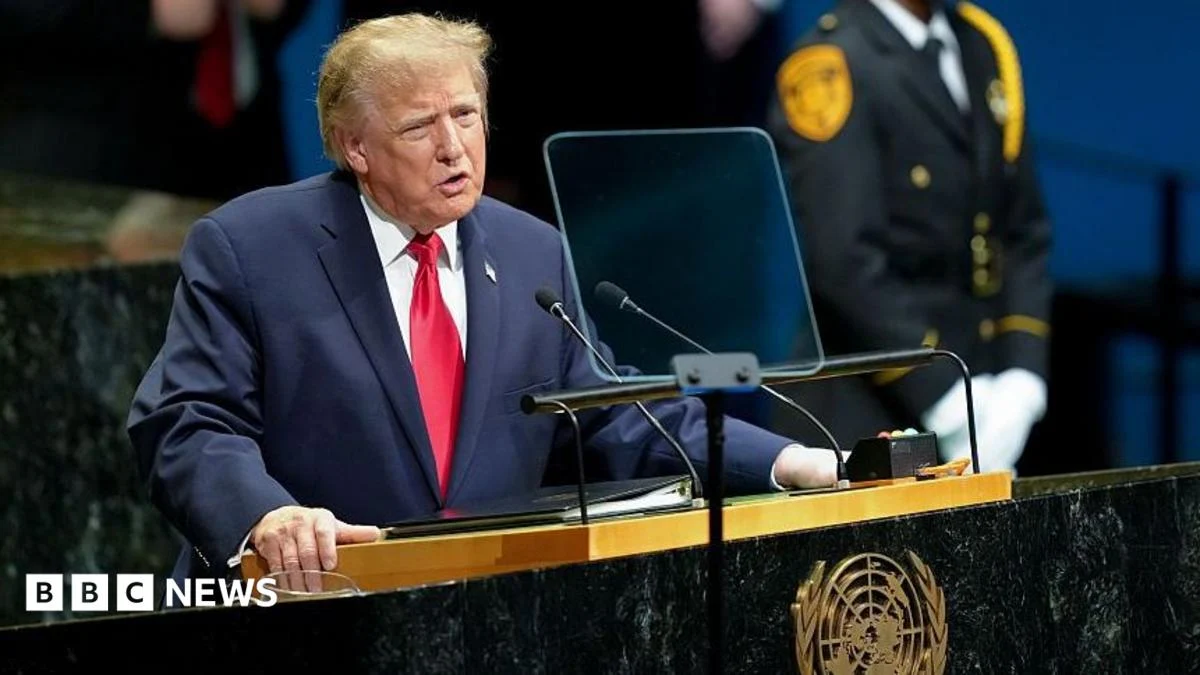
At the United Nations, Donald Trump indicated he is weighing a major decision about whether to take military action against Iran or pursue a diplomatic solution. His remarks contrasted sharply with those of UN Secretary-General António Guterres, who cautioned that global divisions are growing deeper.
Trump’s framing of the Iran situation as a binary choice between escalation and negotiation underscores the ongoing uncertainty surrounding U.S. foreign policy toward the country. No further details about timing or scope were provided in his public statement.
Key Facts
- Trump said he faces a ‘big decision’ on Iran at the UN.
- He suggested the choice is between ‘annihilating’ Iran or making a peace deal.
- His tone contrasted with UN Secretary-General António Guterres’ warning about deepening global divisions.
What Happens Next?
The future of U.S. policy toward Iran remains unclear. Trump’s comments suggest a pivotal moment may be approaching, though no concrete steps have been announced.
His reference to ‘annihilation’ echoes past rhetoric used before previous military interventions, while the mention of a peace deal aligns with historical diplomatic efforts. Analysts will watch for follow-up statements from the White House or National Security Council for clarity on direction.
In the absence of formal policy announcements, markets and allies are likely to remain cautious. Regional actors in the Middle East, particularly those with diplomatic or economic ties to Iran, are expected to monitor developments closely. The UN General Assembly session provides a high-profile venue for any potential shifts in rhetoric or policy.
How Did We Get Here?
Tensions between the United States and Iran have simmered for decades, marked by sanctions, military posturing, and stalled negotiations over Iran’s nuclear program. Trump’s 2018 withdrawal from the Joint Comprehensive Plan of Action (JCPOA) intensified friction, leading to increased regional instability.
The current standoff reflects broader concerns about nuclear proliferation, proxy conflicts, and energy security. Recent intelligence reports and naval skirmishes in the Persian Gulf have fueled speculation about renewed conflict, though neither side has formally declared intent to escalate.
With midterm elections and international summits on the horizon, both nations face domestic pressures that complicate long-term strategy. The UN forum offers a rare opportunity for direct dialogue, even amid hostile exchanges.
What We Know — and What We Don’t
Verified by the source:
- Trump spoke at the United Nations.
- He framed his options as annihilation or peace.
- Guterres warned of worsening global divisions.
Still unconfirmed:
- No specific timeline for a decision was given.
- The exact nature of any potential military plan remains unknown.
- Details of proposed peace negotiations were not disclosed.
- It is unclear if other world leaders responded directly.
Why It Matters
The trajectory of U.S.-Iran relations affects global energy prices, regional stability, and international diplomatic efforts. A renewed conflict could disrupt trade routes and refugee movements, while a peace initiative might reshape alliances across the Middle East and Europe.
What to Watch
Future statements from the White House or UN representatives could clarify whether Trump’s comments signal imminent policy shifts or serve as strategic messaging.