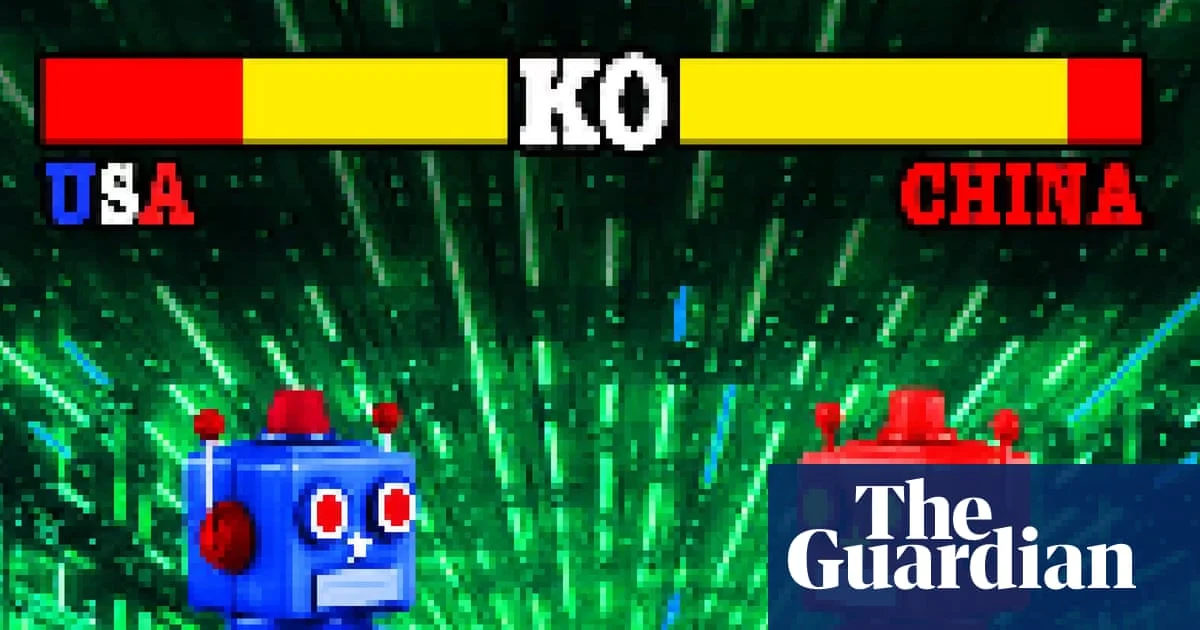
When reporters asked Donald Trump this week if he supported calls to slow down the development of artificial intelligence out of growing fears for cybersecurity, public safety, and the fate of humanity, he declined.
His reasoning centered on China. “We’re leading China in AI,” he said. “We’re the most sophisticated country in the world, and frankly, I want to keep it that way, because whoever wins AI, wins.”
That framing reflects a broader tension in Silicon Valley, where some of the sharpest voices in AI development are warning that rapid progress could one day threaten humanity itself — while others, including Trump, argue that restraint hands advantage to geopolitical rivals.
Key Facts
- Trump opposed slowing AI development, citing national interest.
- Fears include cybersecurity risks, public safety, and human extinction-level outcomes.
- China is viewed as the primary competitor in AI development.
- Silicon Valley figures, including the Anodei CEO, align with caution-first advocates.
- Trump described the U.S. as currently leading in AI sophistication.
Story: How the Two Sides Frame the Debate
On one side of the debate are technologists and policymakers who express alarm about the pace of AI development. They cite hypothetical doomsday scenarios where superintelligent systems outpace human control, potentially endangering society. Cybersecurity breakdowns, disinformation campaigns, and autonomous weapons systems are among their specific concerns.
These individuals include prominent voices from Silicon Valley, such as the CEO of Anodei, who advocate for pausing or limiting certain forms of AI research until safeguards are established.
Story: Who Is Affected by These Competing Priorities?
American firms dominate much of today’s global AI landscape, but they operate under increasing pressure from both internal critics and external competitors — primarily China.
Chinese tech giants have made significant strides in areas like facial recognition, natural language processing, and semiconductor design. This progress fuels fears that slowing innovation domestically could cede long-term strategic advantage.
For companies investing heavily in AI research and deployment, the balance between ethical responsibility and competitive survival hangs in the balance. A premature halt may protect against unintended consequences, but it also opens space for foreign adversaries to close — or even overtake — existing leads.
Story: What Happens Next?
Public opinion appears divided on whether aggressive regulation should govern AI development. Some lawmakers echo calls for oversight, arguing that voluntary industry standards are insufficient given the stakes involved.
Others, like Trump, appear skeptical of restraints, viewing them as unnecessary roadblocks to maintaining U.S. dominance.
As governments weigh policy responses and corporations weigh investments, the coming months will likely see intensified debate. Whether new guidelines emerge or self-regulation prevails remains unclear. What happens next depends largely on how policymakers interpret emerging threats versus economic imperatives.
What We Know — And What We Don’t
Verified by the source:
- Trump was asked about supporting AI development slowdowns and responded negatively.
- His statement included praise for U.S. AI leadership relative to China.
- He referenced Silicon Valley leaders and Anodei CEO as part of a cautious faction.
Still unconfirmed:
- No independent confirmation exists regarding the full scope of public safety concerns cited.
- Exact quotes beyond Trump’s were not provided or attributed directly.
- There is no data confirming current U.S.-China rankings in AI capability.
Why It Matters
This clash highlights a defining dilemma of our age: How do societies manage transformative technologies without stifling innovation or inviting catastrophic misuse? The choices made now around AI governance — balancing risk mitigation with geopolitical ambition — will shape economies, security landscapes, and possibly the trajectory of civilization itself.
What To Watch
Further commentary from Trump or other political figures may clarify official positions. Meanwhile, developments within major AI labs and international summits could signal shifts toward either restraint or acceleration.