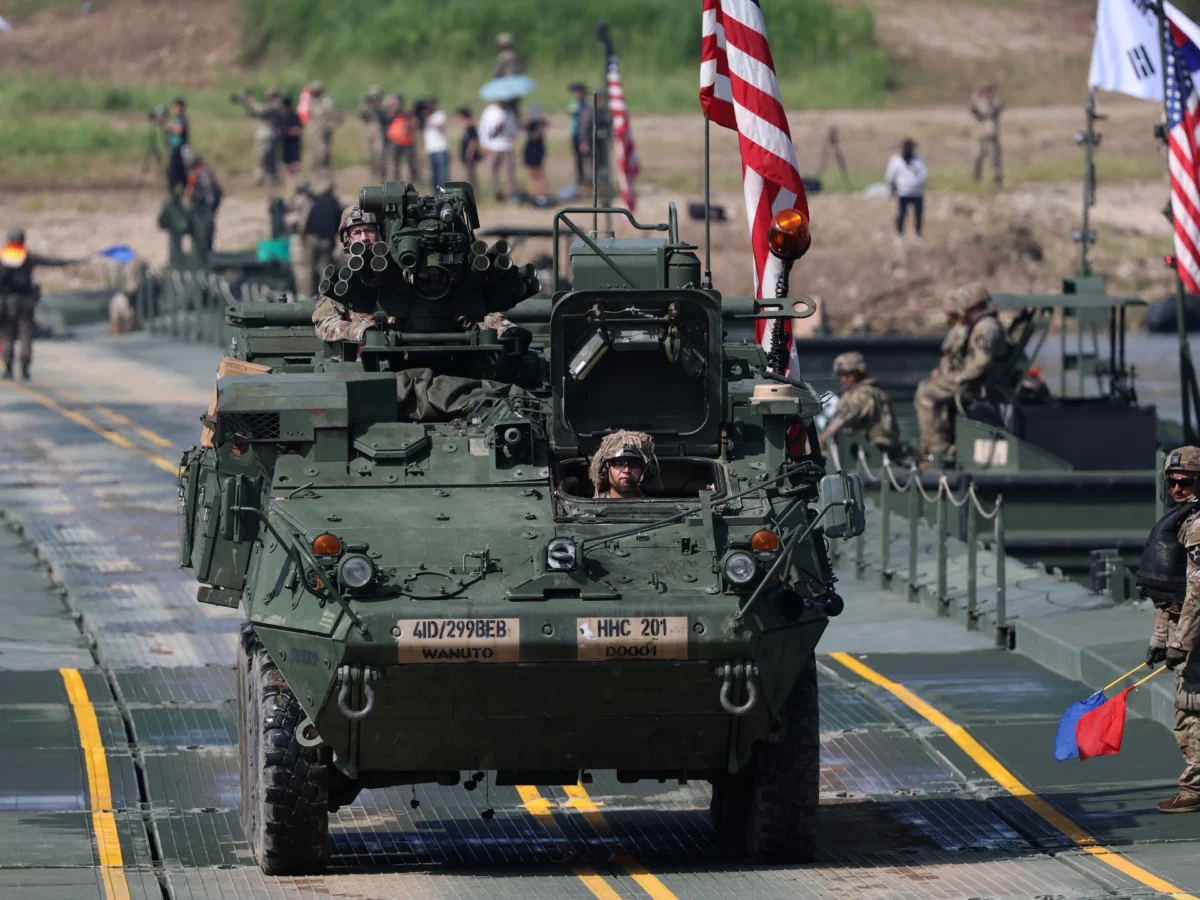
President Trump announced plans to ‘substantially reduce’ U.S. military drills with South Korea, citing his ‘very good relationship’ with North Korean leader Kim Jong Un. The U.S. president stated he’s ‘not happy’ about the current scale of joint exercises between the two allied nations.
This move comes amid ongoing diplomatic efforts with North Korea, though the specific timeline and extent of the reduction remain unclear. The announcement marks a potential shift in longstanding military cooperation between the U.S. and South Korea that has been a cornerstone of regional security for decades.
KEY FACTS
- Trump says US will ‘substantially reduce’ military drills with South Korea
- He cites his ‘very good relationship’ with North Korea’s Kim Jong Un
- The president says he’s ‘not happy’ about current military exercises
Why reduce drills now?
The planned reduction follows several years of fluctuating tensions on the Korean peninsula. Joint military exercises between the U.S. and South Korea have historically drawn strong opposition from North Korea, which views them as provocative rehearsals for invasion. Trump’s reference to his relationship with Kim suggests personal diplomacy may be playing an increased role in U.S. defense policy decisions regarding the region.
What this means for the alliance
For decades, joint military drills have been a key component of the U.S.-South Korea security alliance. The exercises help maintain readiness and demonstrate U.S. commitment to regional stability. Any substantial reduction could affect military preparedness and send strategic signals to allies and adversaries throughout Asia. However, proponents might argue scaled-back exercises could reduce tensions and create space for diplomatic progress.
WHAT WE KNOW — AND WHAT WE DON’T
Verified by the source:
- Trump announced plans to reduce military exercises with South Korea
- He cited his relationship with Kim Jong Un as a factor
- The president expressed dissatisfaction with current drills
Still unconfirmed:
- Precise timeline for implementing exercise reductions
- How South Korea’s government views this announcement
- Which specific drills will be affected and to what degree
WHY IT MATTERS
Joint military exercises represent more than just training – they’re a visible symbol of the U.S.-South Korea alliance and a deterrent against potential aggression. Changes to this longstanding practice could indicate shifting priorities in U.S. foreign policy and affect regional power dynamics. The decision may have political ramifications both domestically and internationally.
WHAT TO WATCH
Observers will monitor how South Korea responds to this announcement and whether this signals broader changes to U.S. force posture in the region. Future diplomatic developments between the U.S. and North Korea may provide context for understanding this shift in military policy.