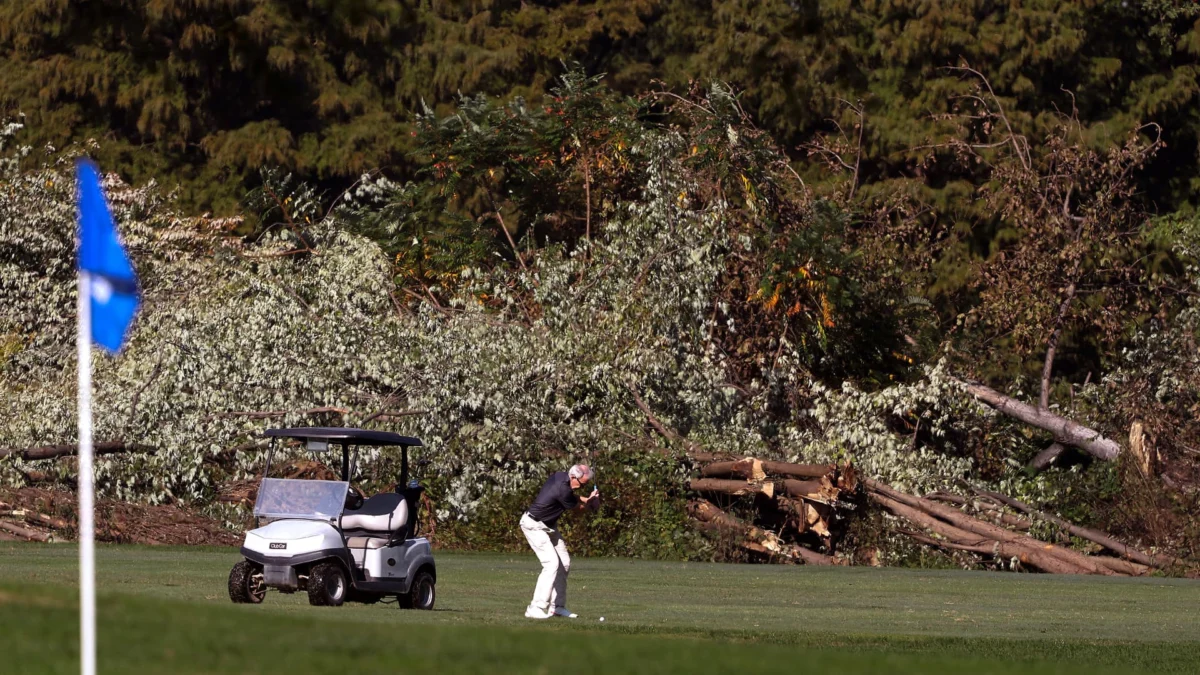
Former U.S. President Donald Trump announced plans to shut down his historic Washington, D.C., golf course for roughly 15 months to conduct major renovations. The Trump National Golf Club, located along the Potomac River, is scheduled to close starting in early 2026 for what Trump has described as a comprehensive upgrade to the course and clubhouse facilities.
However, a federal judge issued an order last week temporarily blocking the renovation plans until at least October 26, 2026. The halt comes after the court expressed concern over large-scale tree removal already initiated at the property without proper authorization. The judge criticized federal officials for allowing the work to proceed before completing required environmental assessments.
Key Facts
- Trump announced plans to close his historic DC golf course for 15 months of renovations.
- A federal judge ordered a temporary halt to the project until at least Oct. 26, 2026.
- The delay follows unauthorized large-scale tree removal at the course.
- The court scolded the government for beginning work without permits.
- The course is located along the Potomac River in Washington, D.C.
What Happens Next?
The fate of the Trump National Golf Club’s renovation project now rests with the federal court system. A preliminary injunction issued by a federal judge will remain in effect until at least October 26, 2026, giving regulators time to complete environmental reviews and determine whether the planned tree removal and construction activities violated federal laws governing public lands and natural resources.
The course sits on federal land managed by the National Park Service, which has raised concerns about the environmental implications of removing mature trees and altering the landscape. Legal experts say the court’s decision to pause the project reflects broader tension between private development interests and public land stewardship on federally owned properties.
Meanwhile, Trump has not publicly responded directly to the court’s rebuke. His organization previously stated that the renovations aim to modernize the course and improve its long-term sustainability. Observers say the ruling could set a precedent for how future development projects on federal land are evaluated, particularly those involving high-profile individuals or entities.
How Did We Get Here?
Trump began acquiring land in northwest Washington, D.C., in the 1990s and later opened the Trump National Golf Club in 2006. The course has long been a subject of controversy, including disputes over zoning, environmental impact, and access restrictions. In recent years, Trump has promoted the course as one of his most prized assets, often hosting political events and fundraising dinners there.
The latest conflict stems from renovation efforts announced earlier this year. According to US Top News and Analysis, the Trump Organization filed paperwork to begin upgrades, but federal agencies moved forward with tree clearing before obtaining final approval. The court’s intervention signals growing scrutiny of the administration-era lease agreement between the federal government and Trump’s company—a deal that has faced repeated criticism for potential conflicts of interest and procedural shortcuts.
The ongoing legal battle underscores the complex relationship between private ownership rights and federal oversight on public lands. As more details emerge, stakeholders—including local residents, environmental groups, and city officials—are watching closely to see whether the project will resume after the court-mandated review period concludes.
What We Know — and What We Don’t
Verified by the source:
- Trump announced plans to close his historic DC golf course for 15 months of renovations.
- A federal judge ordered a temporary halt to the plans until at least Oct. 26, 2026.
- The government began a large-scale tree removal effort at the course.
- The court criticized the government for initiating tree removal without proper permits.
Still unconfirmed:
- The exact start date of the planned 15-month closure.
- Specific scope and budget of the proposed renovations.
- Names of federal officials involved in approving or halting the work.
- Whether additional environmental violations occurred beyond tree removal.
Why It Matters
This story touches on issues of public land use, environmental regulation, and accountability in government contracting. With the course sitting on federally managed land, its future renovations may influence how similar projects are reviewed nationwide, especially when tied to politically connected figures.
For local communities and environmental advocates, the case raises questions about transparency and the protection of green spaces within urban areas like Washington, D.C. The outcome could also shape public perception around the balance between private enterprise and public responsibility on taxpayer-owned land.
What To Watch
All eyes are on the October 26, 2026, deadline set by the court. Any decision made before then regarding the status of the golf course renovation could significantly impact both the Trump Organization’s plans and ongoing discussions about land use policy in the nation’s capital. Updates are expected as the review process unfolds.