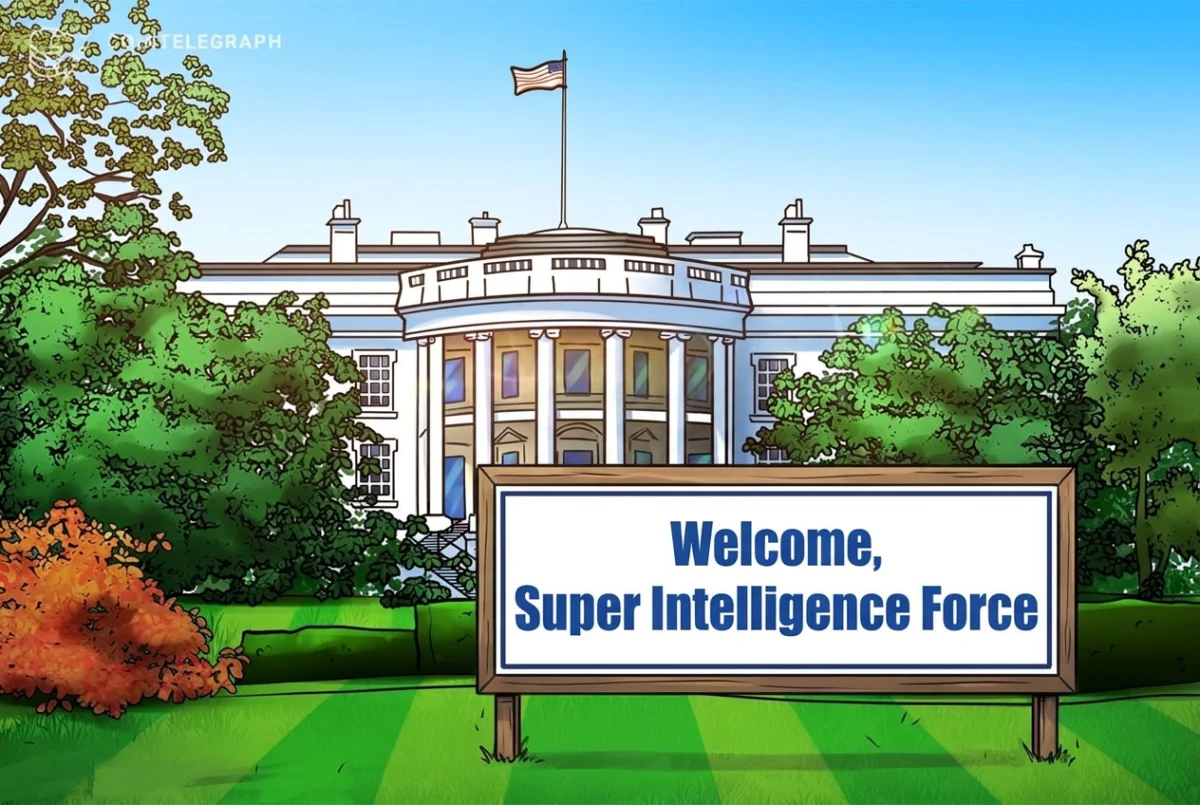
President Donald Trump announced that U.S. intelligence chief Jay Clayton will lead the newly formed Super Intelligence Force, a unit that will report directly to the president and Chief of Staff Susie Wiles.
The Super Intelligence Force was established as part of the administration’s effort to modernize and streamline intelligence operations, according to Cointelegraph.com News. Details about the agency’s structure, staffing, and specific mission remain undisclosed in the source material.
KEY FACTS
- President Donald Trump selected Jay Clayton to lead the Super Intelligence Force.
- The Super Intelligence Force reports to the president and Chief of Staff Susie Wiles.
- Jay Clayton currently serves as U.S. intelligence chief.
What This Means
The creation of the Super Intelligence Force signals a shift toward centralized control of intelligence activities within the executive branch, with the new entity operating outside traditional departmental oversight. Because the agency reports directly to the president and the chief of staff, it bypasses the usual congressional committee review mechanisms that oversee most intelligence programs. This structure raises questions about transparency and accountability that will likely draw scrutiny from lawmakers and civil liberties groups.
Who Is Affected
The Super Intelligence Force will impact existing intelligence professionals, as Clayton’s leadership may redirect priorities and resource allocation within the broader U.S. intelligence community. Other agencies such as the CIA, NSA, and FBI could see shifts in inter-agency cooperation and information sharing protocols. For the public, the new arrangement means intelligence operations may become less visible through traditional congressional oversight channels, potentially altering the balance between national security secrecy and democratic accountability.
WHAT WE KNOW — AND WHAT WE DON’T
Verified by the source:
- President Trump announced the Super Intelligence Force.
- Jay Clayton will lead the Super Intelligence Force.
- The agency reports to the president and Chief of Staff Susie Wiles.
Still unconfirmed:
- The specific mission and operational scope of the Super Intelligence Force.
- The number of personnel or budget assigned to the new entity.
- The exact date the Super Intelligence Force becomes fully operational.
Why It Matters
Centralized intelligence structures can accelerate decision-making but may reduce checks and balances that traditionally govern surveillance and domestic operations.
What To Watch
Future announcements may clarify the agency’s legal framework and whether Congress receives briefings.