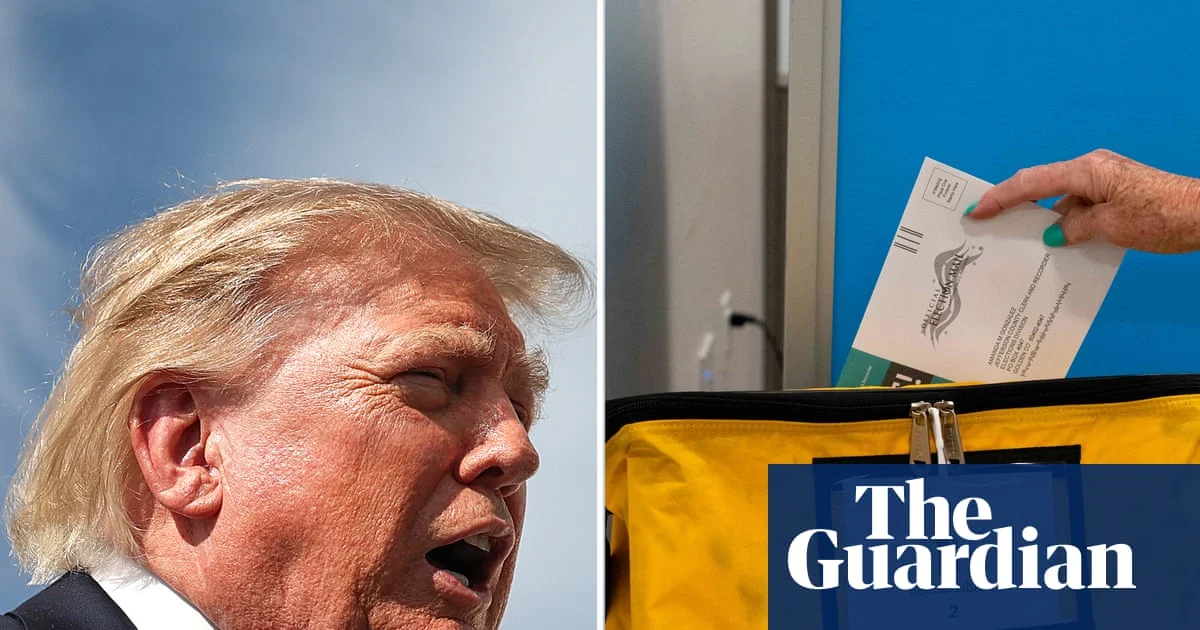
A Trump administration executive order restricting mail-in voting was rejected by the Supreme Court, temporarily restoring certainty for millions of voters who rely on absentee ballots. The ruling rebuked the president’s March directive, which had sparked confusion about ballot eligibility and delivery ahead of the midterm elections.
By Monday night, the Supreme Court’s decision provided a brief respite for the roughly one-third of Americans who vote by mail. However, the broader threat to mail-in voting persists, as the president signaled further challenges to the electoral process.
Key Facts
- Trump issued a March executive order restricting mail-in ballots.
- The order barred USPS from delivering ballots to those deemed ineligible.
- DHS and SSA were tasked with identifying noncitizen voters.
- The Supreme Court rejected the order, calling it unconstitutional.
- Experts called the order an illegal overreach of federal authority.
What happened to mail-in voting rules?
The March executive order attempted to bar the U.S. Postal Service from delivering mail-in ballots to anyone the administration considered ineligible. The Department of Homeland Security, in coordination with the Social Security Administration, was directed to compile a list of supposed noncitizen voters. Legal experts immediately flagged the order as unconstitutional, arguing that only states, not the federal government, have the authority to set election rules. On Monday night, the Supreme Court rebuked the president and rejected the plan, restoring a measure of order just weeks before the midterms.
Who is affected by mail-in voting restrictions?
Nearly one-third of American voters cast ballots by mail, making them directly impacted by changes to postal delivery policies. These voters include elderly individuals, people with disabilities, military personnel stationed overseas, and residents in rural areas with limited polling access. The executive order created uncertainty about whether their ballots would reach election officials in time. Even after the Supreme Court ruling, concerns linger about future disruptions to mail-in voting, particularly in states that rely heavily on absentee ballots.
How did the dispute escalate to the Supreme Court?
The controversy began when the president issued an executive order in March aimed at tightening mail-in ballot procedures. The directive tasked federal agencies with vetting voter eligibility, a move that sparked legal challenges on the grounds that federal overreach infringes on state sovereignty over elections. Courts moved swiftly, and the case reached the Supreme Court, which unanimously rejected the order. Despite the rebuke, the president’s defiant response suggests that additional clashes over voting procedures may emerge before Election Day.
What We Know — and What We Don’t
Verified by the source:
- The Supreme Court rejected the president’s executive order on mail-in ballots.
- The order had assigned DHS and SSA to identify ineligible voters.
- Experts deemed the order unconstitutional.
Still unconfirmed:
- The full text and specific implementation timeline of the executive order.
- Whether further legal challenges or alternative directives will follow.
- The total number of voters potentially affected nationwide.
Why It Matters
The integrity of the electoral process is fundamental to democratic governance. When executive actions attempt to alter voting mechanisms, especially so close to a major election, the potential for disenfranchisement rises. The Supreme Court’s rebuke offers temporary protection for mail-in voting, but ongoing disputes pose risks to public confidence and voter access in the upcoming midterms.
What To Watch
Legal experts anticipate additional court filings and possible appeals. The White House has not ruled out alternative measures to challenge mail-in voting protocols before the November midterm elections.