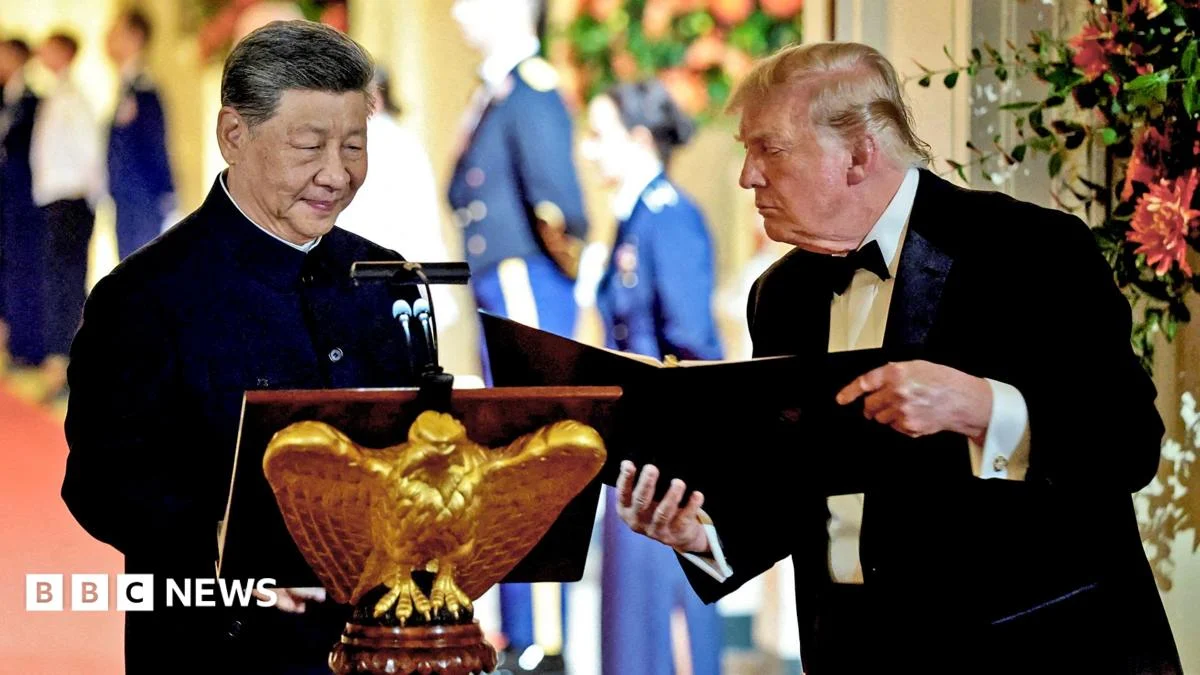
At a state dinner marked by polite exchanges and ceremonial courtesy, U.S. President Donald Trump and Chinese President Xi Jinping exchanged warm words but made little apparent headway on the major issues dividing their nations. The dinner, steeped in traditional diplomatic ritual, underscored how ceremonial goodwill has struggled to translate into substantive policy breakthroughs. While both sides exchanged gifts and praised bilateral ties, the underlying tensions over trade, technology, and regional security remained largely unresolved.
Key Facts
- Trump and Xi exchanged warm words at a state dinner.
- Little progress was made on key issues separating the leaders.
- Diplomatic niceties and gifts were exchanged during the meeting.
- Few details were shared on substantial matters of disagreement.
What the State Dinner Revealed
The state dinner served as a carefully choreographed display of mutual respect and shared protocol, yet the substance behind the ceremony remained thin. Diplomatic traditions often mask deeper strategic disagreements, and this event appeared to follow that familiar pattern. Neither leader offered new concessions or timelines for resolving long-standing disputes, suggesting that the warmth of the occasion did not extend to policy alignment.
How Did We Get Here?
Years of escalating trade friction, competing visions for regional influence, and disagreements over technology transfer have defined U.S.-China relations in recent years. The state dinner represented an opportunity to reset the tone, but without concrete follow-up mechanisms or joint declarations, analysts note that symbolic gestures alone are unlikely to bridge the gap. Past summits have similarly produced cordial moments but few lasting agreements on core issues.
What We Know — and What We Don’t
Verified by the source:
- Leaders exchanged warm words and diplomatic courtesy at the dinner.
- Gifts were presented as part of traditional protocol.
- No substantial progress was reported on key separating issues.
Still unconfirmed:
- Specific topics discussed during private portions of the dinner.
- Timeline or framework for future negotiations.
- Content and significance of gifts exchanged.
- Whether any informal understandings were reached.
Why It Matters
The trajectory of U.S.-China relations affects global markets, supply chains, and regional stability. When the world’s two largest economies fail to advance cooperation on critical issues, uncertainty tends to rise across financial and political landscapes.
What To Watch
Future bilateral meetings and official statements from either capital may clarify whether the state dinner was a prelude to deeper talks or simply a moment of diplomatic courtesy with no follow-through.