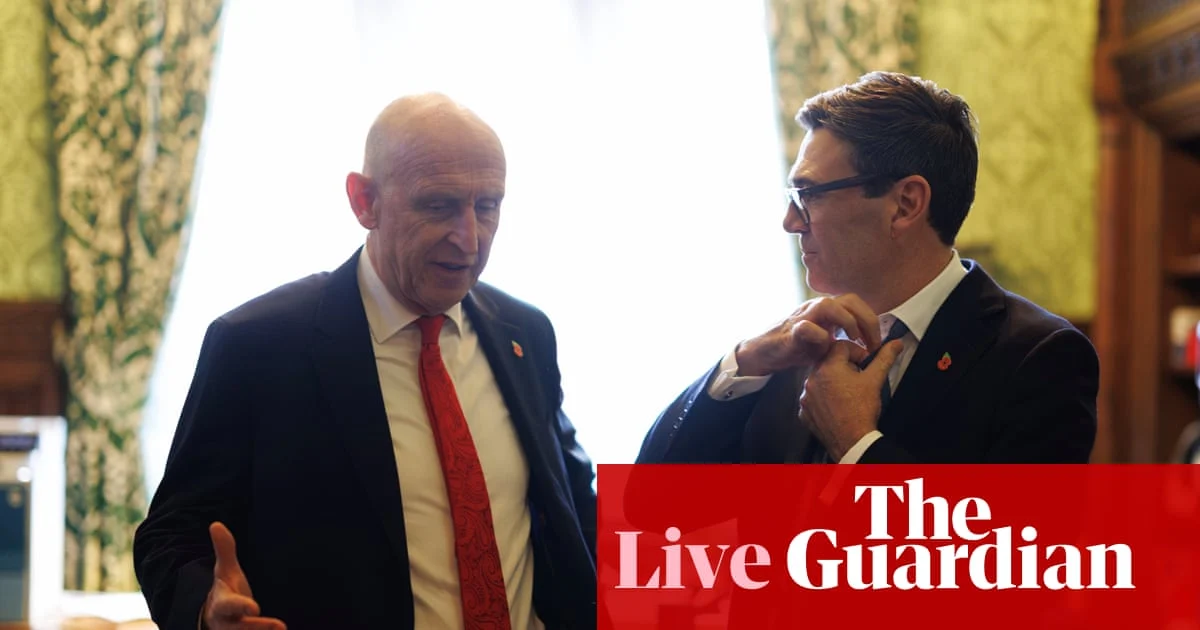
The Treasury has denied that Chancellor John Healey intended to announce planned cuts to the welfare bill ahead of the next election, saying his earlier remarks were misinterpreted.
The clarification came after the chancellor was asked whether there would be a cut to the welfare bill before the next election, reportedly responding that there would be a reduction in the benefits bill. The Treasury later clarified that no decisions had been taken.
Key Facts
- Treasury denies Healey planned welfare bill cuts before the next election.
- Chancellor’s comment about reducing the benefits bill was deemed misinterpreted.
- Debt interest spending to reach £147bn in 2029-30, up £13bn from March forecast.
- Debt interest projected at 4.1% of GDP, above combined Universal Credit, Housing Benefit and Child Benefit spend.
- RHDI income growth this decade forecast at just 1.4%, or £400 by 2026-27 prices.
What was said and when
According to reporting in World news | The Guardian, the chancellor was asked about potential cuts to the welfare bill before the next election and replied that there would be a reduction in the benefits bill. The Treasury subsequently issued a statement saying those comments had been misinterpreted and that no decisions had been made regarding changes to benefit spending levels.
The exchange occurred during a budget briefing period in which economic forecasts were also being discussed. The Resolution Foundation published its full 48-page report on the budget during the same timeframe, adding context to ongoing fiscal discussions.
What the numbers show
New forecasts indicate debt interest spending will rise to £147bn in 2029-30, an increase of £13bn from earlier projections made in March. This trajectory places debt servicing costs at 4.1% of GDP in 2029-30, rising slightly to 4.14% in 2031-32 — the highest proportion since 1956-57.
These figures exceed the projected combined expenditure on Universal Credit, Housing Benefit and Child Benefit in the same year. Additionally, Real Household Disposable Income (RHDI) is expected to grow only 1.4% across the entire decade, equating to roughly £400 in 2026-27 prices.
This pace contrasts sharply with the previous decade, which saw stronger but still historically low income gains. Analysts note that rising taxes and import prices are dampening household purchasing power despite broader economic indicators.
Why the clarification matters
The Treasury’s correction highlights sensitivities around benefit policy ahead of a likely electoral cycle. With debt servicing costs rising faster than benefit programs themselves, any perceived signal of cuts triggers immediate political fallout.
For voters and advocacy groups monitoring access to social support systems, clarity from officials remains critical. The phrasing used by high-ranking figures often shapes market expectations and public perception alike.
What We Know — and What We Don’t
Verified by the source:
- The Treasury denied that Healey planned welfare bill cuts before the next election.
- His remarks about reducing the benefits bill were described as misinterpreted.
- Debt interest spending is forecast at £147bn in 2029-30.
- RHDI growth for the 2020s is projected at only 1.4%.
Still unconfirmed:
- Exact wording of the chancellor’s original statement.
- Whether specific benefit programs face reductions in future budgets.
- Timeline for official policy decisions on welfare reforms.
Why It Matters
As the UK navigates high debt servicing costs and stagnant income growth, fiscal choices carry major implications for households reliant on state benefits. Clarity from the Treasury helps anchor both investor confidence and voter trust during uncertain times.
What To Watch
Official statements from the Treasury and updated budget documents may provide further detail on spending plans. Watch for responses from opposition parties and advocacy organizations tracking benefit policies.