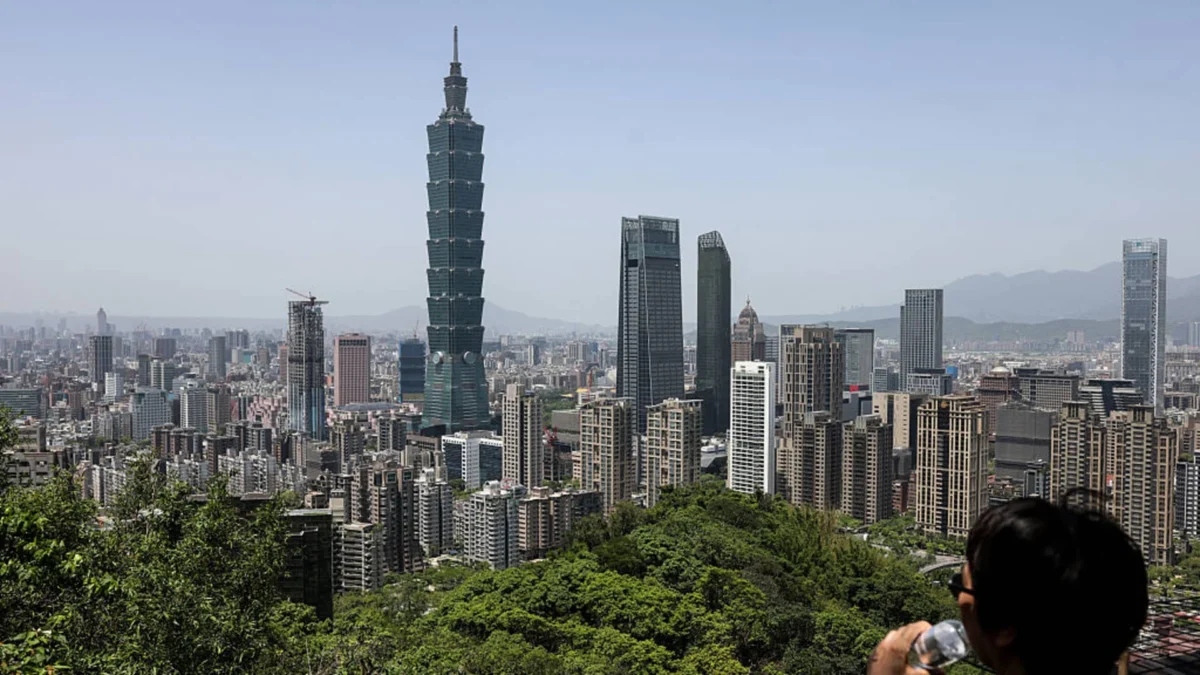
Taiwan’s economic growth, forecasted at 11% due to AI and semiconductor dominance, may not be sustainable, according to economists. The island’s heavy reliance on tech exports leaves it vulnerable to capital expenditure slowdowns and broader economic downturns.
KEY FACTS
- Taiwan’s GDP growth could reach 11%, fueled by AI and semiconductor sectors.
- Economists caution this growth may moderate due to risks like capex slowdowns and macroeconomic downturns.
- Taiwan’s economy is highly concentrated in semiconductors, increasing vulnerability.
Why Taiwan’s Growth May Slow
Taiwan’s projected GDP growth hinges on its tech sector, particularly semiconductors, which account for a significant portion of its exports. However, this concentration creates exposure to global demand fluctuations, supply chain disruptions, and geopolitical tensions. A slowdown in capital expenditure (capex) by tech firms or a broader economic downturn could quickly reverse growth momentum.
What Are the Risks?
The semiconductor industry is cyclical, and Taiwan’s outsized role makes it susceptible to market volatility. Macroeconomic factors like inflation, interest rate hikes, or reduced consumer spending in key markets (e.g., the U.S. and China) could dampen demand for Taiwanese tech exports. Additionally, geopolitical risks, such as cross-strait tensions, could further destabilize the outlook.
WHAT WE KNOW — AND WHAT WE DON’T
Verified by the source:
- Taiwan’s GDP growth forecast of 11% is driven by AI and semiconductor sectors.
- Economists highlight risks like capex slowdown and macroeconomic downturns.
Still unconfirmed:
- Specific timelines or magnitude of potential economic moderation.
- Whether Taiwan has contingency plans to diversify its economy.
WHY IT MATTERS
Taiwan is a critical player in global tech supply chains, particularly for semiconductors. A slowdown in its economy could ripple through industries worldwide, from consumer electronics to automotive manufacturing. Investors and policymakers should monitor these risks closely.
WHAT TO WATCH
Key indicators include global semiconductor demand, Taiwan’s export performance, and broader macroeconomic trends. Any shifts in these areas could signal whether the current growth forecast holds.