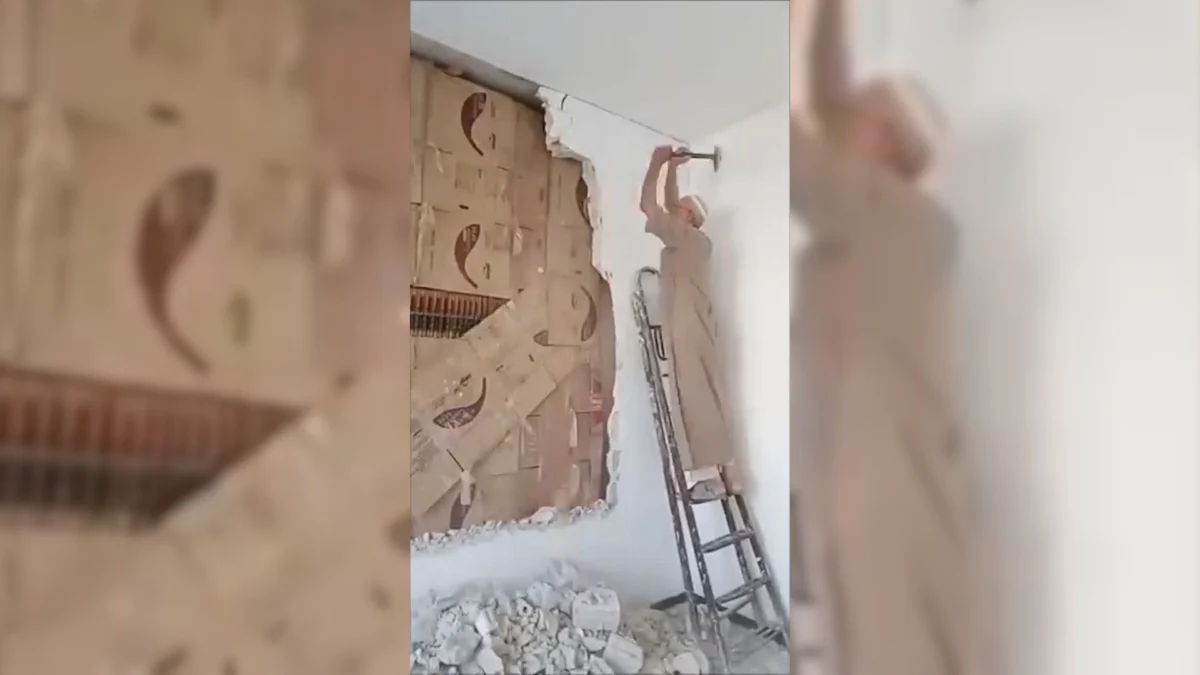
A Syrian man has revealed how he built a secret wall inside his home to hide books for 15 years, keeping them safe during Syria’s former Assad regime. The hidden library was rediscovered after the wall was removed.
Abu Bilal constructed the concealed space in his home to shield his books from potential damage or confiscation during a period of political upheaval. The library, which had been hidden for over a decade, was uncovered when the wall was demolished, revealing a collection preserved in secrecy.
Key Facts
- A Syrian man built a secret wall in his home to protect books from Syria’s former Assad regime.
- The wall concealed a library for 15 years before being uncovered.
- Abu Bilal is the individual who discovered the hidden library.
What happened to the books?
The books were hidden as a protective measure during Syria’s former Assad regime, a time marked by strict control over information and expression. By sealing the books behind a wall, Abu Bilal aimed to prevent their destruction or seizure. After 15 years, the library was uncovered, offering a rare glimpse into efforts made to preserve knowledge under authoritarian rule.
Who is affected by this discovery?
The discovery primarily concerns Abu Bilal, who spent over a decade keeping his books hidden. Broader public interest lies in how individuals preserved culture and literature during Syria’s conflict. While no additional individuals were named in the source, the story highlights grassroots efforts to maintain access to reading material under restrictive conditions.
What We Know — and What We Don’t
Verified by the source:
- The library was hidden behind a wall for 15 years.
- The wall was built by a Syrian man named Abu Bilal.
- The purpose of the wall was to protect books from Syria’s former Assad regime.
Still unconfirmed:
- The exact location where the wall was built.
- The number or types of books stored in the hidden library.
- Whether any official documentation or third-party verification of the discovery exists.
Why it matters
In times of political oppression, preserving books and culture becomes an act of quiet resistance. This hidden library reflects personal sacrifices made to protect access to information under a repressive regime, underscoring the value of knowledge even in difficult circumstances.
What to watch
It remains unclear whether further details about the hidden library will be released in upcoming reports or interviews with Abu Bilal.