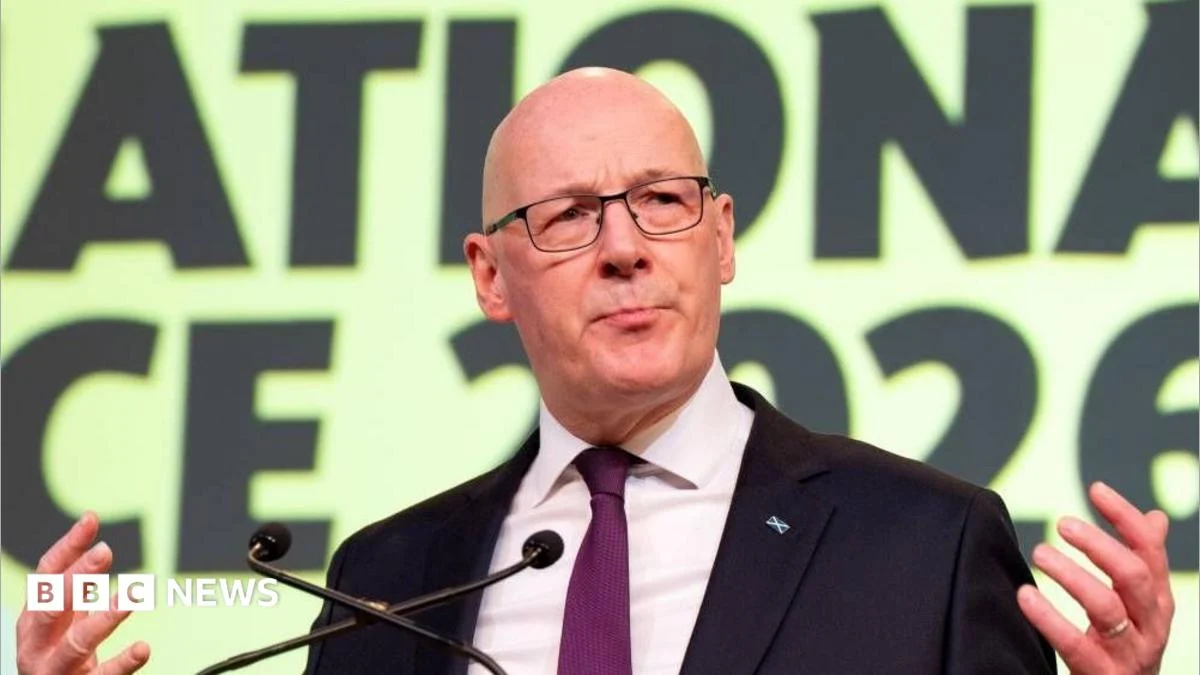
John Swinney, Scotland’s first minister, insisted that “the stars are aligning” for a fresh push toward Scottish independence, telling delegates at the SNP conference in Aberdeen that 2026 marked a turning point in the country’s journey to nationhood.
His remarks, delivered at the party’s annual gathering, signal renewed momentum behind the longstanding but unresolved question of Scotland’s constitutional future. Supporters inside the SNP view the speech as an effort to re-energize members following years of stalled progress on a second independence referendum.
The comments come as political attention in the UK turns to questions of devolution and national identity, with public opinion in Scotland remaining divided over whether formal separation from the rest of the United Kingdom would benefit the country economically and politically.
KEY FACTS
- First Minister John Swinney spoke at the SNP conference in Aberdeen.
- He argued 2026 was a turning point in Scotland’s “journey to nationhood.”
- Swinney stated that “the stars are aligning” for Scottish independence.
- The speech was addressed to SNP delegates at the party conference.
What Happens Next?
Swinney’s declaration at the SNP conference in Aberdeen underscores how the issue of Scottish independence remains central to his party’s identity and electoral messaging.
By framing 2026 as a turning point, he is attempting to build internal consensus among party members who may be divided over tactics and timing. The SNP has historically struggled to translate public support into concrete constitutional action, particularly after the 2014 referendum resulted in a vote to remain part of the United Kingdom.
Since then, changes in UK government leadership and Brexit have reshaped the political landscape, giving renewed urgency to arguments made by independence supporters. However, any future referendum would require legal approval from Westminster, meaning parliamentary consent remains a key obstacle.
Despite repeated pledges from the SNP to hold a second vote, successive UK governments have declined to authorize it under existing constitutional arrangements, leaving the question unresolved beyond rhetorical cycles each party conference.
How Did We Get Here?
Scotland last voted on independence in 2014, when roughly 55% chose to remain in the UK. That outcome was legally binding and overseen by the UK government, setting a precedent for future decisions requiring cross-party agreement or statutory changes.
The SNP has governed Scotland continuously since 2007, using its dominance to keep pressure on Westminster for another referendum. Public opinion polling shows fluctuating levels of support for leaving the UK, often influenced by broader debates around Brexit, economic performance, and trust in UK-wide institutions.
Recent years have seen increased discussion within Scottish civil society about self-determination, especially following Brexit, even though the majority of Scots voted against it. These tensions reflect deeper questions about democratic representation and sovereignty that extend beyond party lines.
While no formal mechanism currently exists for an unilateral declaration of independence, legal scholars suggest that prolonged stalemate could eventually prompt new negotiations between Edinburgh and London over constitutional reform or enhanced devolution.
Who Is Affected?
If Scotland pursued full independence, millions of residents would experience shifts in citizenship rights, currency usage, taxation systems, and access to public services administered jointly across the UK.
Economic uncertainty would likely affect businesses operating north of the English border, particularly those relying on integrated supply chains or shared regulatory frameworks established during centuries of union. Market reactions might mirror patterns seen after previous referendums such as in 2014 or during Brexit discussions.
Internationally, an independent Scotland would need to apply separately for membership in organizations like NATO and the European Union, which previously included the UK collectively. This process could take years and involve complex negotiations over border controls, trade agreements, and defense commitments.
For many voters, personal financial stability — pensions, savings accounts, mortgage rates — could change dramatically depending on whether Westminster agrees to terms favorable to separation or maintains fiscal integration under revised conditions otherwise unknown until formal negotiations begin.
WHAT WE KNOW — AND WHAT WE DON’T
p>Verified by the source:
- John Swinney attended and spoke at the SNP conference in Aberdeen.
- He referred to 2026 as a turning point in Scotland’s journey to nationhood.
- His message emphasized that “the stars are aligning” for independence efforts.
Still unconfirmed:
- No timeline or concrete plan for holding a second independence referendum was outlined.
- It is unclear whether the UK government supports or opposes Swinney’s claims.
- Details about how the “stars aligning” metaphor translates into actionable policy were not provided.
WHY IT MATTERS
This story matters because it highlights ongoing divisions within the UK regarding self-governance, democracy, and national autonomy. As debates continue internationally about regional identity and political sovereignty, Scotland’s position illustrates how domestic policies intersect with global conversations about unity versus independence. Whether viewed as legitimate aspirations for self-rule or risky economic experiments, these issues influence electoral choices far beyond Britain’s borders today.
WHAT TO WATCH
Further developments will depend on upcoming discussions among UK political leaders and potential legislative responses to requests for another independence vote. Politics observers should monitor statements from both Holyrood and Westminster closely, as well as public sentiment reflected through polling data and civic engagement throughout Scotland moving forward. See also our war and geopolitics coverage for related context on national movements globally.