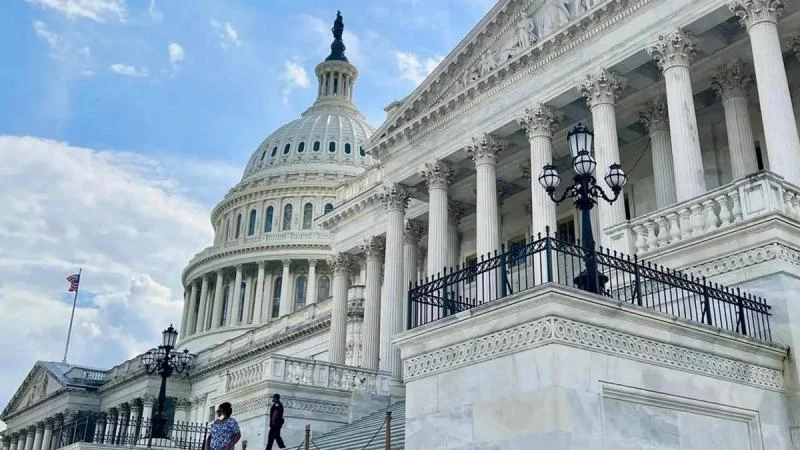
The U.S. Supreme Court has not signaled whether it will review cases involving prediction markets, even as multiple interest groups seek the court’s attention.
Stakeholders have filed several amicus briefs, and regulators have issued both an interim final rule and a proposed rule related to prediction markets. The confluence of these moves suggests growing momentum around the legal future of prediction markets in cryptocurrency trading circles.
KEY FACTS
- The U.S. Supreme Court has not yet indicated whether it will take up prediction markets cases.
- Several amicus briefs have been filed in support of bringing prediction markets cases before the court.
- An interim final rule related to prediction markets has been issued.
- A rule proposal on prediction markets is currently under consideration.
How did we get here?
Prediction markets allow participants to wager on real-world events, often using digital assets. Their popularity has grown alongside decentralized finance, prompting renewed regulatory interest. Legal challenges have mounted as market operators and advocates push back against unclear rules, arguing that existing frameworks limit innovation in prediction markets.
Regulators appear divided on appropriate oversight. While some push for formal rulemaking, others have introduced emergency guidance. These differing approaches have created uncertainty for platforms operating prediction markets, particularly those leveraging cryptocurrency infrastructure.
The emergence of amicus briefs reflects broader coalitions forming around prediction markets. Trade groups, academic institutions, and individual operators have all sought to influence how courts evaluate existing restrictions. These filings highlight the stakes involved as prediction markets expand.
What happens next?
Courts typically select a small fraction of petitions for review each term. Prediction markets cases face stiff competition among dozens of pending appeals seeking Supreme Court attention. Until the court grants certiorari, existing rulings remain in place, shaping how platforms operate in the near term.
Proposed rules may also move forward independently of judicial outcomes. Agencies involved in prediction markets oversight could finalize new policies regardless of whether the Supreme Court intervenes. Any rulemaking will likely require additional public comment periods and analysis.
Observers expect further clarification through upcoming hearings and regulatory notices. The intersection of prediction markets and cryptocurrency remains politically charged, suggesting continued volatility for operators. Final decisions could significantly reshape how financial event-based contracts function across crypto ecosystems.
What We Know — and What We Don’t
Verified by the source:
- The Supreme Court has not yet decided whether to hear prediction markets cases.
- Multiple amicus briefs have been submitted regarding prediction markets.
- An interim final rule concerning prediction markets exists.
- A rule proposal concerning prediction markets has been published.
Still unconfirmed:
- Which organizations filed the amicus briefs.
- The specific content or implications of the interim final rule.
- Details of the proposed rule changes.
- Whether the Supreme Court will grant review for any case.
Why it matters
Prediction markets tied to cryptocurrency trading sit at the crossroads of finance, law, and free speech debates. Their treatment could determine whether event-driven betting thrives or contracts under heavier oversight, affecting developers building on [trading-crypto] protocols and traders across [economy-markets] platforms alike.
What to watch
The Supreme Court may release its initial conference schedule listing cases under consideration. Legal experts say any grant of certiorari would mark a turning point for prediction markets regulation.