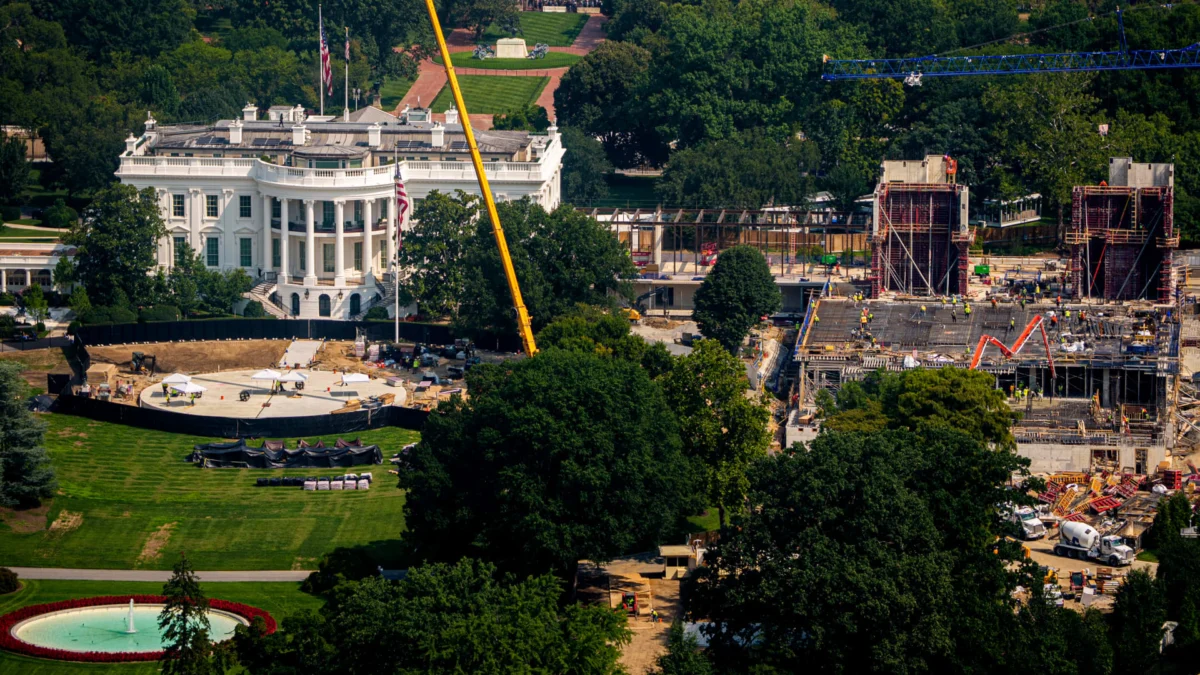
The Supreme Court has issued a ruling allowing for the construction of a White House ballroom to move forward, despite an ongoing lawsuit challenging the project. Chief Justice John Roberts expressed dissent from this decision.
This development indicates a division within the highest court regarding the legality of the construction. The dissenting opinion suggests significant concerns among some justices regarding the project’s lawfulness, even as the majority’s decision clears the way for the building work to continue while legal challenges are still active.
KEY FACTS
- The Supreme Court permitted the construction of a White House ballroom.
- The construction is proceeding while a lawsuit continues.
- Chief Justice John Roberts dissented from the ruling.
- Three liberal justices dissented with Chief Justice Roberts.
- Chief Justice Roberts stated, “That construction is likely unlawful.”
The Court’s Decision and Dissent
The Supreme Court’s ruling allows for the White House ballroom construction to proceed, signaling a green light for the project despite existing legal challenges. This decision means that the physical building work can continue concurrently with the ongoing lawsuit. The Court’s action, however, was not unanimous, highlighting internal disagreement on the matter.
Chief Justice John Roberts, alongside three liberal justices, voiced a strong dissent against the majority’s decision. His explicit statement, “That construction is likely unlawful,” underscores a significant concern regarding the legal standing of the project. This indicates a jurisprudential divide within the Court concerning the project’s legitimacy and the propriety of allowing construction to advance while its legality is still being contested.
What are the implications of the ongoing lawsuit?
The fact that the construction is permitted to continue while a lawsuit is ongoing means that the project’s future could still be uncertain. If the lawsuit ultimately finds the construction to be unlawful, there could be significant repercussions, potentially including a halt to construction or even mandates for changes to the completed structure. The continued legal challenge suggests that the foundational legality of the White House ballroom project has not been fully resolved, despite the Supreme Court’s latest ruling.
This situation presents a scenario where financial and structural commitments might be made on a project whose legal basis remains under scrutiny. The Supreme Court’s decision primarily addresses the immediate ability to build, rather than definitively settling the underlying legal disputes. The dissent from the Chief Justice further emphasizes the potential legal vulnerabilities that the project faces, even as it moves forward physically.
WHAT WE KNOW — AND WHAT WE DON’T
Verified by the source:
- The Supreme Court has allowed the construction of a White House ballroom to proceed.
- A lawsuit related to the construction is ongoing.
- Chief Justice John Roberts and three liberal justices dissented from the decision.
- Chief Justice Roberts commented on the likely unlawfulness of the construction.
Still unconfirmed:
- The specific nature or grounds of the ongoing lawsuit.
- The identities of the three liberal justices who dissented.
- The reasons provided by the majority for allowing the construction to proceed.
- The projected cost or timeline for the White House ballroom construction.
- The potential impact of the ongoing lawsuit on the completed construction.
WHY IT MATTERS
This decision is significant as it demonstrates how legal challenges can intersect with executive projects, even reaching the highest court in the nation. The split within the Supreme Court, particularly the Chief Justice’s dissent, highlights differing interpretations of legal authority and governmental action. This case could set precedents for future large-scale government construction projects facing legal opposition and underscores the complexities of legal oversight within government initiatives.
WHAT TO WATCH
Attention will likely remain on the progression of the ongoing lawsuit, as its outcome could still impact the White House ballroom project. Any further legal filings or rulings in that case will be key to understanding the full implications of this Supreme Court decision.