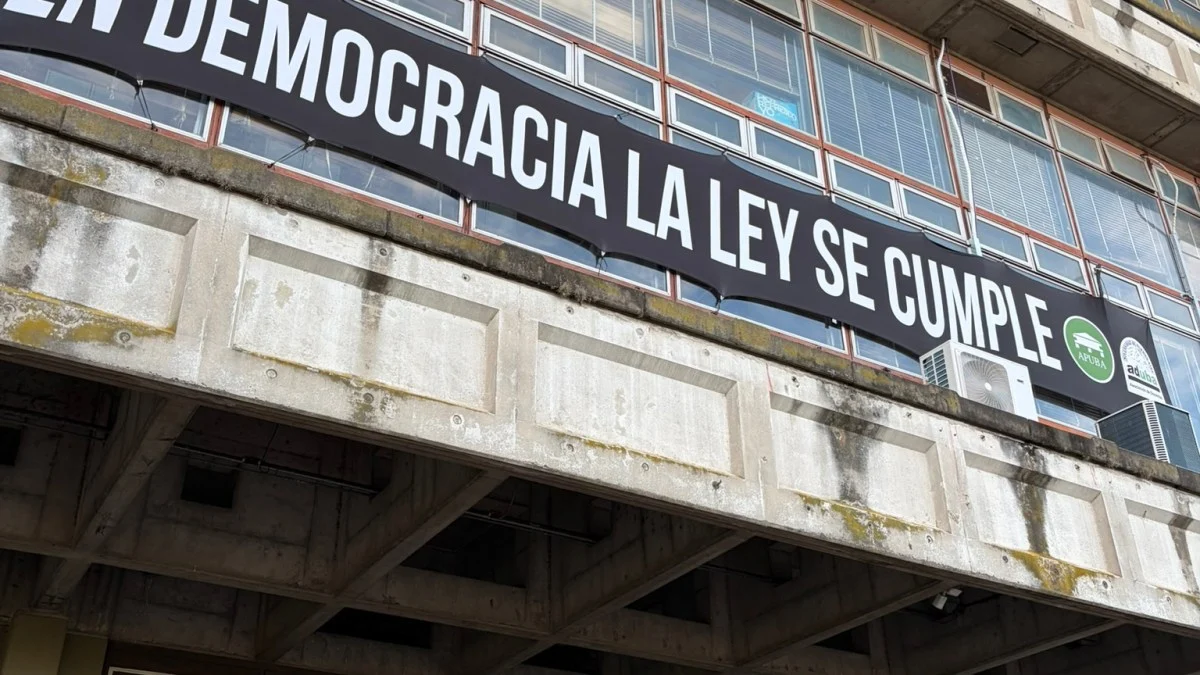
Argentine students protest on campus over Milei’s austerity measures, as a judge fines the government for failing to fund public universities amid escalating tensions, with protests turning violent. The demonstrations reflect growing unrest over sweeping spending cuts introduced by President Javier Milei’s administration, which have sparked widespread backlash across educational institutions in Argentina. These cuts, part of broader economic reforms aimed at reducing fiscal deficits, have directly impacted university budgets and student access to resources, prompting calls for urgent action and accountability from the judiciary and public alike.
## Key Facts
• A judge has fined the government for failing to fund universities.
• Protests by students over Milei’s austerity measures have turned violent.
• Demonstrations are taking place on university campuses in Argentina.
• The unrest stems from austerity policies implemented under President Javier Milei.
• Tensions between students and authorities have escalated during the protests.
## The Story So Far: What Sparked the Unrest?
The current wave of unrest began after the implementation of austerity measures under President Javier Milei, whose government announced sharp reductions in public spending. Among the most controversial moves was the decision to slash funding for public universities, which rely heavily on state support to operate. These cuts have left many institutions struggling to cover basic operational costs, including salaries for faculty and staff, maintenance of facilities, and academic programming. In response, students across multiple campuses took to the streets—literally—organizing sit-ins, walkouts, and mass demonstrations to voice their dissatisfaction with the direction of national education policy. As the protests gathered momentum, tensions rose both among participants and between demonstrators and law enforcement, eventually resulting in confrontations that led to property damage and injuries. While exact numbers remain unclear due to the fluid nature of events, reports indicate that several individuals were detained following clashes near key government buildings and university grounds.
## Why Are Students Taking to the Streets?
At the heart of the protests lies a fundamental concern over access to quality education and the role of the state in ensuring equitable opportunities for all citizens. Public universities in Argentina have long served as pillars of social mobility, providing free or low-cost higher education to millions of students regardless of economic background. However, with the recent budget cuts, many fear that these institutions may no longer be able to sustain themselves adequately, potentially leading to staff layoffs, program cancellations, and increased fees. This fear has galvanized young people and faculty members alike, transforming campuses into focal points of resistance against what they see as an attack on democratic values and societal progress. The situation further intensified when a local court ruled against the government, finding it liable for neglecting its constitutional obligation to provide adequate funding to educational institutions. This ruling not only validates the concerns raised by protesters but also sets a precedent that could influence future policy decisions regarding public investment in education.
## What Happens Next?
As authorities grapple with the fallout from days of turmoil, questions linger about whether additional concessions will be made to ease tensions. Government officials have so far maintained that the reforms are necessary to stabilize the economy and reduce inflation, which reached triple digits last year. Meanwhile, student organizations continue to demand full reversal of the cuts, warning that without immediate intervention, more disruptions could follow. International observers have also begun weighing in, urging dialogue between stakeholders to prevent further escalation. For now, classes at affected universities remain suspended indefinitely, leaving thousands of students uncertain about their academic futures. Whether this moment marks the beginning of a larger movement or simply another chapter in Argentina’s ongoing struggle with economic reform remains to be seen.
## What We Know — and What We Don’t
**Verified by the source:**
– A judge fined the government for failing to fund universities.
– Students protested on campuses over Milei’s austerity.
– Some protests turned violent.
– The unrest is linked to Milei’s broader economic policies.
**Still unconfirmed:**
– Exact number of casualties or arrests.
– Full extent of university funding Cuts.
– Identity of injured parties.
– Timeline for resolution.
– Official response from the presidential office.
## Why It Matters
This story matters because it highlights the domestic consequences of radical fiscal adjustments in one of Latin America’s largest economies. As other nations watch closely, Argentina’s handling of its educational crisis may set a precedent for how governments balance fiscal discipline with public services. Internally, unresolved grievances risk deepening divisions and undermining trust in institutions meant to serve citizens equitably.
## What To Watch
Watch for updates from the judiciary, potential negotiations between students and officials, and any policy reversals that could deescalate the situation.