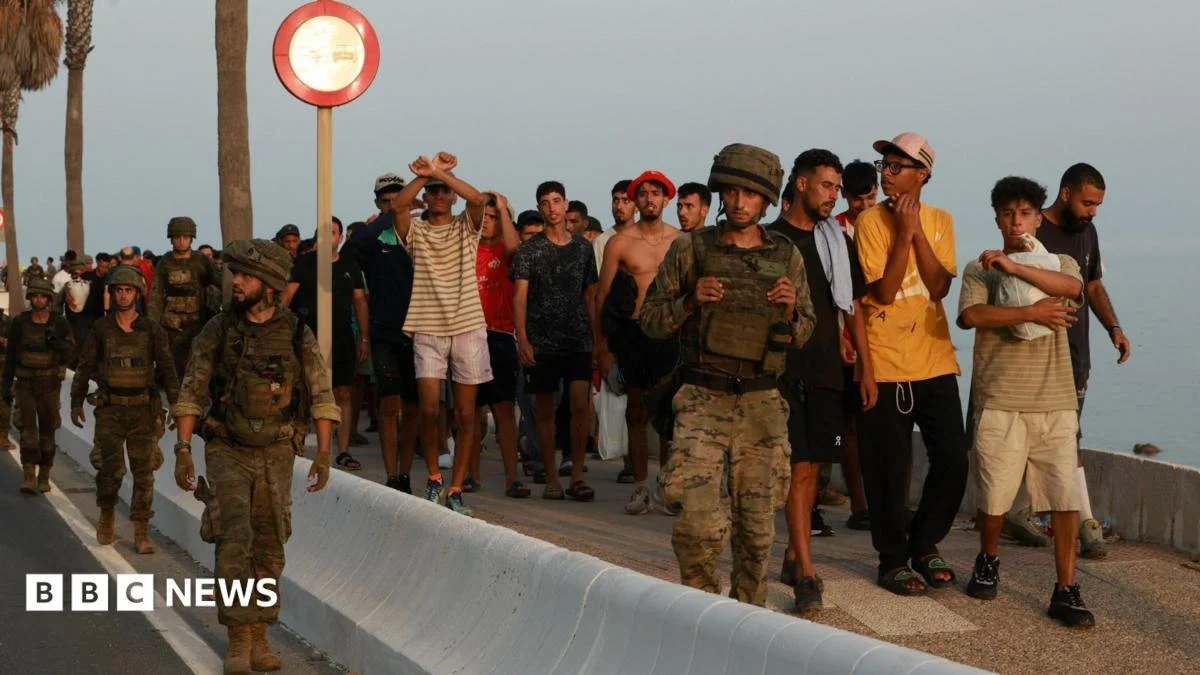
Spain’s migrant crisis has created a political storm that was amplified by social media, according to BBC reporting.
The Ceuta crossings have shaken Europe politically, exposing deep divisions over the sensitive issue of migration.
Key Facts
- The Ceuta crossings have shaken Europe politically.
- The migrant crisis has exposed divisions over migration in Europe.
- Social media has whipped up the political storm around Spain’s migrant crisis.
- BBC reporter Sarah Rainsford covered the story.
How did we get here?
Ceuta is a Spanish enclave on North Africa that serves as a point where migrants attempt to enter Europe.
Recent increases in arrivals have drawn attention from authorities and media.
This surge has been described as a migrant crisis by observers.
The migrant crisis has prompted increased attention from authorities and media.
What does the migrant crisis mean for Europe?
The exposure of divisions over migration suggests that EU countries may struggle to agree on a unified policy response.
Disagreements can affect cooperation on broader security and economic matters.
Observers note that migration often becomes a litmus test for broader political alliances within the bloc.
National governments may face pressure from constituents who view the issue through different lenses, ranging from humanitarian concerns to worries about social cohesion.
This pressure can influence electoral outcomes and policy priorities in individual member states.
Consequently, the migrant crisis can have ripple effects beyond immediate border management.
Some analysts argue that the heightened attention could lead to increased funding for border agencies or new legislative proposals aimed at managing flows.
Others caution that politicization might hinder practical solutions and deepen mistrust between states.
The outcome will depend on how leaders balance competing demands.
What role does social media play?
Social media enables rapid sharing of images, videos, and personal accounts from the Ceuta crossings.
This speed allows information to reach audiences far beyond the immediate location almost instantly.
As a result, events that might have stayed local can gain international attention quickly.
The content shared online often carries emotional language that can sway public sentiment in different directions.
Some posts highlight humanitarian needs, while others emphasize security risks.
These contrasting narratives contribute to polarized discussions on migration.
Politicians and advocacy groups use the same platforms to disseminate their messages, seeking to influence the conversation.
The interplay between official statements and grassroots commentary creates a dynamic environment where opinions can shift rapidly.
This environment is what reporters describe as a storm whipped up by digital channels.
Researchers note that the amplification effect of social media can both inform and misinform, depending on the reliability of the sources shared.
Fact-checking efforts sometimes struggle to keep pace with the volume of posts.
Consequently, the digital landscape remains a key factor in how political issues evolve.
What We Know — and What We Don’t
Verified by the source:
- The Ceuta crossings have shaken Europe politically.
- The migrant crisis has exposed divisions over migration in Europe.
- Social media has whipped up the political storm around Spain’s migrant crisis.
- BBC reporter Sarah Rainsford covered the story.
Still unconfirmed:
- The exact number of crossings or migrants involved in the recent Ceuta events.
- Specific statements made by individual European officials regarding the situation.
- Details of particular social media posts that drove the amplification.
- Any immediate policy changes that have resulted from the political storm.
Why It Matters
Understanding how migration issues intersect with digital communication helps explain why certain topics can quickly dominate public debate and influence policy decisions across continents.
What To Watch
Observers will continue to monitor how European governments respond to migration pressures and how social media narratives evolve in the coming weeks.