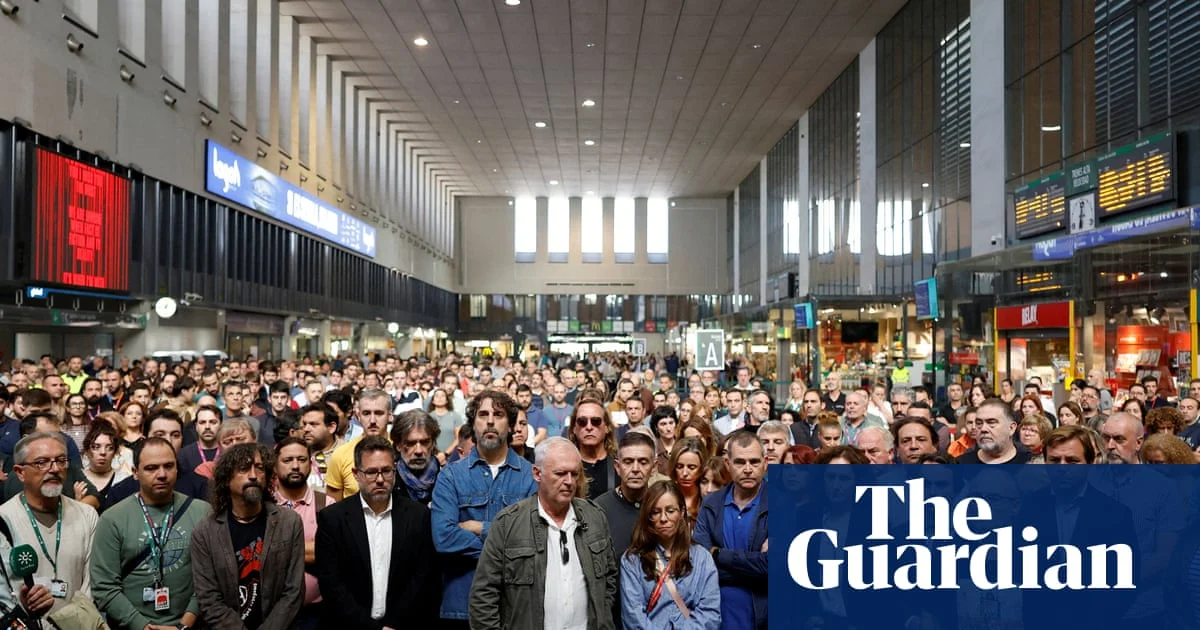
Spain has begun a three-day period of official mourning following a deadly high-speed train crash that killed at least 68 people, as search and rescue efforts continue across the wreckage. The collision occurred just before 9 a.m. near the town of Urda in the central region of Castilla-La Mancha, involving two passenger trains traveling on the same rail line from Madrid toward the southern region of Andalucía. One train struck the rear of the other after it came to a halt, derailing multiple carriages and causing significant damage to the tracks and surrounding area. Emergency services, including drones and a dog unit, are combing through the debris of the carriages as the Civil Guard has established clinics for relatives to provide DNA samples. Hospitals are also continuing treatment for dozens of injured passengers and first responders affected by the train crash. The incident marks one of the deadliest rail accidents in recent Spanish history and has drawn attention to safety protocols on the country’s high-speed rail network.
Key Facts
- Spain declared three days of official mourning following the train crash.
- At least 68 people died in the high-speed rail collision.
- The crash occurred near Urda in the central region of Castilla-La Mancha.
- The trains involved were operated by Renfe and Iryo.
- Emergency teams are using drones and a dog unit to search the wreckage.
The Story
What kind of response is underway?
Emergency services are conducting an intensive search operation at the crash site, deploying drones and a specialized dog unit to navigate and examine the overturned and displaced train carriages. These tools are critical in reaching areas that may be unstable or difficult for human rescuers to access safely. In addition, the Civil Guard has set up dedicated clinics where family members of those affected by the train crash can submit DNA samples to assist in the identification of victims. This process is expected to take time, particularly given the scale of the loss of life and the severity of the damage to the trains involved.
Who is affected by this train crash?
Hospitals across the region are currently treating dozens of injured passengers and rescue workers injured during the aftermath of the train crash. The victims include individuals traveling on both the Renfe state-operated service and the privately-run Iryo train, suggesting the impact spanned passengers from different segments of the traveling public. Families of the deceased are being supported through the clinics set up by the Civil Guard, while broader communities along the rail line are likely feeling the ripple effects, especially in areas connected to the Madrid-to-Andalusia route that plays a major role in regional mobility.
How did we get here?
The two trains were part of Spain’s extensive high-speed rail network, a system that has been expanded and modernized over the past two decades as a symbol of national infrastructure growth. Both trains were heading from Madrid toward Andalucía when, according to authorities, one train came to a stop on the line and was subsequently struck from behind by the second train. The impact caused several carriages to derail and fall off the tracks, leading to catastrophic injuries and fatalities. Investigations into the cause of the train crash are expected to begin shortly, with experts likely examining signaling systems, communication protocols, and whether proper spacing was maintained between the two high-speed services.
What We Know — and What We Don…
Verified by the source:
- The crash occurred near the town of Urda in Castilla-La Mancha.
- Two passenger trains were involved: one operated by Renfe and one by Iryo.
- At least 68 people died as a result of the collision.
- The trains were traveling from Madrid toward the Andalucía region.
- Spain has begun three days of official mourning.
- DNA collection clinics have been established by the Civil Guard.
Still unconfirmed:
Why It Matters
This train crash is a sobering reminder of the vulnerabilities in even the most advanced transportation systems. High-speed rail networks like Spain’s are often held up as models of efficiency and safety, making this event particularly jarring for the public and officials alike. The loss of life and injuries sustained in the train crash underscore the urgent need for transparency during the investigation process and for reassurance that such incidents remain rare but thoroughly understood.
What To Watch
A full investigation into the train crash is expected to begin soon, with attention focused on determining the cause of the collision and whether proper safety protocols were followed. Updates on victim identification and the condition of the injured will continue to emerge as recovery and medical efforts proceed.
Spain mourns as authorities search for victims in the wake of one of the deadliest train crashes in recent national history, with emergency crews still working to clear the site and identify the dead.