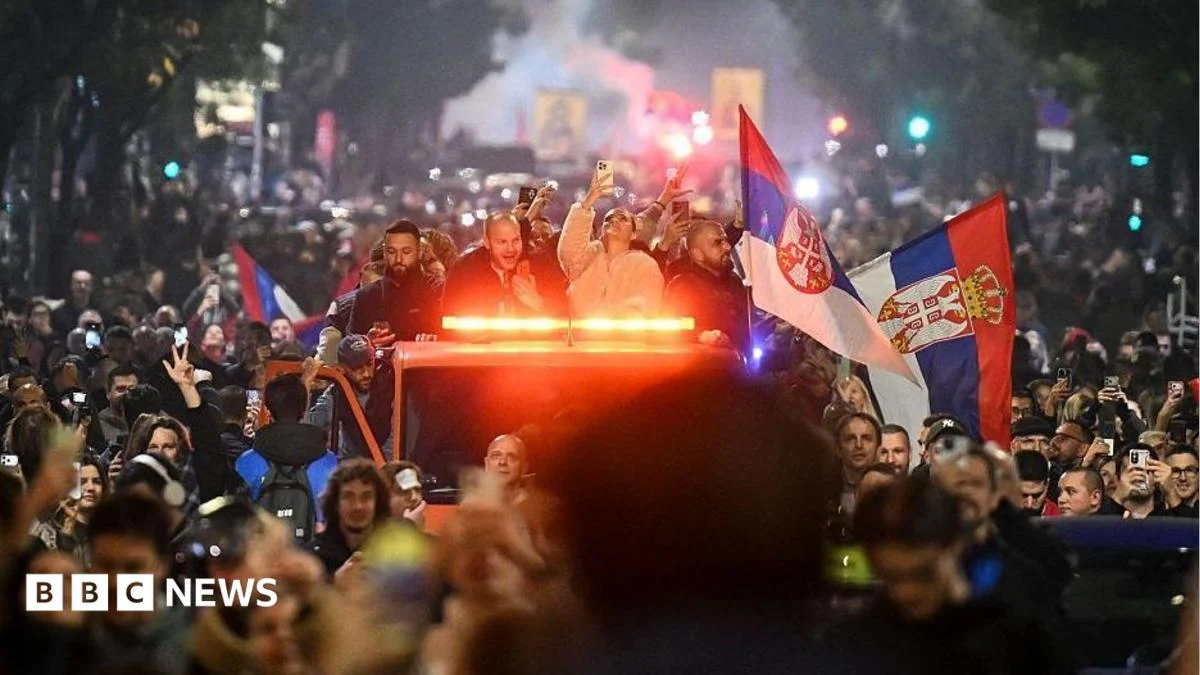
Serbia’s veteran leader Vučić concedes Serbia election defeat to a student-led protest movement, acknowledging his party has lost a vote framed as a referendum on the country’s future.
The populist right-wing leader, in power for 12 years, stated it was “clear” his party lost the vote, ending a long period of dominant rule and signaling potential political change in the Balkans.
KEY FACTS
- Vučić concedes Serbia election defeat to student-led protest movement.
- Populist leader of 12 years admits loss in vote billed as referendum on future.
- He said it was “clear” his party lost the vote.
- Election seen as critical test for Serbia’s political direction.
The Future of Serbian Politics
The Serbia election result marks a dramatic turning point after more than a decade of Vučić’s rule. His party’s loss suggests growing public dissatisfaction, especially among younger generations mobilized by student-led protests. These movements have challenged the government on issues of corruption, democratic governance, and EU integration. The outcome reflects broader regional trends of voter fatigue with entrenched leaders across Europe and signals a possible generational shift in Serbian politics.
How Did We Get Here?
For years, Vučić dominated Serbia’s political landscape, transforming from a nationalist figure to a pro-European reformer, then back to an increasingly authoritarian leader. His government was frequently criticized for weakening media freedom, centralizing power, and fostering clientelism. Student protests emerged as the primary opposition force, drawing massive crowds and using digital organizing to galvanize urban voters. These demonstrations capitalized on economic discontent, youth unemployment, and frustration with stalled reforms, ultimately reshaping the contest in the Serbia election.
Who Is Affected by This Change?
The Serbia election outcome affects millions of citizens who have demanded accountability and transparency. It also impacts regional stability, EU enlargement discussions, and international relations. Neighboring countries are watching closely, as this vote may inspire similar movements or influence diplomatic ties. Internally, public institutions, state-owned enterprises, and security services will likely face pressure to realign with new leadership priorities once transition begins.
WHAT WE KNOW / WHAT WE DON’T
Verified by the source:
- Vučić acknowledged his party lost the Serbia election.
- The vote was described as a referendum on the country’s future.
- He had led the government for 12 years before this loss.
Still unconfirmed:
- Exact vote margins or turnout figures.
- Timeline for transfer of power or coalition negotiations.
- Whether Vučić will resign or attempt legal challenges.
- Names and platforms of incoming opposition leaders.
WHY IT MATTERS
Serbia plays a strategic role in Europe due to its geographic position, energy projects, and potential EU accession path. A peaceful transition after the Serbia election could strengthen democratic norms and offer hope for reform elsewhere in the Balkans. Conversely, instability or disputed results risk stirring tensions at a time when regional cohesion remains fragile.
WHAT TO WATCH
Observers expect clarity soon on how the new majority plans to form a government. Analysts say the next weeks will test whether institutions can manage the transition smoothly and whether opposition leaders can deliver on promises of reform.